

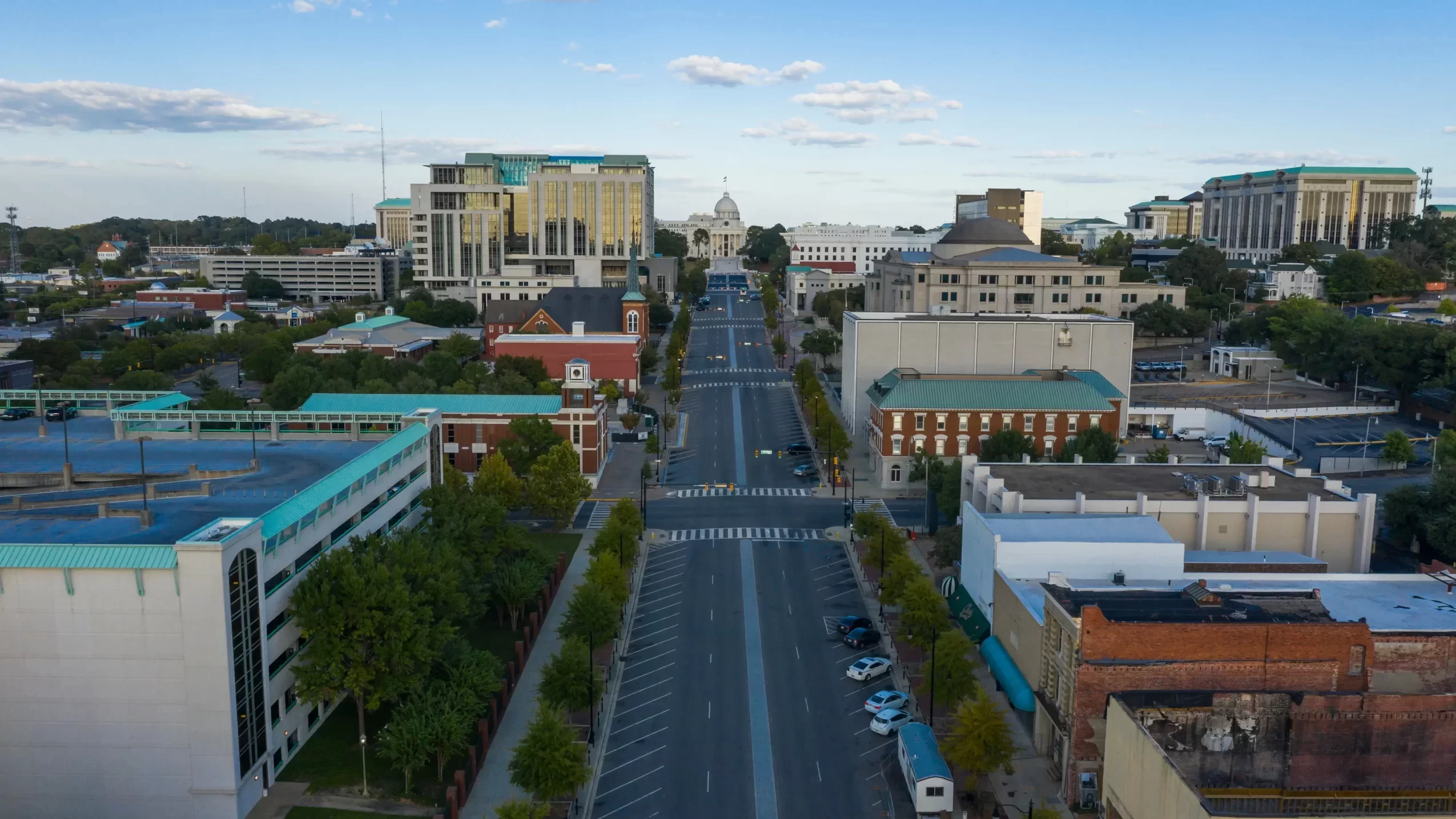
In 2013, as Montgomery’s murder rate was rising, the editor-in-chief of the Montgomery Advertiser tasked reporters with going into neighborhoods on both sides of the city and asking people what was going on.
I know this because I was one of them. Over the course of a few days, I and a few other people from The Advertiser simply walked around different neighborhoods, talking to people about their opinions on the rise in gun violence and other issues in the city.
One of the most shocking things I heard was how little these two communities are known about: It’s easy to separate them based on race, but in 2013, and especially today, these two communities were clearly separated economically: working poor on one side, upper middle class and above on the other.
Two women told me that their kids, around 10-12 years old, had no idea what Eastchase Shopping Center was – they’d never been there, it’s on the other side of town, like 100 miles away.
A group of black young people (about 10-12 in all) told me they hadn’t spoken to a white person in over a year, and two kids said they couldn’t remember ever having a long conversation with a white person in their lives.
We also did a lot of reporting on the Montgomery school system and its recurring funding issues. One year, for the first month, Montgomery’s public high school did not have enough desks for students. There were photos and videos of kids lining up against the walls of classrooms or sitting on the floor.
For much of the time I covered education in the city, public school students were not allowed to take textbooks home because the school system simply did not have enough textbooks for everyone.
When crime rates began to rise, and especially when murder rates spiked in 2013, many tough questions were asked of cities and police departments: About gun violence. About light sentences and low bail. About access to weapons.
But few took it seriously. Other Montgomery. Poor people were killing each other. It was a problem for the black community. The mayor at the time, Todd Strange, drew criticism when he said the killings were mostly among criminals and that good citizens didn’t need to worry.
Strange also famously refused for years to acknowledge that Montgomery had a gang problem, serving as mayor when many of the city’s community centers, which provided a safe, structured environment for young people, were closed.
Rising crime rates in 2013 and an earlier rise in gang- and drug-related violence prompted former Montgomery Police Chief Kevin Murphy to seek more modern ways of policing, particularly one that would focus on community policing. Old-school carceralists within the department fought back, saying such an approach was coddling criminals and soft on crime. Murphy was ousted.
Having read this far, you may be wondering why I am taking a trip down Montgomery’s memory lane and why I am covering events that occurred over a decade ago.
That’s because people seem to be a little forgetful about the city, especially when it comes to gun crime and violence that’s getting so much attention right now. From the mass emails from local doctors to the attacks from dim-witted politicians who live hundreds of miles away, there seems to be this notion that Montgomery’s problems just popped up within the last four years, or around the same time the city elected its first black mayor.
They didn’t.
They happened 10, 15, 20, 30 years ago, and most of them were caused by actions taken over many years.
State Assemblyman Lance Bell recently spoke on a local Montgomery radio show to blast Montgomery Mayor Steven Reed for blaming the Republican-led Legislature and unlicensed gun laws for contributing to gun violence in the city. Bell called on Mayor Reed to “take responsibility.”
This Lance Bell is the same man who was indicted three years ago by the Alabama Attorney General’s office for his role in a bizarre conspiracy to free former Republican House Speaker Mike Hubbard from prison, so liability is clearly a subject he should be talking about.
The fact is that the Legislature bears responsibility — far more than Mr. Reid has accused it of.
It is the Legislature that made it so easy to buy and carry a gun while simultaneously removing nearly all gun safety and storage requirements. It is the Legislature that maintains a foolish school funding structure that ensures schools in poor areas continually struggle with basic funding. It is the Legislature that blocked cities’ ability to levy occupational taxes, especially in opposition to Montgomery’s proposed tax increase a few years ago.
So, yeah, Lance, I really hope someone takes responsibility for all of that.
Meanwhile, Dr. David Thrasher, the former Montgomery City Coroner and a generally well-liked and respected figure, has been sending out a lengthy series of emails to people around Montgomery about the city’s problems and his proposed solutions.
While some of the opinions and ideas are reasonable and sound, much of the criticism, especially of “social programs” and simply heavy-handed tactics and increased armed forces (seemingly encouraging cities to hire private military companies for patrols), is rooted in the belief that problems will fall from the sky and be dismissed with heavy-handed tactics.
Montgomery’s problems have been around for a long time and are the result of a lot of people’s mistakes, ignorance, shortcomings, and just plain meanness. It’s what happens when you try to isolate and forget half your city. It’s the result of years of racism, Jim Crow laws, and more subtle discrimination. It’s the result of inadequate education and even worse conflict resolution skills. It’s the result of so much anger and hatred and misunderstanding. It’s the result of bad laws, a passion for violence, and the romanticization of guns.
These are long-term problems that require long-term solutions, and it doesn’t hurt for everyone to take appropriate responsibility, either.
