

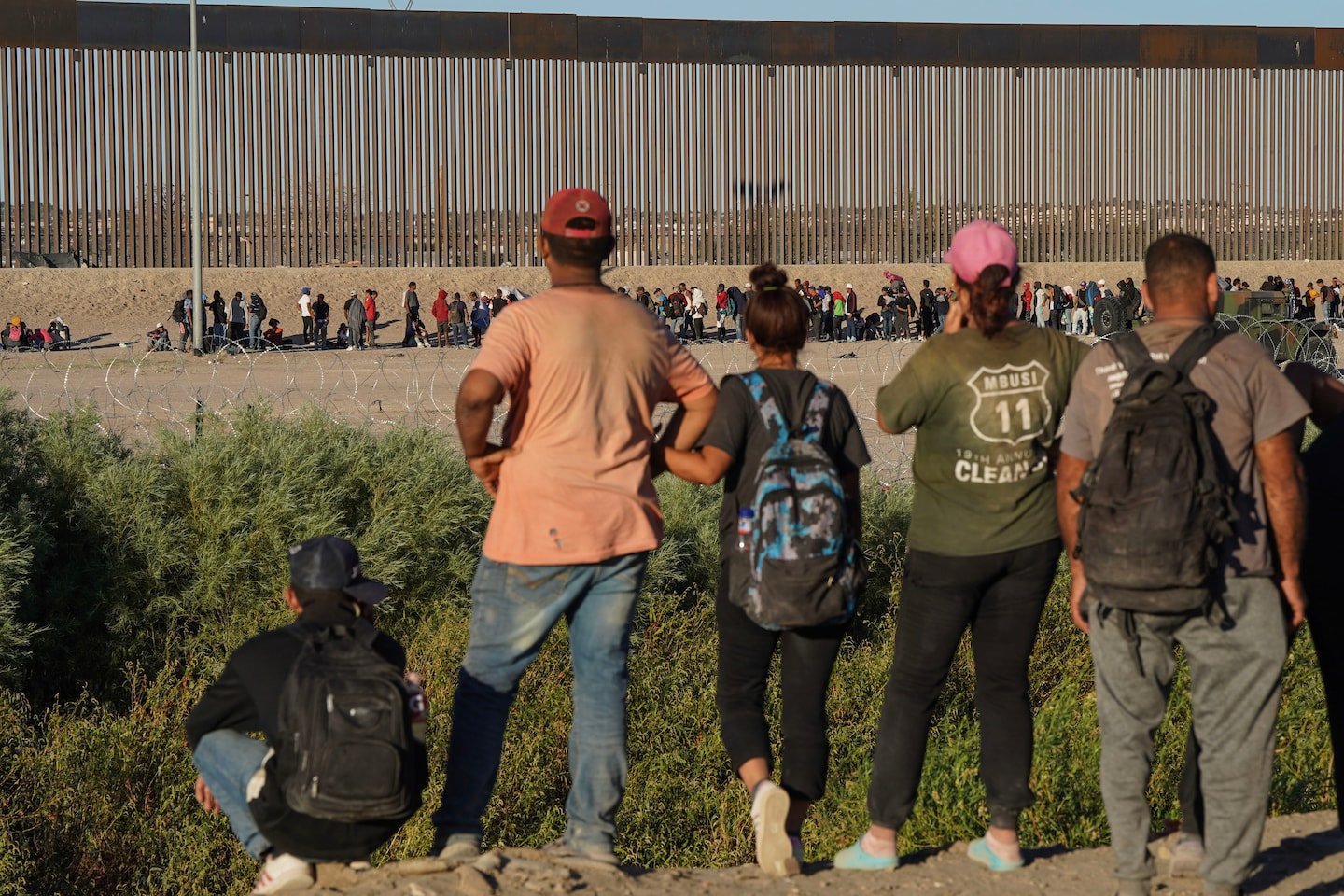
One reason for the significant increase in immigration in recent years is that immigrants are seeking asylum within the United States.
This process motivates people to cross the border from Mexico because asylum claims require them to be in the country. Once a claim is filed, a legal process begins, sometimes resulting in years of waiting for a hearing before an immigration judge. In many cases, migrants are released from custody by the Department of Homeland Security (DHS) to await their hearing in the United States.
There are several points at which this trajectory can change. Under a procedure introduced in 1996, asylum seekers undergo an initial screening process to determine whether their application is based on a credible fear – in other words, whether they are in fact seeking asylum because of the situation in their place of origin.
If they are found not to have a legitimate fear, they will be deported. Under the Trump administration, the government has implemented a “remain in Mexico” policy, whereby those found to have a legitimate fear are not released to the U.S. to await trial, but are instead temporarily returned to Mexico.
One challenge that exists is a lack of resources to adjudicate credible fear claims.
“The bottom line is that credible fear interviews require an asylum judge to conduct them,” Aaron Reichlin-Melnick, policy director at the American Immigration Council, explained in an email. “Without an asylum judge available to conduct a credible fear interview, Homeland Security officials cannot order the rapid deportation of immigrants. They will either detain the immigrant until an asylum judge is available (which could take weeks or months), issue a notice to appear before an immigration judge, or bypass the credible fear process and rely on an eventual hearing before an immigration judge.”
The policy Biden is introducing is aimed at quickly removing people who cross the border illegally between existing border crossings if there are more than 2,500 illegal crossers per day over a seven-day period, a level that has been reached frequently in recent years both during most months of the Biden administration and during the Trump administration.
Customs and Border Protection publishes data on the number of arrests made by Border Patrol agents. While daily figures can fluctuate, the average number of arrests per month has exceeded 2,500 in 29 of Biden’s 40 months in office. (Data for May 2024 is not yet available.)
There have been four such months under the Trump administration; there were 54 under George W. Bush.
One reason for the decline in immigration during the second Bush administration and the low immigration numbers under Barack Obama is that border barriers expanded, forcing more immigrants to border crossings. It is also worth noting that Mexico’s population has increased by nearly a third since 2000, and apprehensions have increased by about 5 percent from 2000 to 2023. Mexico’s and Central America’s large populations are a small reason why more people are seeking asylum in the United States.
DHS also reports to Congress every two months how many people have been interviewed for credible fear and the outcomes of those interviews. The gap between the number of people entering the U.S. and those interviewed is stark: in April, about 129,000 people were apprehended crossing the border illegally, but only about 18,000 new cases of credible fear were recorded. About 4,300 migrants were determined not to have a credible fear that month, roughly the same number of arrests per day in April.
This goes back to Reichlin-Melnick’s point: there are only a limited number of asylum judges available to conduct these interviews, and similarly, there are only a limited number of immigration judges available to hear cases.
“Without additional funding, the administration’s ability to close the border to illegal crossers is likely to face many of the same limitations that have hampered previous efforts to stop migration by restricting the entry of asylum seekers,” The Washington Post’s Nick Milov and Maria Sacchetti wrote about Biden’s new policy. “U.S. border authorities simply don’t have the detention space, deportation capacity and enough asylum judges to comply with the U.S.’s basic legal obligation to prevent anyone from being returned and suffering torture, death or other serious harm.”
Once the 2,500 entry limit is passed, processing will be limited, but asylum seekers will still have to be screened to make sure they won’t be at risk if deported from the United States.
There’s a further change that will speed up the vetting process: Instead of being asked a series of questions to determine whether immigrants fear being returned to their home countries, they will now have to “state or express a fear of return to their home or country of deportation, a fear of persecution or torture, or an intent to apply for asylum,” the Homeland Security document explains. In other words, immigrants will have to affirmatively express such fears. In practice, this will result in fewer immigrants being treated as asylum seekers.
As is often the case with presidential efforts to circumvent congressional inaction, Biden’s proposal has serious challenges hidden beneath the rhetoric. At the forefront here is the same challenge that has existed for years: not enough resources to deal with the influx of immigrants caused in part by a strong economy. The response tends to focus on the politics rather than the problem.
