

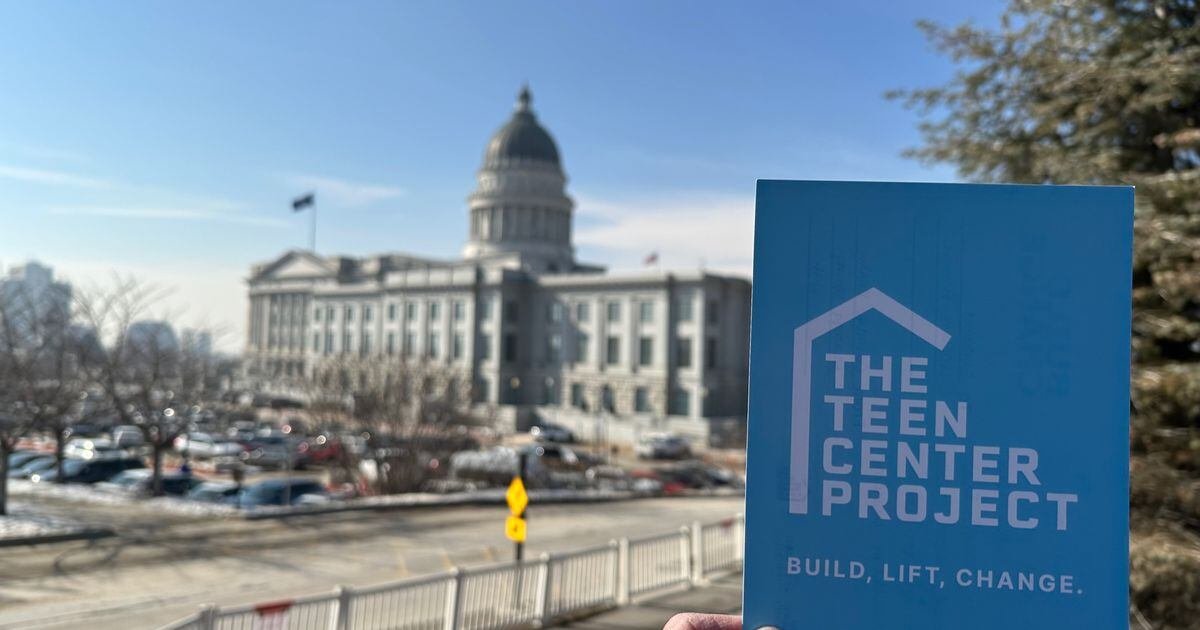
The Teen Center is an investment in Utah’s future and the people who will soon lead it.
(Photo courtesy of The Policy Project) Teen centers “provide valuable support to teenagers struggling with mental health issues, family problems, homelessness, substance abuse, bullying, and other challenges,” writes Sidni Shorter, executive director of The Policy Project.
Although the idea of teenagers smoking continuously is a scary story, the solutions are also relatively simple: we warn them about the dangers and tell them to quit. Policy measures have been put in place, such as laws banning tobacco marketing targeted at young people and taxes that make smoking an expensive habit. However, research shows that the effects of loneliness and social isolation can be as harmful as smoking 15 cigarettes a day, affecting a person’s overall health and especially their mental health.
But addressing mental health issues in teenagers is much more complicated. Teen centers, now set up in dozens of schools across the state, can help.
The teenage years are a difficult and complicated time, with many pressures: demanding academic loads, after-school jobs and activities, setting new boundaries, questions about the impact of social media, and of course, fluctuating hormones. Navigating this period can be a lot. Adults who care for these teenagers are often struggling with their own mental health issues, adding to the challenges families face.
Beyond reports of loneliness, which have only begun to increase post-pandemic, Utah teens face a number of mental health challenges and risk factors. According to the 2021 Utah Youth Health Report, more than one in five students have seriously considered suicide, 18% have made a suicide plan, and 41.5% reported feeling sad or hopeless. Utah children face mental health issues at a rate 14% higher than the national average. The number of Utah teens who have experienced a severe depressive episode has doubled over the past decade.
A growing number of Utah elementary, middle and high school students are also facing significant challenges in meeting their basic needs. There is a 9.6% increase in students experiencing homelessness from 2022 to 2023, with 13,049 Utah students classified as homeless and lacking fixed, regular and adequate nighttime housing in 2023. One in three Utah students are economically disadvantaged and qualify for free or reduced lunch.
Addressing these challenges requires families, communities, and policymakers to work together to ensure all students have the support they need to thrive. One of the efforts The Policy Project is spearheading is the creation of teen centers across Utah. Teen centers are facilities in Utah schools that provide food pantries, laundry facilities, and showers to meet students’ basic needs. The centers also have adults on-site who provide resources, such as homework help, social work and family support, and connections to other community resources. Simply connecting with someone you can trust can often prevent or alleviate mental health issues. Teen centers provide valuable support to teens struggling with mental health issues, family issues, homelessness, substance abuse, bullying, and other challenges.
Since the Policy Project’s work began in 2022, $15 million has been secured from the Utah Legislature to fund these centers, and $3 million has been raised from private donors. All $18 million of these funds have been allocated for construction and opening by 2024, showing just how great the need for these types of resources is. Funding has been awarded to over 70 schools in every region and corner of Utah.
With factors that impact teen mental health ranging from economic to social, these teen centers have been and will continue to be an integral part of Utah’s education community. The ultimate goal of these centers is to help teens succeed in all areas of life. Teen centers act as conduits and connectors to connect teens to a variety of non-academic resources and opportunities. By providing a safe and supportive environment, teen centers help teens address, cope and overcome obstacles and barriers. Teen centers provide resources and support to help them overcome challenges and prepare for a successful future.
The Teen Center is an investment in Utah’s future and the people who will soon lead it.
(Photo courtesy of The Policy Project) Sydne Shorter
Sidney L. Shorter, Doctor of Psychology, She is the President and CEO of the Utah Black Chamber of Commerce and a board member of The Policy Project. As a servant-leader, Sydni prioritizes relationship building and authentic engagement. As an advocate for change and a social entrepreneur, her career and efforts are driven by her passion for entrepreneurs and business leaders who pursue affordable access to capital with the goal of growth, progress and equitable outcomes, including diversity, equity and inclusion.
The Salt Lake Tribune is committed to creating a space where Utahns can share ideas, perspectives and solutions that move our state forward. To do this, we need your insight. Find out how you can share your opinion. herePlease contact us by email email address.
