

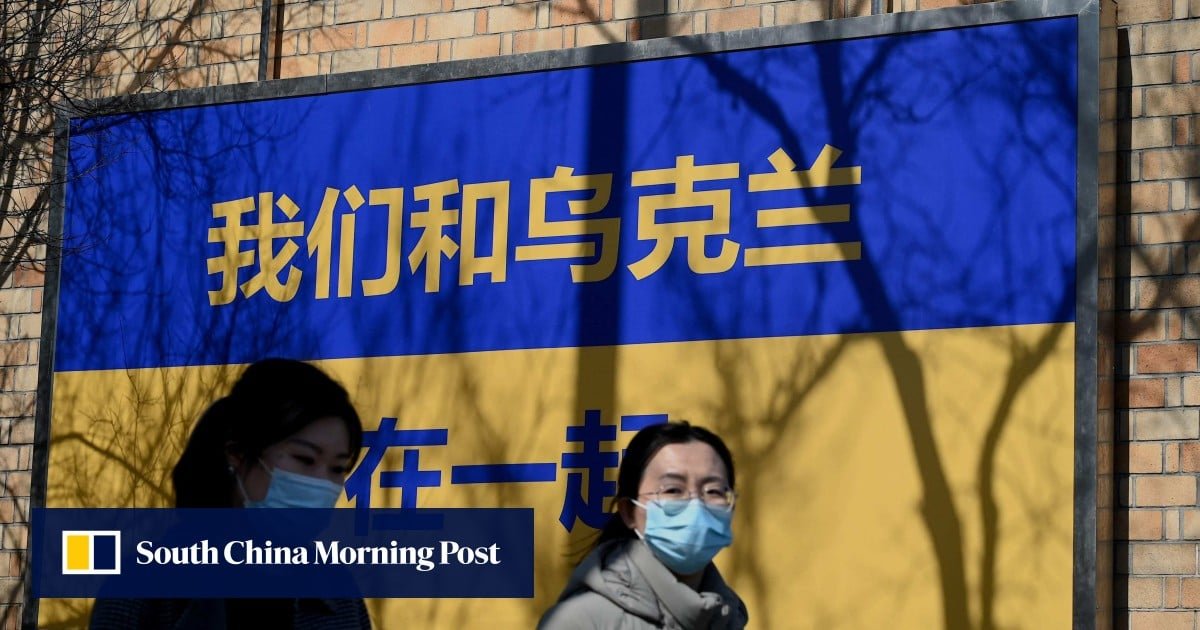
Using familiar tactics and tools that are true to its traditional foreign policy principles, China has built its image as a peacemaker and mediator in the Russia-Ukraine and Israel-Palestine conflicts, with its peacemaking actions serving one main purpose: advancing its national interests.
“Does peace in Ukraine matter to China?” “What is China’s constructive role in Ukraine?” “What does President Putin mean to Chinese President Xi Jinping?” These are questions I asked my Chinese colleagues and friends during conversations in Beijing. This month, we witnessed Russian President Vladimir Putin visit China with a high-level delegation. Ukrainians responded very negatively to the visit.
Here are the main takeaways from my discussion, which fortunately also included some points of mutual understanding.
First of all, Ukraine must win this war. Intellectuals from China’s top universities are beginning to openly admit that Russia’s actions cast a negative shadow over China on the international stage. I heard the opinion “Glory to Ukraine” from well-known experts from Peking and Tsinghua universities, and a similar opinion was expressed by a scholar from Fudan University. Liberating about 20% of Ukrainian territory is a difficult task, but China’s historic victory over the Japanese invaders serves as a painful example.
advertisement
advertisement
Second, Ukraine’s territorial integrity must be respected. China respects Ukrainian sovereignty and has consistently refused to recognize Crimea and other occupied territories as part of Russia. This position is unlikely to change, as Russia’s actions violate the UN Charter.
Third, China’s relations with Russia and Ukraine are asymmetric.. China maintains friendly relations with both Ukraine and Russia, but Russian influence is quite pronounced. Ukraine has lost a significant place in the perception of Chinese society, a situation that existed even before the full-scale invasion. Ukraine’s presence in China is limited.
Fourth, China recognizes the importance of Ukraine to Europe. France can promote stability by playing a role in China-Ukraine trilateral relations. China needs to communicate with Ukraine while recognizing it as a member of the European nations.
The fifth commonality is that China has a vested interest in protecting global food security. Ukraine has historically contributed greatly to this effort but is currently challenged by frequent shelling at Odesa and weakening control over the Black Sea. Despite benefiting greatly from the Black Sea Grain Initiative, China has not done enough to help Ukrainian food exports reach global markets, and it should.
Finally, Russia is a security threat: as clearly stated in Germany’s China strategy, the deepening of Sino-Russian ties poses significant risks both to Ukraine’s relations with China and to Europe’s relations with China.
I realized that there is still a big gap in our understanding of our aspirations, our current position on this war, and our place on the world map. China still sees Ukraine as part of the Russian sphere of influence and believes that Ukraine has a very long way to go before it is fully integrated into Europe.
China has been pushing Ukraine to negotiate with Russia but has yet to respond positively to Ukrainian President Volodymyr Zelensky’s invitation to a peace summit in Switzerland, while China has strengthened ties with Russia and says the world should accept the rapprochement as a non-aligned relationship.
The Taiwan issue remains a hot topic among intellectuals and is widely seen as a red line for Beijing. Although Ukraine still adheres to the “One China” policy, Taipei’s support for Ukraine has been more visible than Beijing’s efforts.
Taipei has made no secret of its interest in forging closer ties with Kyiv, and it has become common for Taiwanese officials to promote the argument that defending Taiwan means defending Ukraine. Beijing is aware of the pro-Taiwan faction in the Ukrainian parliament and has expressed concern about Taipei’s growing closeness to Kyiv.
I have noticed that many ordinary Chinese people lament the lack of information about Ukraine, which indicates a critical need for Ukraine to engage with influential Chinese media professionals, scholars, and cultural figures who can act as ambassadors to promote Ukrainian perspectives.
During an interview with BBC China in Beijing, I called on all Chinese people to be on the right side of history and also to follow the news from Ukraine Online, a Chinese-language information project about Ukraine that was born out of the volunteer work of Ukrainian sinologists after the Russian invasion.
Public, cultural and academic diplomacy can still bridge the gap in understanding: while Western media and academic circles are engaged in the Ukraine issue, Chinese media and academic circles remain relatively indifferent.
But there are some examples. Before Feng Yujun’s article in The Economist, in which he took the view that “Russia will definitely lose in Ukraine,” he shared his thoughts on the war at a forum at Tsinghua University, suggesting that pro-Ukrainian rhetoric is not heavily censored in China. In private conversations, Feng described his position as pro-China.
How China cooperates to end this war will determine the future of Ukrainian-Chinese relations. A series of new strategic agreements between Russia and China recently signed in Beijing have triggered further negative discourse against China in Ukraine. Exports of Chinese electronics and dual-use technologies that support the Russian war machine should be halted.
As Russia looms closer to the possibility of using nuclear weapons, which it has repeatedly hinted at, it remains unclear whether President Xi Jinping will use his meeting with Putin in Beijing to avert a disastrous outcome and pursue China’s global security vision of “building a world of lasting peace and universal security.”
Vita Gorod is a researcher from Kiev, Ukraine.
