

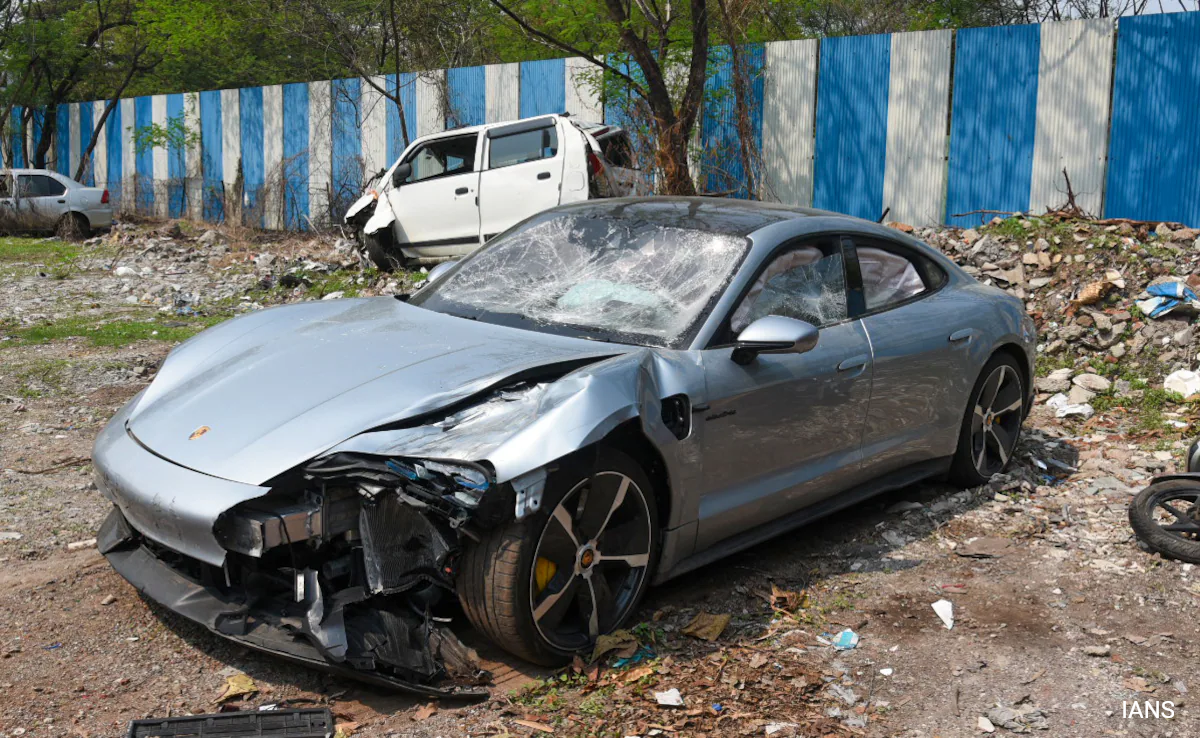

India’s laws regarding minors have evolved over the years, but the question remains whether they have gone far enough. The Juvenile Justice Act, 1986 was followed by the Rules of 2000, which were amended again in 2006 and 2010. This has been replaced by the current Juvenile Justice (Protection and Care of Children) Act, 2015. The horrific incident in Pune that claimed the lives of two young professionals, blamed on underage drunk driving and reckless driving, has raised serious questions about the functional efficiency of the provisions of the current law, especially Section 15 of the Act. The section, for the first time, clearly categorizes minors between the ages of 16 and 18 involved in heinous crimes. This is a clear departure from the earlier rules which treated all minors alike.
In the Pune case, the act of granting bail to a juvenile on trivial conditions such as writing an essay on road safety and cooperating with the traffic police was not only naive but also patently illegal, but the subsequent decision to send the juvenile to jail sought to “correct” this act.
A confusing process
Section 15 of the Act provides for a “preliminary assessment of heinous crimes” by the Juvenile Justice Board, which assesses the juvenile’s “mental and physical capacity to commit such crimes, ability to understand the consequences of the crime” and the circumstances surrounding the alleged crime. Expert assistance may be obtained for this purpose. Based on this assessment, invoking Section 18(3) of the Act, the Board may decide that the juvenile should be tried as an adult and transfer the case to a Children’s Court for trial. The Children’s Court may review this decision again. Even after trial, the death penalty or life imprisonment cannot be imposed due to the embargo under Section 21 of the Act.
However, these procedures are not simple or straightforward, and tribunals are often ignorant of the exact criteria for trying a child as an adult. Varun Chandra Thakur v. Master Bol and others (2022) the Supreme Court comprehensively addressed the deficiencies in the provision and directed to frame guidelines. The Supreme Court interpreted the proviso to Section 15 to mean that the committee shall be assisted by “experienced psychologists, psychosocial workers or other professionals”. The Supreme Court held that “it would be appropriate to frame appropriate and specific guidelines in this regard.”
Focus on social context
In April 2023, the National Commission for Protection of Child Rights (NCPCR) issued rules to facilitate effective application of Article 15. The commission stated that “existing mechanisms such as Social Investigation Report (SIR) and Social Background Report (SBR) are exhaustive” and assessments can be case-by-case. Hence, according to the guidelines, they are designed “to include the essential elements and basic mechanisms involved in a preliminary assessment to address ambiguity in understanding the process and procedures to be followed.”
The guidelines reminded authorities that “the purpose of the preliminary assessment is not to seek a confession from the child or to reach any conclusion” and warned that “any confession in the Social Investigation Report (SIR) should not be taken into consideration while conducting the preliminary assessment.”
Read | Pune teen’s blood sample dumped in dustbin, forensic chief arrested
The guidelines explain how to prepare a social background report detailing the child’s history, family background, individualized care plan, etc. More importantly, they state that “the final report should not contain any kind of statements or documents that may be incriminating in nature.” The guidelines include an appendix with specific “suggestive questions to include in the report” and a hypothetical illustration.
Violations are common
Despite these efforts, the situation on the ground has not improved significantly. Child in Conflict with Law v. State of Gujarat In a separate ruling, the Gujarat High Court set aside the order passed by the Juvenile Justice Board and directed it to conduct a fresh assessment based on the guidelines detailed by the court. Mustafa Khan Jabbar Khan v. State of Maharashtra (2023) the Bombay High Court has set aside orders of the Children’s Court (Sessions Court) and the Juvenile Justice Board enumerating violations of statutory provisions in matters of assessment. Ironically, violations remain the norm and proper compliance of the provisions is the exception.
This highlights the need for fundamental reforms in institutions and social outlook, given the complex nature of the problem. Those at the helm need to be properly selected and well trained.
Read | Rs 48,000 bill and pizza before breathalyser test: Pune Porsche accident investigation widens
Chapter 3 of the NCPCR guidelines talks about the role of Juvenile Justice Committees and other experts, but NCPCR does not seek to end the prevailing ad hocism in appointment of experts. It also envisages a situation where there are no experts in a district. In my view, to end this ad hocism, we need permanent expert committees at the state level. It is undesirable for the Juvenile Justice Boards to have a lack of clarity in selecting experts on a temporary basis to decide the fate of juveniles and their families. We need permanent committees and guaranteed tenure of experts to make the experts better accountable. The legal aid system also needs to be reformed so that the parties are free to choose their lawyers and the state bears the costs of such lawyers, even if the costs are somewhat higher. The current legal aid system often does not provide for this and forces a pool of lawyers appointed by the parties.
The law is no panacea
After all, to understand the reality on the ground, we need to go beyond the letter of the law and even court decisions. When minors commit heinous crimes, administrative authorities and the children’s parents need to be held accountable. Adequate compensation methods need to be developed, but no amount of compensation can be enough in such cases.
India is seeing a surge in violent crimes committed by boys between the ages of 16 and 18. In 2015, there were 853 recorded murders and 1,688 rapes committed by boys, according to government data.
Many factors influence juvenile crime today, including inadequate parenting, ignorance, poverty and affluence, along with family and social conditions. Laws have limitations and are hardly a preventative measure. The real solution must come from the homes and schools in India, for these are the places and environments that shape the child, despite having little or limited control over the environment. “A child is an uncut diamond,” said author Austin O’Malley. Let us not think that the law is the only tool to shape this diamond. The tools are many and often outside the law.
(Kaleeswaram Raj is an Advocate at the Supreme Court of India)
Disclaimer: These are the personal opinions of the author.
