

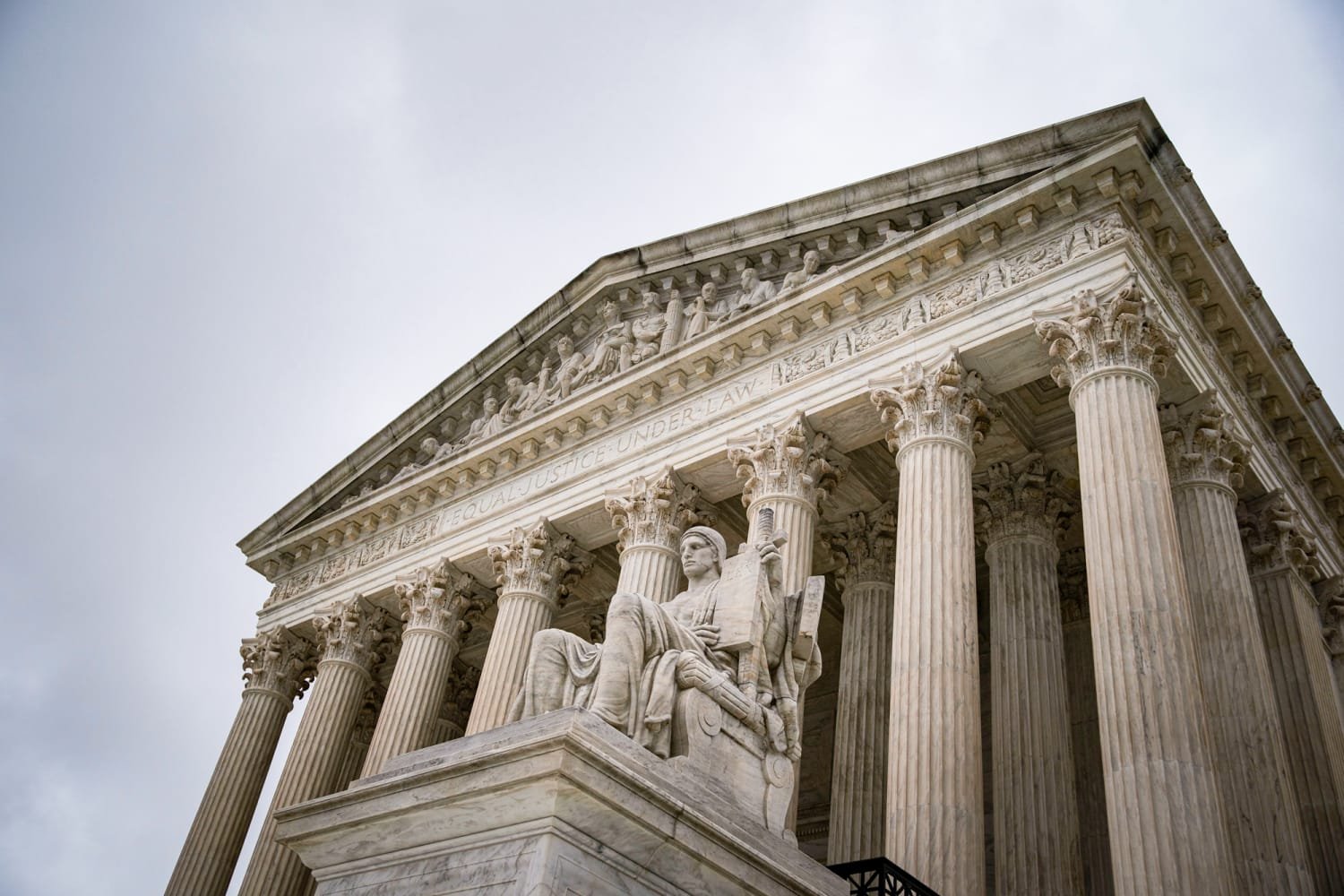
WASHINGTON — The Supreme Court on Thursday upheld a tax on investments in foreign companies in a case that some feared could jeopardize future wealth taxes on the ultra-rich.
The case had previously attracted attention after conservative Justice Samuel Alito refused to recuse himself from the case because of his ties to one of the lawyers who challenged the lump-sum tax imposed in 2017.
Alito was part of the majority that voted 7-2 to reject a challenge to the bill.
In his majority opinion, Justice Brett Kavanaugh noted that the ruling was narrow and unrelated to the possibility of a wealth tax that taxes assets rather than income.
“Nothing in this opinion should be construed as authorizing Congress to make a hypothetical effort to tax both an entity and its shareholders or partners on the same undistributed income earned by that entity,” he wrote.
“These are potential issues to resolve another day and we will not be addressing or resolving them here,” he added.
The provision was part of a major tax bill enacted by the Republican-led Congress and signed into law by then-President Donald Trump.
The case concerns the 16th Amendment to the Constitution, which gives Congress the power “to levy taxes on income.” The 16th Amendment gives Congress the power to levy taxes on income from foreign-owned corporations, even if the corporations do not derive income from the stock of those corporations.
David Rivkin, one of the lawyers involved in the lawsuit against the federal government, interviewed Alito for two articles published in The Wall Street Journal, addressing recent allegations of ethics violations on the court and Congress’s power to legislate on the issue.
Rivkin is representing Washington state residents Charles and Katherine Moore, who invested in India-based companies, but did not argue the case before the Supreme Court.
In 2005, the Moores invested $40,000 in a company called Kisancraft Machine Tools. The company made a profit, but they didn’t receive dividends. Instead, they reinvested the money in the business. As a result, the Moores didn’t pay taxes on what the U.S. government defined as income from the company from 2006 to 2017.
After the new law went into effect, the Moores paid about $15,000 in additional taxes and sought refunds, arguing that the taxes were illegal because the increase in value of their capital investments did not constitute income.
In a dissenting opinion, Justice Clarence Thomas, joined by fellow conservative Justice Neil Gorsuch, said the funds at issue should not be taxed because “the Moores have not actually received any investment gains.”
