

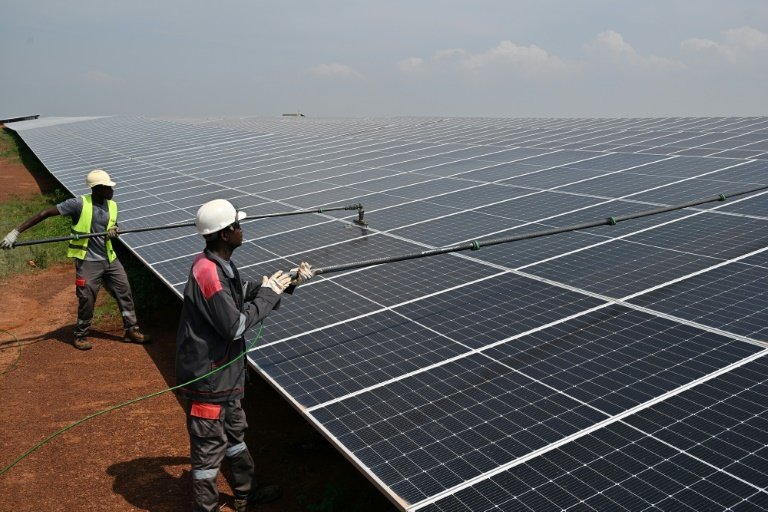
Investment in solar power has surpassed all other sources of electricity combined and is on track to reach $500 billion this year, the world’s top energy research institute said Thursday.
The International Energy Agency (IEA) said in a report that global investment in clean energy is expected to reach $2 trillion this year, double the amount invested in fossil fuels.
The company said its total investment in renewable energy and power grids will surpass its investment in fossil fuels for the first time in 2023.
“Clean energy investment is setting new records even in tough economic times, highlighting the momentum of the new global energy economy,” IEA Executive Director Fatih Birol said in a statement accompanying the agency’s annual World Energy Investment Report.
Companies and governments around the world are increasing spending on clean energy production to reduce the carbon emissions from burning fossil fuels that are causing deadly climate change.
Advertisement – Scroll to continue
The report noted that improving supply chains and falling costs are driving increased investment in so-called clean energy sources such as solar panels, wind turbines, electric vehicles, heat pumps and nuclear power.
Total investment in renewable energy and nuclear power is expected to be 10 times that currently invested in fossil fuel power generation, led by solar power, with China investing the largest proportion.
“Currently, more money is being invested in solar photovoltaics (photovoltaic panels) than all other electricity generation technologies combined,” the report states.
Advertisement – Scroll to continue
The cost of solar panels has fallen 30% over the past two years, and by 2024, “solar investment is expected to rise to $500 billion as lower module prices spur new investment.”
By comparison, global upstream oil and gas investment is expected to show a similar increase in 2023, before growing 7% to $570 billion in 2024.
But the IEA warned that clean energy projects remain prohibitively expensive, leading to “large imbalances and shortfalls in energy investment flows in many parts of the world.”
Advertisement – Scroll to continue
Excluding China, a renewable energy powerhouse, the $300 billion invested by emerging and developing countries “is far short of what is needed to meet the growing energy needs of many of these countries.”
“More work needs to be done to ensure that investment gets to where it is most needed,” Birol said.
The IEA said investment in renewable energy around the world needs to double by 2030 to meet medium-term global targets for reducing harmful carbon emissions.
