

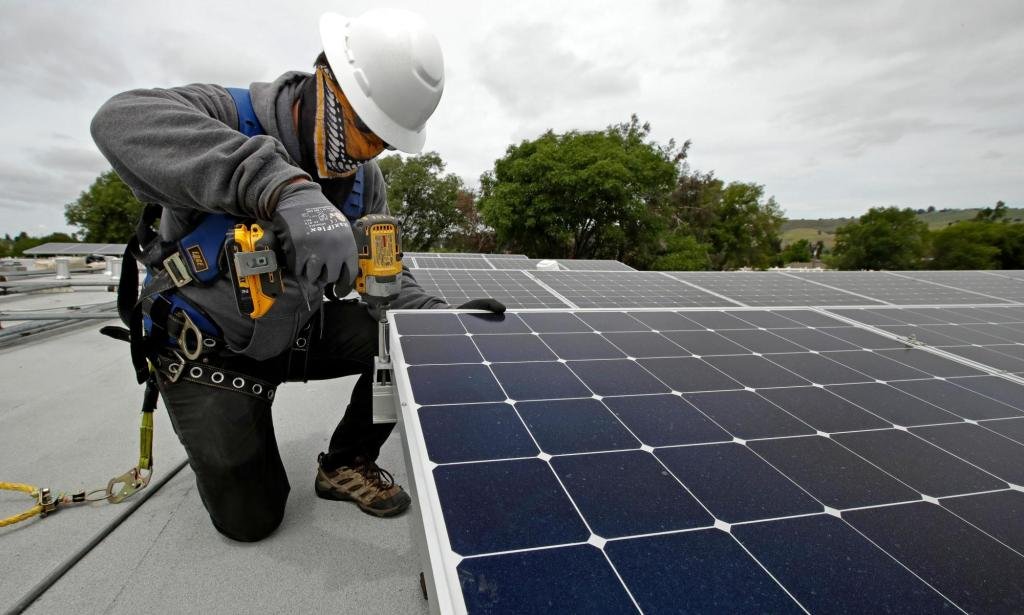
Luminato’s Gen Nashimoto installs solar panels in Hayward, California, on April 29, 2020. California air regulators are set to approve an ambitious plan for the state to become carbon neutral by 2045, which will require a rapid transition from oil and gas to renewable energy to power everything from cars to buildings. (AP Photo/Ben Margot, File)
Solar installations in California are in steep decline, with the market at its lowest in a decade.
This is exactly what solar advocates have been warning about in the wake of the California Public Utilities Commission’s recent decision to sharply and suddenly cut consumer incentives for rooftop solar — and exactly what utilities, who see rooftop solar as competition, have been hoping for all along.
The solar and storage industry is a resilient and innovative group. Rooftop solar combined with batteries remains a worthwhile investment for consumers, and even more so as Pacific Gas & Electric rates continue to rise. We will move forward and find ways to put solar and batteries back in the hands of everyone, from public schools to renters. But the market downturn is undeniable, and its impacts go beyond just impacting businesses and solar workers.
Thousands of solar workers have lost their jobs and many businesses have closed over the past year, while long-term damage has been done to our clean energy and grid-strength goals.
California residents are relying on local solar and storage to keep their electricity flowing and reduce air pollution, and it’s clear that PG&E and other investor-owned utilities can’t do it alone.
According to the California Energy Commission, rooftop solar power must double by 2030 to meet climate goals. Until last year, this impressive feat was within reach as working- and middle-class consumers increasingly adopted solar power. California was on pace to add an additional 2 million solar rooftops and hundreds of thousands of batteries by 2030, in line with its climate goals.
That movement has slowed since PG&E pressured the CPUC to eliminate net metering, the most important solar program encouraging new rooftop installations. The decision reduced the rate credits that utilities can offer new solar projects for the excess electricity they generate and put back into the grid, from homes to apartment complexes to schools.
As California’s population grows and electricity consumption soars, it will be essential that the state builds more energy capacity to keep up with demand. Some of that new capacity will come from massive solar farms in the desert and giant battery banks, but not all of it. California needs to build solar farms and batteries in its cities, too, or demand for electricity will exceed supply and the power grid will collapse again.
The CPUC said its decision to cut solar incentives was intended to ease the cost burden on households without rooftop solar panels, but the decision did not fully consider all the ways rooftop solar panels provide savings to everyone.
The CPUC assumes that consumers who install rooftop solar panels and take less electricity from the grid are a burden on all other consumers, even though the solar panels could save billions of dollars in generation and transmission costs. The CPUC’s disregard for shared benefits and inflated costs is one of the reasons the California Supreme Court agreed to review the decision.
When it comes to climate change, the costs of inaction are always greater, and the stupidest, most expensive thing California could do is wait to build all the clean energy we know we need.
It’s easy to see why the big utilities hate rooftop solar: More local solar generation means less money for the utilities, which in turn means less profit for the utilities. They want to hide the problem while eliminating competitors.
It’s not too late to transform California’s clean energy plan, but ignoring the impact of ill-advised regulatory decisions will do no good. Without an honest assessment of where we are, the state risks making further mistakes.
Californians have a right to know that their desires for clean air, reliable and affordable electricity, and choices in how they power their lives are supported by their state government.
This is how we get out of this climate chaos while reducing costs and keeping everyone powered. Through innovative, smart technology, we can build a better future. But we must work together and let the people, not PG&E, lead the way.
Bernadette Del Chiaro is executive director of the California Solar Power and Storage Association, the state’s largest clean energy trade group.
