

Universities have long used current events as catalysts to advance political causes, a trend that reached a fever pitch in 2020. Harvard and Stanford joined universities across the country in fully committing their institutions to the progressive racial justice movement sweeping the country.
But four years later, as their campuses were thrown into turmoil by the war between Israel and Hamas, both universities banned such organized advocacy. A Harvard faculty report released last week and approved by university officials said, “University leaders are hired in their capacity to lead institutions of higher education, not because of their expertise in public affairs. Thus, when they speak in their official capacity, they should limit themselves to matters within the scope of their university’s expertise and responsibilities, namely, the conduct of the university.”
Stanford University’s faculty senate adopted a similar resolution: “When speaking on behalf of the University, Stanford leaders and administrators should not express opinions on political or social controversies, except when these issues directly affect the University’s mission or relate to the University’s legal obligations.”
In other words, Stanford and Harvard want to remain culture-war neutral, with strictly defined exceptions. On paper, this is a welcome shift away from institutional pretensions toward academic mission. But skeptics are forced to ask whether the emerging consensus is durable, or whether it’s a convenient position that will itself collapse the next time it comes into contact with an all-encompassing progressive social movement.
The shift to official neutrality is instructive as the Israeli-Palestinian conflict escalates. Support for Israel is broadly speaking not so much an issue that divides liberals and conservatives, but rather an issue that unites conservatives and divides liberals. Leaders at elite universities are answerable to primarily liberal interests, such as activist student bodies and left-leaning faculty, but their alumni are presumably more politically diverse.
Institutional statements on the Israeli-Palestinian conflict, as university leaders have made on other issues, tend to divide and inflame university politics, since they are almost always from the progressive side. On the other hand, pro-abortion statements, or statements in support of, say, gay or transgender rights, are likely to meet with backlash, primarily from outside academia. University presidents are necessarily political, and it is in their interest to avoid creating friction within their base (as in the case of Israel and Gaza) and to unite instead against a perceived external threat (as in the case of issues like Black Lives Matter).
Pivot is all On the Middle East, university officials eventually began to abandon the explicitly progressive commitments they had built up in the years before the October 7 attacks, and Stanford heralded a new policy last March. After progressive law students shouted and blocked a conservative federal judge from speaking, the law dean (now the university president) issued a statement that brushed off students who had expected the university to condemn the judge’s views. “Our commitment to diversity, equity, and inclusion does not intend for the university to take the form of announcing institutional positions on the broad range of current social and political issues,” she wrote.
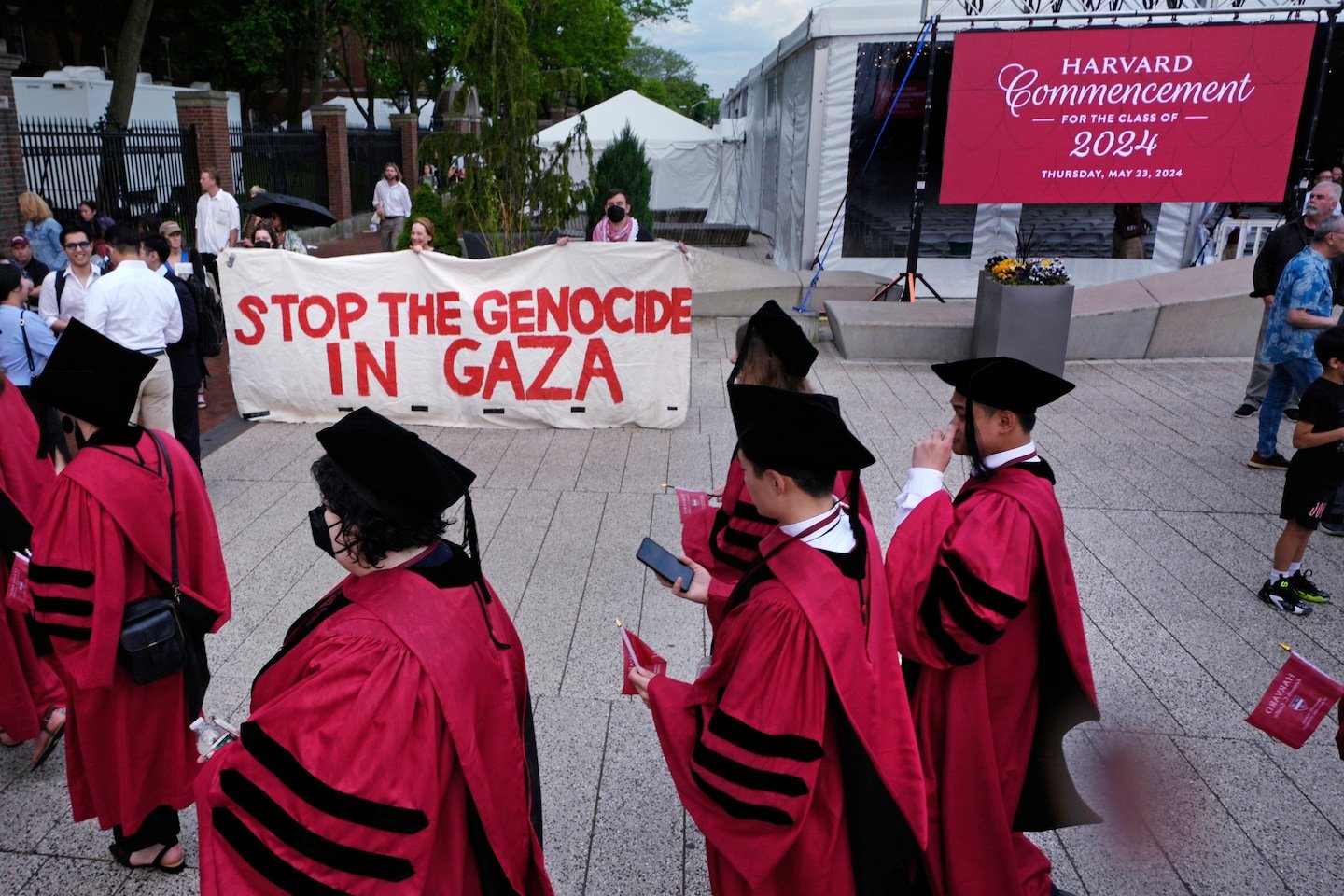
Yet it is clear that institutional neutrality in higher education has taken on greater urgency in the aftermath of the October 7 Hamas massacre and Israel’s subsequent war on Gaza. The controversy over the war has led to the resignation of two Ivy League presidents, campus protests, and new dilemmas over free speech. For universities trying to navigate this political environment, liberal neutrality may indeed seem principled, but it may also seem appealing as a matter of self-preservation.
In contrast, the self-preservation instincts of campus leaders have turned in the opposite direction in the wake of the murder of George Floyd. At the time, condemnations of racism and calls for progressive change were perhaps Politicalper se. They were widely shared in academic circles.
The laudable statements adopted by Harvard and Stanford contain an escape route that university leaders can use the next time they feel they must take political action. In the statements, leaders correctly acknowledge that they must defend the university’s “core functions” (Harvard) or “mission” (Stanford). Elite universities are rarefied microcosms of American society, directly affected by issues such as endowment taxes, but also indirectly affected by issues such as race relations and the war in the Middle East. If an issue seems important enough, deans and presidents can decide that it is core to the university’s mission.
If anything good comes from the campus fights over Israel, it may be that universities find that cause-based politics in service of identity groups is institutionally stalled. But principles are not ratified when it is convenient to announce them; they are ratified when implementation is risky and requires courage. A second Trump administration would bring a widespread sense of crisis back to liberal institutions, quickly making Harvard and Stanford’s beautiful commitment to liberal neutrality inconvenient.
