

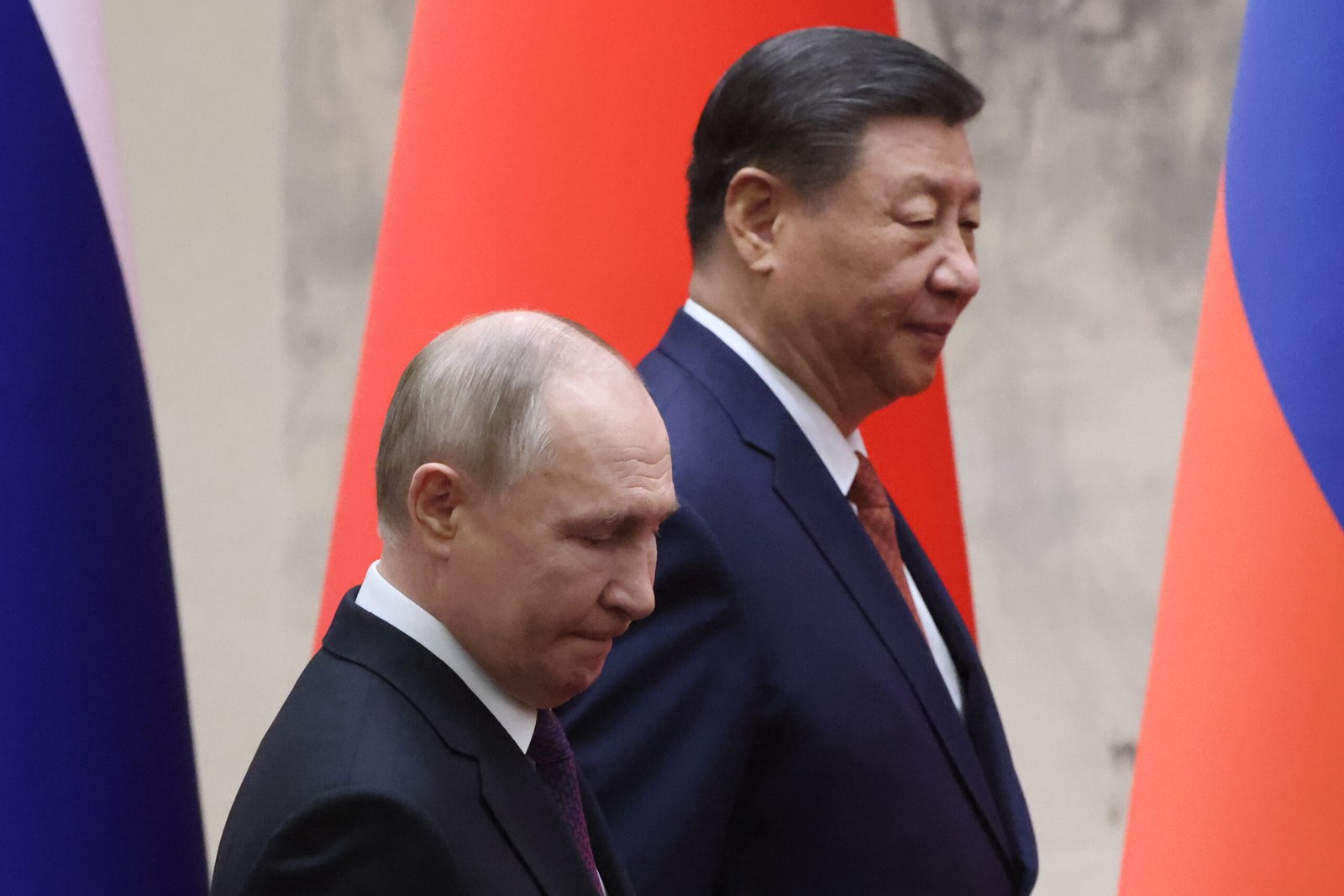
In recent years, the concept of “containment” has made a surprising comeback in U.S. foreign policy circles, with strategists proposing a “neo-containment” strategy aimed at Russia and China. The idea is modeled on the U.S.’s Cold War strategy, Quarantine Line In order to limit their influence, they are surrounding these countries using economic and military means.
But this approach is fundamentally flawed and risks not only failing but also exacerbating global tensions. Indeed, as scholars Nikolai N. Petro and Arta Moeini argue, the current trajectory of the Russia-Ukraine war highlights the dangers of underestimating Russia’s willingness to defend its perceived vital interests, even at great cost to itself.
The original containment strategy, devised by George Kennan, was tailored to the unique geopolitical circumstances of the Cold War. It sought to contain Soviet expansion through a combination of military deterrence and economic incentives, focusing on strategically important regions while avoiding direct conflict. Kennan’s approach was nuanced, recognizing the limitations of military power and emphasizing the need for political and ideological engagement.
In contrast, today’s proponents of “neo-containment” seem to have misunderstood the nuances of the original doctrine, arguing for a blanket strategy that simultaneously targets both Russia and China without taking into account the specific challenges each faces and the very different global situations in which we find ourselves today.
Consider the economic sphere. The new containment strategy relies heavily on economic isolation as a coercive tool, as seen in the recent round of sanctions imposed on Russia. Elements of this approach made sense during the Cold War: Western countries had a near monopoly on advanced technologies and economic resources, which they used to provoke their allies and deter their enemies.
However, today the global economic landscape has changed dramatically. Unlike the USSR, modern Russia and China are deeply integrated into the global economy. China in particular has emerged as a manufacturing powerhouse and is deeply integrated into global supply chains. Thus, a strategy of economic isolation is much less feasible for the United States and potentially much more self-defeating. This can be seen in current attempts to “rehome” manufacturing from China. Supply chains have been lengthened while maintaining the same starting and ending points. Products still come from China, but are transported through intermediate countries or undergo final-stage assembly in intermediate countries, making them appear decoupled from China.
Other kinds of sanctions and trade barriers, while certainly disruptive and costly, are unlikely to have the desired effect of crippling these countries’ economies. First, these countries will only experience the same supply chain extension process described above. Consider that in the past two years, Serbia’s exports to Kyrgyzstan have increased by 6,200 percent. As one economist points out, “Kyrgyzstan is undoubtedly a key hub for transshipping Western products to Russia.” In a broader sense, the continued imposition of sanctions on Russia and China, as well as on countries that may be taking advantage of current opportunities, such as Kyrgyzstan, risks drawing these countries closer together and accelerating the development of alternative economic networks, such as the BRICS+ group, which seek to build a parallel world economy less dependent on Western institutions and currencies.

Contributor/Getty Images
But beyond the realm of trade and finance, the possibility of a military conflict is of greater concern. One of the major flaws of the new containment strategy is that it does not take into account the principle of “escalation advantage” in regions adjacent to Russia and China. During the Cold War, the United States carefully avoided direct military engagement with the Soviet Union in areas considered important for the Soviet security; otherwise, Moscow would have seen it as a major threat and would have easily triggered a nuclear war. But today, Western countries are trying to project power in areas where Russia and China have significant military advantages, such as Ukraine and the South China Sea.
This aggressive posture increases the risk of direct conflict, with potentially disastrous consequences. Miscalculation in the Indo-Pacific could trigger a dangerous escalation of tensions with China, whose military power and regional influence are growing significantly.
Such miscalculations could also be caused by ideological reasons. The ideological aspects of the containment policy during the Cold War played a crucial role in its success. Kennan’s strategy envisioned a future in which the Soviet Union could eventually be reintegrated into the international community after the collapse of Communism. This hopeful vision offered the Soviet people an alternative and ultimately inspired change.
In contrast, the New Containment Strategy lacks a positive vision for Russia or China. It portrays these countries not simply as strategic competitors but as existential threats that must be defeated and indefinitely isolated or dismantled. This approach alienates Russian and Chinese leaders and entrenches nationalistic sentiments, making diplomacy, let alone future detente, even more difficult.
Thus, neo-containment is not only a flawed approach, but also a misapplication of Cold War logic to a fundamentally different world situation. It risks intensifying conflict, damaging the U.S. and global economies, and alienating potential allies. Rather than clinging to an outdated, aggressive, and unsound strategy, the United States should adopt a more nuanced approach, drawing on the principles of Washington realism. This philosophy advocates a foreign policy that prioritizes national unity, economic self-reliance, and pragmatic diplomacy, and emphasizes the importance of engaging with the world in a manner that is consistent with core U.S. interests and values. It recognizes the need for strategic partnerships based on mutual respect and common goals, rather than coercive tactics and unilateral demands that are unlikely to be effective.
By fostering dialogue, cooperation, and mutual respect, the United States can build a more stable and prosperous international order — one that reflects the complexities of the 21st century, not the dualism of the Cold War. This approach offers a more hopeful vision of the future that is consistent with America’s enduring principles and role as a global leader.
Carlos Roa is an associate Washington fellow at the Institute for Peace and Diplomacy and a visiting fellow at the Danube Institute. He is a former editor in chief of The National Interest magazine, where he currently serves as a contributing editor.
The views expressed in this article are the author’s own.
Rare knowledge
Newsweek is committed to challenging conventional wisdom, seeking common ground and finding connections.
Newsweek is committed to challenging conventional wisdom, seeking common ground and finding connections.
