

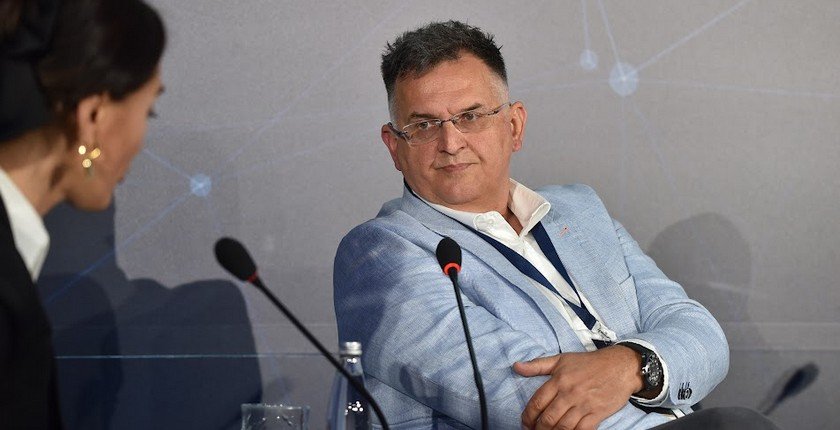
Lafarge Serbia, Serbia’s leading cement producer, is not lacking the knowledge, equipment and investment needed to adapt to the new business environment following the introduction of a European Union carbon border tax, but it needs support from Serbian regulators on its decarbonization journey, said the company’s CEO Dimitrije Kněginic.
Speaking about the EU’s Carbon Border Adjustment Mechanism (CBAM), Knieginic noted that from 1 January 2026 the cement industry will have to pay for every tonne of CO2 emitted. According to him, this means that companies will have to significantly change their operations to adapt to the new situation.
Knieginich: We have made all the necessary investments, we just need the government’s understanding.
“On this path, we have no shortage of know-how, skills and facilities. We have invested everything we had to invest. All we need is the understanding of the Serbian government so we can untie this knot and be ready for January 1, 2026,” Kněginic said on the sidelines of the Belgrade Energy Forum 2024.
He stressed that Lafarge is a leading producer of construction materials in Serbia and is the leader in the production of cement, ready mixed concrete, stone and crushed stone.
Speaking at a panel titled “Decarbonization of Industry and Business in Response to the Green Agenda and Carbon Pricing” held as part of the Belgrade Energy Forum (BEF 2024), Kněginić said the cement industry needs proper regulation to encourage decarbonization, not subsidies to reduce carbon emissions.
The solution already exists and we just need to copy EU regulations
“We don’t need people inventing solutions, the solutions already exist, and we don’t need to reinvent the wheel, we just need to apply what already exists in the EU and copy EU law from 1 January 2026 onwards,” Knieginich told the panel.
One solution, he said, is for authorities to allow at least three cement plants in Serbia to set up cogeneration plants so that non-recyclable waste from city landfills can be used to produce energy.
Post View: 1
