

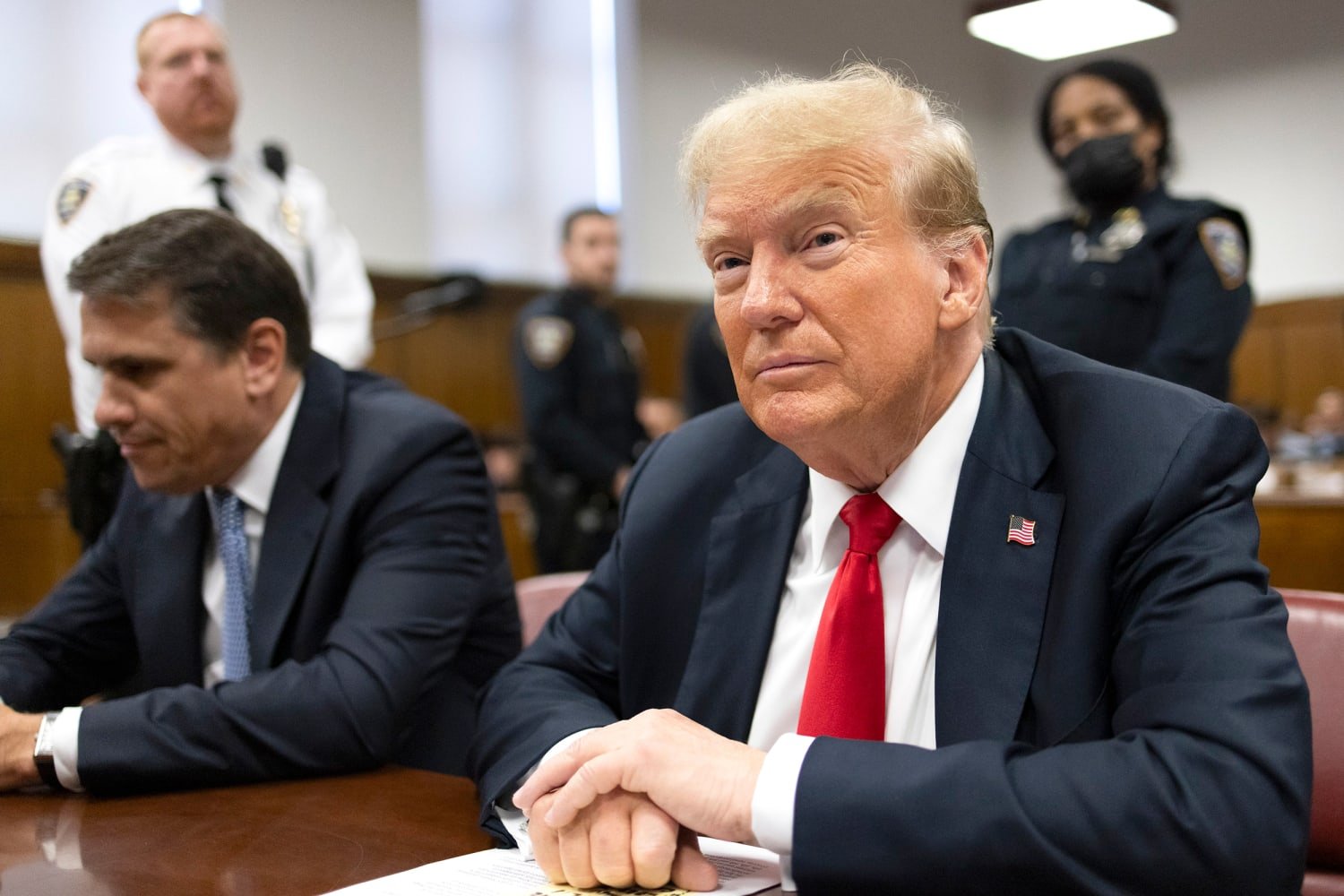
The defense has finished its testimony. The prosecution has finished its testimony. And on Wednesday morning, the jury will begin deciding on a verdict in the New York prosecutor’s trial of Donald Trump, the first criminal trial involving a former president.
“You have the power to hold this defendant accountable,” prosecutor Joshua Steinglass told the jury at the end of 4 1/2 hours of closing arguments that extended into Tuesday night.
Deliberations will begin after State Judge Juan Marchan instructs the 12-person jury on the law they must consider when deciding the landmark case. His instructions are expected to last about an hour.
The jury could reach a verdict as early as Wednesday afternoon, but the case could take several days and stretch into next week.
Citizens across the country are waiting with bated breath for the verdict, with little insight into the jury’s deliberations, which are being held behind closed doors.
Manhattan District Attorney Alvin Bragg’s office has charged Trump with 34 counts of falsifying business records related to hush money paid by his lawyer, Michael Cohen, to adult film star Stormy Daniels in the closing days of the 2016 election. Prosecutors allege that Trump reimbursed Cohen through a series of payments that were falsely listed as legal expenses.
The district attorney’s office could elevate the charge, normally a misdemeanor, to a felony by arguing that the records were altered to cover up another crime. Steinglass suggested that Trump was trying to cover up a host of crimes, including violations of state and federal election laws.
“President Trump is innocent. He did not commit any crime and the District Attorney has not met his burden of proof. Period,” Trump lawyer Todd Blanche told the jury.
He argued that the records were falsified not because Trump had not repaid Cohen for the payment to Daniels, but because he was paying Cohen for general legal services because he was Trump’s personal lawyer at the time.
Steinglass noted that Trump had previously publicly acknowledged repaying Cohen, and called the explanation surprising.
Cohen was the prosecution’s key witness, and Blanche told jurors he couldn’t be trusted because of his history of lying. “Mr. Cohen is literally the MVP of lying,” Blanche said.
Steinglass acknowledged that Cohen had lied in the past but said he often lied to protect Trump. Trump’s lawyers’ use of those lies to try to undermine Trump’s credibility was “what some might call brazen,” he said.
The trial began with jury selection on April 15. Trump, who said before the trial began that he would “absolutely” testify, did not take the stand in his own defense.
If convicted, Trump faces up to four years in prison.
