

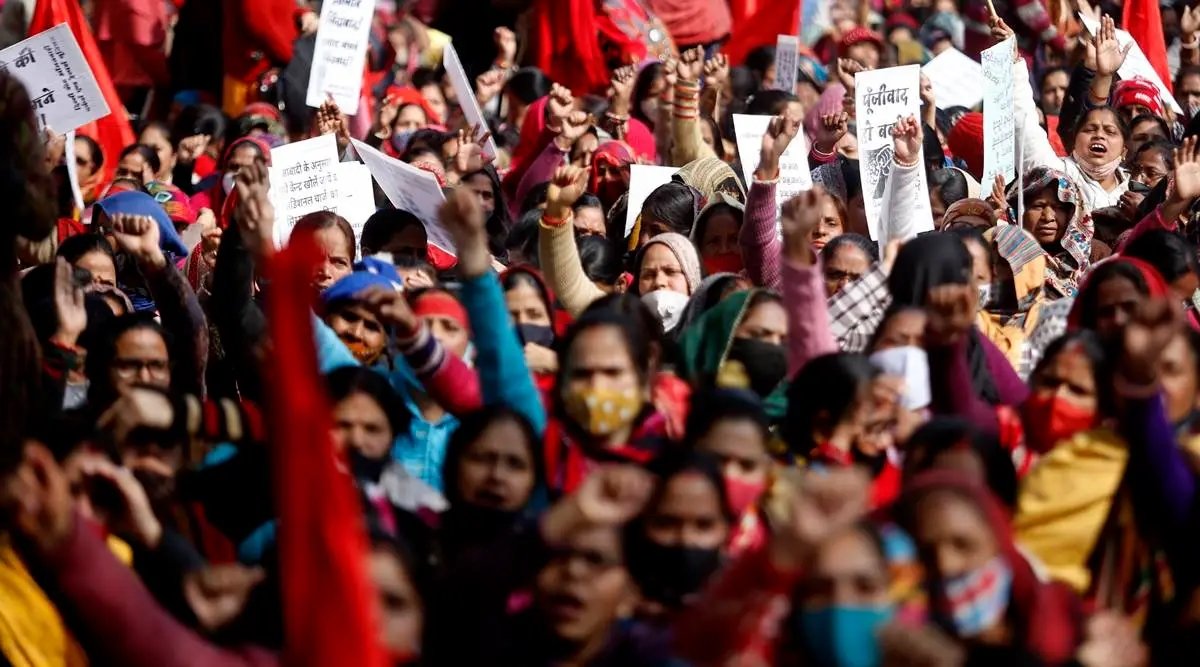
“Cook it in your main kitchen“(He stops in front of the door so I can go to the kitchen),” said a BJP Mahila Morcha member when we sat down to discuss booth management and door-to-door canvassing strategies in her constituency in 2013. This sentiment, highlighting the unique advantage that women party members have in reaching out to women voters, is one I have heard countless times in conversations with women party members across political parties. Since 2012, I have engaged with thousands of party members and observed numerous elections and campaigns across the country.
Unlike many election observers and political scientists who mostly talk to men, I spoke to both male and female party workers. A striking pattern emerged every election cycle: women party workers build stronger, finely developed party organisations, often stretching from the district level to the polling booth level. This trend is evident not only in the BJP but across parties, especially those that win panchayat and municipal elections. What captured my imagination was not just the increase in women voter turnout or the proliferation of welfare schemes favourable to women. It was the rise of ordinary, unsung women party workers, behind the scenes, who play a crucial role in shaping the political landscape. Their often overlooked contributions are crucial to the success and dynamism of India’s participatory democracy.
Indian democracy is witnessing a remarkable phenomenon: women’s electoral turnout is not only at par with, but even surpassing that of men. Though there was a slight dip in voter turnout in the recent elections, the overall trend remains strong. The surge in electoral participation coincides with endless distributive promises, including the recently passed Women’s Reservation Bill in Parliament. Why do political parties attract women? The rise of grassroots women party members or “party women” is driving this new era of female voter-political party connect.
Academic studies and political commentators have largely ignored these women, or worse, caricatured them as symbolic figures. But their active participation at polling stations and as campaign workers, along with advances in welfare and gender equality systems, have forced women to reflect. The traditional notion that Indian women voters lack agency and independence from the family structure has been discredited. After all, why do political parties promise women welfare schemes when telling their husbands is enough? Or why are women turning out to vote in increasing numbers and supporting the BJP? Voter turnout precedes election promises, suggesting that women are not voting because of these promises, rather, the promises are a response to increasing female turnout and political engagement.
What does my research suggest? In the last three decades since the 73rd Amendment, women have not only run but also won in panchayat and local elections. To remain competitive and rise to the top, these ambitious women have strengthened local party structures, ending the days when women’s party wings were only led by elites.


A look at the Mahila Morcha flags of any political party makes this change clear. Women’s organisations today include district presidents, ward presidents, booth-level managers and panna pramukhs, with significant variation within and across political parties, across time and place. Women running for elections often rely on loyal party workers rather than men, as women are more likely to claim credit for mobilising fellow women. Bike rallies organised by women party workers are one of the few women’s party events that make media headlines and are a good example of how women can claim credit and secure party tickets ahead of elections.
How does grassroots mobilization by ordinary women party workers explain the gender shift in Indian politics? Consider voter turnout. India boasts of the strongest door-to-door campaigning, with post-election surveys showing that around 60% of voters are contacted by party workers in every national election. Until 2009, men dominated campaign mobilization, reaching out primarily to male voters. Since then, thanks to two decades of quota elections and effective grassroots mobilization, women campaigners have increasingly taken up the role of voter mobilization. By entering the home, they can reach both women and men more equally.


These efforts have revealed the potential of women votes and prompted political parties to launch targeted election campaigns to garner support from women voters. These distribution campaigns are a direct outcome of the labour of women party members. Apart from elections, women party members also organise innumerable events from tree plantation drives to dharnas and seva abhiyans, mobilise women from various social groups like self-help groups (SHGs) and anganwadi activists in party activities and keep them politically engaged in between election cycles. While the availability of administrative data on voter turnout provides clearer insights into electoral participation, women’s participation goes beyond the polling booth. We are witnessing women taking part in protests in an unprecedented way, with the recent farmers’ protests being a case in point.
What is the reason for the BJP’s dominance among women voters? The BJP benefits the most from the increasingly vocal, most fragmented and most active female electorate. Women in the BJP party have played a major role in mobilizing women as voters because the party offers women more opportunities for advancement and career development, especially in the absence of clan or wealth power. Other parties’ inability to offer opportunities hampers their ability to attract and elect women candidates who can foster strong grassroots organizations. Sadly, no political party offers real opportunities for women, but the BJP has done relatively well. Moreover, the BJP offers a mix of religious ideology and patriotic narrative that helps Hindu women overcome social and family barriers to join the party.
In addition to voter turnout and welfare, gender merit claims will play an increasingly central role in shaping party-voter connect in India. This trend will deepen with the implementation of reservations for men and women in parliament. Will increased women’s participation be a strengthening force for Indian democracy or will it exacerbate its decline? What is clear is that women’s political agency is essential to the future of Indian democracy.
The author is an assistant professor of political science and international affairs in the Department of Politics and the School of Public and International Affairs at Princeton University.
© Indian Express Ltd.
First uploaded: May 29, 2024, 7:30 AM
