

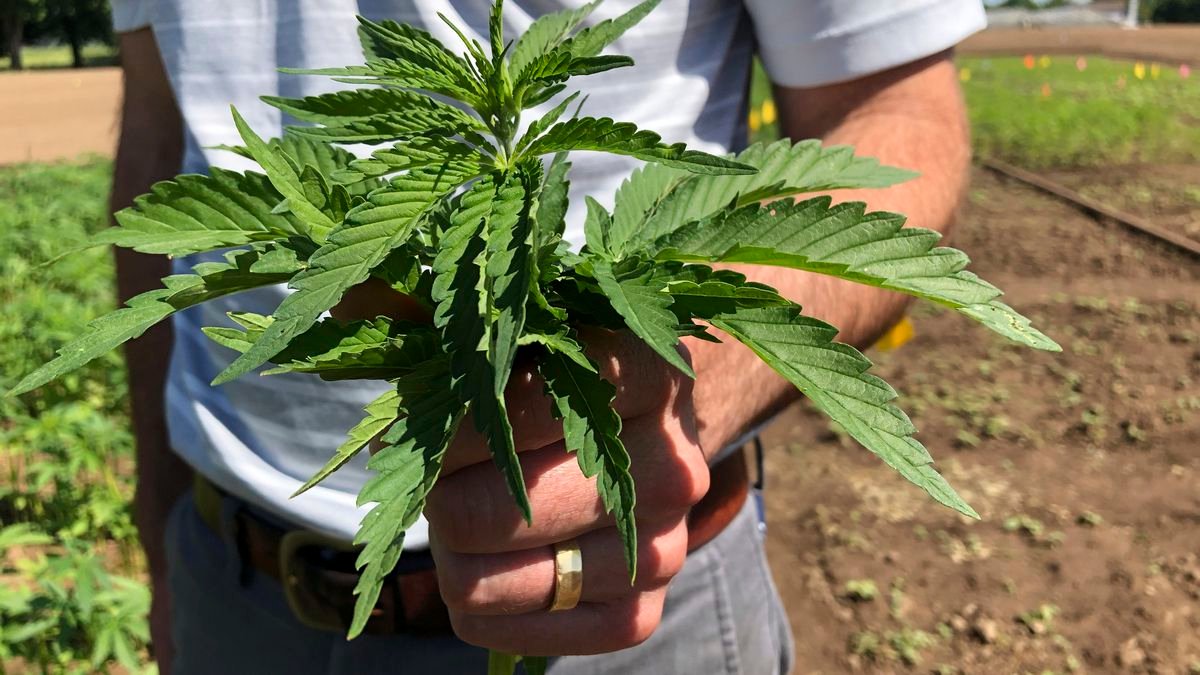
Floridians will be able to continue purchasing and using Delta 8 and other hemp products after Gov. Ron DeSantis on Friday vetoed a bill that sought to restructure the state’s marketplace.
As SB 1698 made its way through Florida’s legislative process, it drew opposition from consumers who say they need the products for their physical and mental health, and from businesses that say the bill would put thousands of Floridians out of work.
Governor DeSantis appeared to agree with the bill in his veto letter, saying the bill would “impose severe regulatory burdens on small businesses” and “dramatically disrupt and harm many small retail and manufacturing businesses in Florida.”
Florida’s hemp market is expected to generate more than $10 billion in sales in 2022 and employ more than 100,000 people, according to a study commissioned by a hemp trade group.
DeSantis said he would urge the Legislature to return to the topic during the next session to create a regulatory framework for Florida’s hemp market.
“Smart, non-arbitrary regulation will provide much-needed stability for businesses and consumers alike, protect public health and safety, allow legitimate industries to thrive, and remove bad actors from the marketplace,” DeSantis said.
He cited three areas that Congress should focus on: quality control, product packaging requirements and considering how and where hemp products can be sold.
As of earlier this week, the governor’s office had received more than 13,000 calls, emails and letters from people and groups calling for a veto, though fewer than 100 people had contacted the governor’s office in support of the bill.
Those opposed to the bill included consumer groups who feared that its passage would affect CBD, which is non-psychoactive.
The bill seeks to ban the sale of delta-8 hemp products, which produce the “high” feeling, and would also ban hemp products containing other cannabinoids, such as delta-10, THC-V and THC-P, and would also limit the strengths of hemp products that are still permitted.
Because the cannabis plant contains more than 100 cannabinoids, even non-psychoactive products may contain traces of cannabinoids, which is why some CBD users feared a total ban would mean the products would disappear from store shelves.
Paige Figi, executive director of the Access Now Coalition, opposed the bill because of its impact on CBD, a CBD product named after her daughter, Charlotte’s Web, whom she used to manage her daughter’s epilepsy.
Ms Figi said for families like hers, access to the CBD was a matter of life and death.
Senators voted unanimously in favor of the bill, but the House was split, with 14 Republicans voting against it — a notable split in a Congress where Republicans are typically largely united on final votes.
/cloudfront-us-east-1.images.arcpublishing.com/tbt/3ZG7PKPGXZHMNE76F7AGCEZ5DA.jpg "Catch up on top stories before rush hour")
Catch up on the top news before rush hour
Become a Times subscriber and receive our afternoon newsletter, “The Rundown.”
Every week we bring you Tampa Bay’s biggest environmental, political, business, education and cultural news.
You’re signed up!
Want more of our free weekly newsletter delivered to your inbox? let’s start.
Explore all options
Several Democrats who opposed the bill said its passage would only benefit large medical marijuana dispensaries, who would take business from cannabis stores that are closed.
In November, Florida voters will be able to decide whether to legalize recreational marijuana in the state. If the amendment passes, only medical marijuana licensees will be able to sell to recreational buyers. Governor DeSantis has voiced his opposition to the marijuana amendment.
