

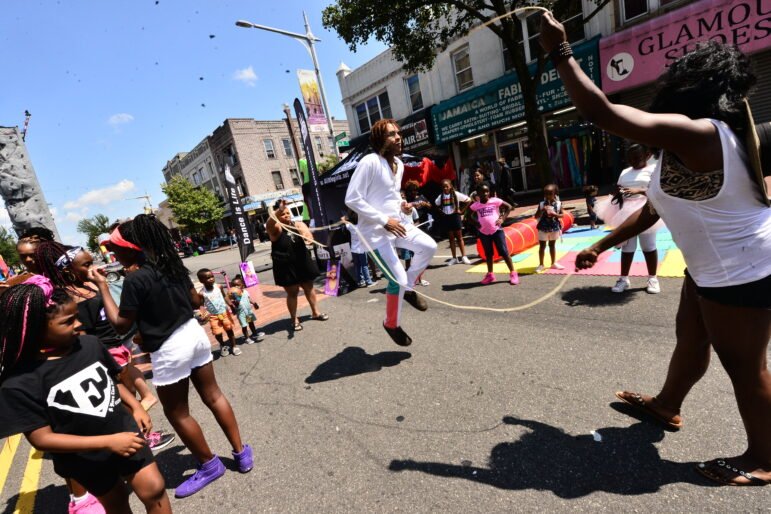
“As warmer weather returns and summer approaches, we are reminded that New York City’s streets, sidewalks, parks and squares are our public property. New Yorkers should be able to dance on their streets, sidewalks and curbs if they want to.”
Provided by the author
Block parties are an iconic New York experience: they brought the community together, provided space for kids to run around and play, and gave birth to hip hop. But now they’re nearly impossible to plan because New York City has made permits so hard to get. They must be applied for at least two months in advance, and they can’t be rescheduled in case of rain. And that’s just to close down one block for half a day. This is just one of many types of simple public space activations; red tape makes it excruciatingly difficult for community groups to use streets and public squares.
As warm weather returns and summer approaches, we are reminded that New York City’s streets, sidewalks, parks and squares are our public commons. New Yorkers should be able to dance in the streets, sidewalks and curbs if they want to. But for most New Yorkers, these public spaces outside our homes are hidden deep in a maze of paperwork and frustratingly unavailable and inaccessible. New York City must reform its permitting process to work in favor of, rather than against, community members who want to organize activities in public spaces.
Many of the permitting rules for public spaces haven’t been updated in decades and no longer reflect how New Yorkers want to use them today. The same outdated and cumbersome process applies to liability requirements for public events. Even if a gathering is just to play the board game Jenga, 34th Street Open Street in Queens must be insured for $1 million, the same as a large, one-time dance performance with a stage and speakers. Even if Jenga gatherings are held regularly, organizers must submit separate applications for each event, making planning such a routine event surprisingly time-consuming. Open Street organizers sometimes don’t know until the day before whether their event has been approved by the city.
There are reforms that would improve this street permit process. The City should create a single portal that provides access to all street activity permit types. There should be permit types that cover a range of recurring events to reflect the new reality of Open Streets and the integrated activations that are emerging in every neighborhood in the City. The City should strive to develop a sliding scale of liability based on the intensity of activation.
Street permit reform isn’t just about access, it’s also about social equity. In areas without business improvement districts (BIDs), historic heritage organizations, or park conservancies, the burden of applying for these permits falls on volunteer local residents who already perform important tasks like fundraising, coordinating activities, and providing the maintenance services necessary for events to be successful. Many communities don’t have the time or resources needed to cut through the jungle of bureaucracy that lies ahead.
Mayor Eric Adams campaigned on improving public spaces, and his administration frequently pushes ahead with large-scale capital projects, like the redesign of Kim Lau Plaza to transform the city’s commercial and tourist hub, and new people-centered amenities to be built in the Flatiron District as part of the Broadway Vision plan. These flagship projects demonstrate on an epic scale what’s possible in our public spaces, and New Yorkers appreciate it.
Now is the time to give New Yorkers, every borough, every neighborhood more power over their public spaces. Permit reform is the next step to create more equitable, accessible, and revitalized public spaces. It’s time to cut the red tape and let the block parties go!
Onerous permit policies are just one aspect of the current state of public spaces that has exhausted many New Yorkers. By making it easier to host fun events, let’s make this a year of excitement for both participants and the custodians of our precious public spaces.
Jackson Chabot is Director of Advocacy and Organizing at Open Plans. Elana Elenberg is Director of Strategic Partnerships at the Design Trust for Public Spaces. Rebecca Makris is Senior Manager of Strategic Initiatives at the New York City Council for the Arts. They are members of the Public Spaces Leadership Coalition, a partnership dedicated to improving the condition of public space for all New Yorkers.
