

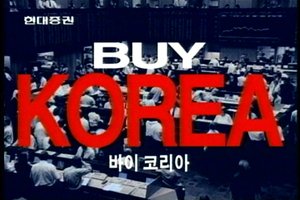

In the first half of this year, foreign investors continued their “Buy Korea” trend, focusing on semiconductor companies such as Samsung Electronics and SK Hynix. As a result, the foreign ownership rate in the KOSPI market increased significantly to 35.55%.
According to statistics released by the Korea Exchange on the 21st, foreign investors made net purchases of a total of 22.62 trillion won (approximately $16.26 billion) in the KOSPI market from Jan. 2 to June 20. This raised the foreign ownership ratio in the KOSPI market to 35.55% in terms of market capitalization from 32.72%, the highest level since May 7, 2021.
Foreign investors are being seen as the main driving force behind the stock market. On June 20, when the Korea Composite Stock Price Index surpassed the 2,800 mark for the first time in two years and five months, analysts attributed the milestone to active purchases of semiconductor stocks by foreign investors. “Foreign investors concentrated their purchases of semiconductor stocks, which led to a steady rise in related stock prices,” explained Seo Sang-yeon, an analyst at Mirae Asset Securities.
Noh Dong-gil, a researcher at Shinhan Investment and Securities, also pointed out, “Since last year, the correlation coefficient between net purchases by foreigners and trends in the Korea Composite Stock Price Index has recorded 83%. Since the Federal Open Market Committee (FOMC) meeting in November last year, when disinflation expectations began to take shape, foreigners’ net purchases of the Korea Composite Stock Price Index reached 27.4 trillion won. The domestic stock market has fluctuated some along the way, but ultimately it has moved in tandem with net purchases by foreigners.”
Continued net purchases by foreign investors throughout the first half of the year were influenced by several factors, including expectations for enterprise valuation programs, foreign capital outflows from the Chinese stock market, expectations of interest rate cuts by the US Federal Reserve this year, optimism over the rise of semiconductors and artificial intelligence (AI), and the depreciation of the South Korean won against the dollar.
While the KOSPI’s foreign ownership ratio is already high, analysts expect the upward trend to continue in the second half of the year. Korea Investment and Securities said, “The foreign ownership ratio rose to its highest level since 2021. Although the buying momentum has slowed since April, the upward trend remains. The possibility of a stronger won and expectations for policies such as value enhancement programs are expected to sustain buying by foreign investors.”
“There is a high possibility of additional foreign capital inflows from the perspective of ownership ratios as well. Foreign ownership ratios based on market capitalization of KOSPI and KOSDAQ are 34% and 9.4%, respectively, and have now recovered to their average levels since 2010. Amid the COVID-19 pandemic, they have risen to 36.8%. Taking into account KOSPI’s market capitalization, a 1% increase in ownership ratio would require net purchases of around 20 trillion won. Therefore, given the considerable scale of the required net purchases, it is difficult to argue that further inflows are unlikely,” said Luh.
