

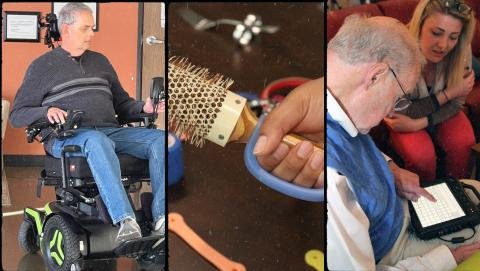
“Over the last decade, technologies have been developed that allow people to preserve speech or speak through machines, and the latest advances in ALS are so-called brain-computer interfaces, or BCI devices,” says Dr Dave.This technology records brain signals and translates or decodes them, allowing people who cannot move to control objects in their environment using their mind.
“So someone who can’t speak can now speak by thinking, and type by thinking. In the last 10 years since the Ice Bucket Challenge, this field of brain-computer interfaces has changed and is really at the cutting edge of technology,” he said.
Another technology that has gained increased popularity over the past five years, says Dr Dave, is adjustable wheelchair seat height. When you meet someone in a wheelchair, they’re usually sitting low and, like most people, they want the opportunity to make eye contact.
“Technology has improved and now we can raise the seat of a wheelchair. This change allows us to not only talk to him at eye level, but also open refrigerators and cupboards that we couldn’t do before. These are types of technology that don’t usually get much attention, but are so important in managing ALS.”
