

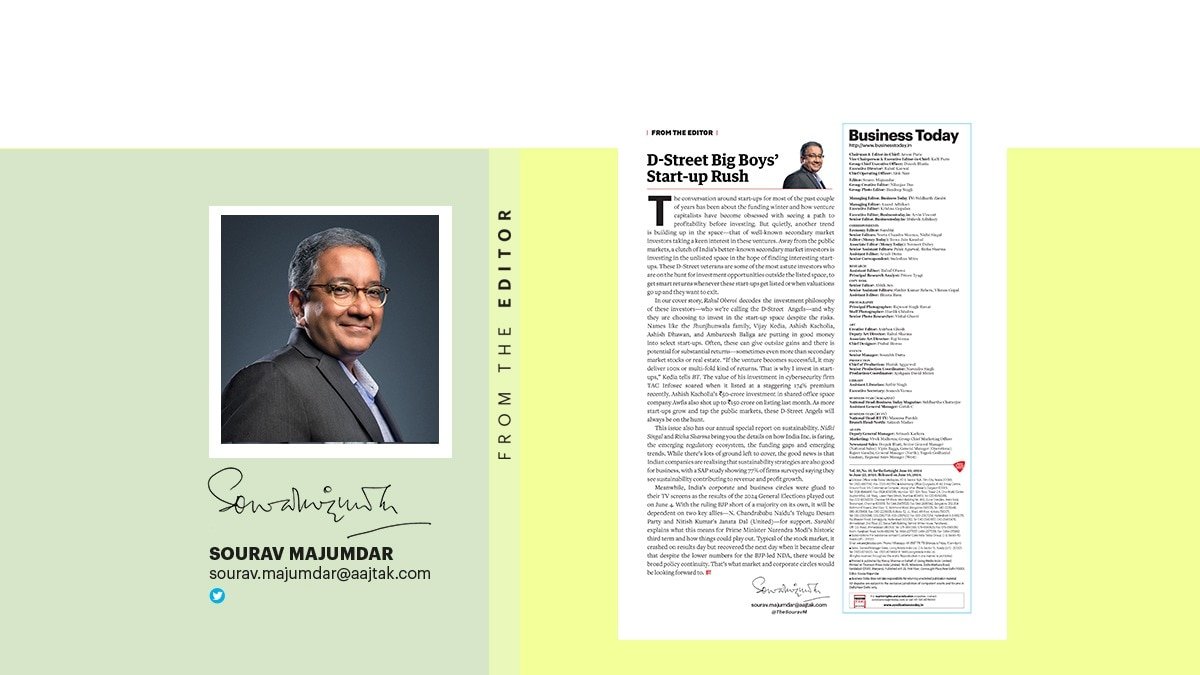
For the past few years, much of the discussion around startups has been around fundraising winters and venture capitalists’ growing obsession with identifying a path to profitability before investing. But another trend has quietly been emerging in the space – that of well-known secondary market investors taking a keen interest in these ventures. Away from the public markets, a cohort of well-known secondary market investors in India have been investing in the private sector in the hope of finding interesting startups. These D Street veterans are some of the astute investors looking for investment opportunities outside the listed sector, looking to cash in on smart returns when these startups go public or when valuations rise and they want to exit.
In a feature article, Rahul Oberoi explains the investment philosophy of these investors (we call them D Street Angels) and why they choose to take risks and invest in the startup space. Names like Jhunjhunwala family, Vijay Kedia, Ashish Kachoria, Ashish Dhawan and Ambareesh Baliga are pumping huge amounts of money into handpicked startups. Often these companies are exceptionally profitable and can generate substantial profits, sometimes even higher than secondary market stocks or real estate. “If the venture is successful, it can bring in 100 times or even multiples of profits. That’s why I invest in startups,” Kedia tells BT. His investment in cybersecurity company TAC Infosec recently listed at a staggering premium of 174% and has skyrocketed in value. Ashish Kachoria’s Rs 500 crore investment in shared office space company Awfis also jumped to Rs 1,500 crore when it listed last month. As more startups grow and enter the public markets, these D-Street Angels will continue to be on the hunt.
This issue also features our annual special report on sustainability. Nidhi Singhal and Richa Sharma delve into the current state of Indian enterprises, the new regulatory ecosystem, funding gaps and emerging trends. While there is still a lot of ground to cover, the good news is that Indian companies are realizing that a sustainability strategy can also be good for business, with SAP research showing that 77% of companies surveyed believe that sustainability contributes to revenue and profit growth.
Meanwhile, Indian corporate and business communities were glued to their television sets as the results of the 2024 general elections were announced on June 4. The ruling BJP did not have a majority on its own and would rely on the support of two major alliances – N. Chandrababu Naidu’s Telugu Desam Party and Nitish Kumar’s Janata Dal (United). Surabhi explains what this means for Prime Minister Narendra Modi’s historic third term and how things might play out. Equity markets typically crash on the day of the results, only to recover the next day as it became clear that there would be broad policy continuity despite the BJP-led NDA’s low vote count. That’s what markets and the corporate world are hoping for.
