

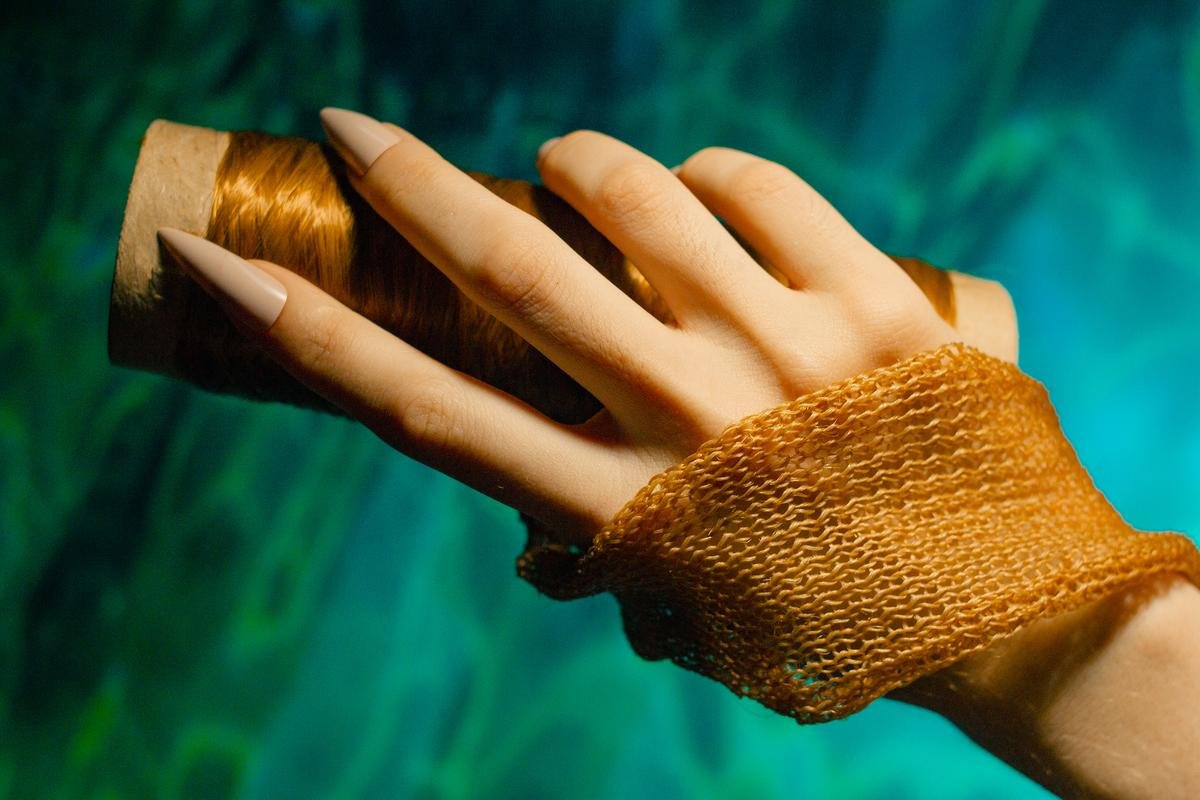
Tamires Pontes has invented a way to turn seaweed into a durable fiber. The alternative to petrochemicals in clothing is the Brazil-based textile designer’s attempt to address the fashion industry’s waste and carbon emissions problems (currently, the fashion industry is responsible for 10% of global carbon emissions, according to the United Nations). Last month, Pontes’ timely innovation also won her a $100,000 Unlock Her Future prize from retail experience brand The Bicester Collection.
In a male-dominated entrepreneurial ecosystem, prizes and cash awards are becoming gateways for women to get their ideas vetted, validated and made visible. For example, in May, Asan, a new generation menstrual cup that aims to eradicate period poverty in India, awarded founder Ila Guha a Cartier Women’s Initiative Fellowship. In June, Kenyan entrepreneur Beth Koigi’s atmospheric water generator (which extracts clean water from the air) awarded her the 2023 Rolex Prize for Enterprise.
These efforts are justified, considering that currently, less than 3% of women-led businesses receive venture capital, according to Harvard Business School. But it has been proven that equal participation of men and women in entrepreneurship could boost global GDP by 3% to 6%, or up to $5 trillion. “Gender equality is literally good for business and the economy,” said Maria Noel Baeza, regional director for the Americas and Caribbean for UN Women, who was a judge for this year’s awards. “Globally, only 30% of parliamentarians are women. Currently, 15% of mayors are women, only 6% of CEOs, and only 17% of board positions in the private sector are held by women. There is a lot of work to be done.”
Supporting women-led initiatives
Narrowed down from 954 applicants with early-stage startup ideas (less than three years in operation) aligned with the UN Sustainable Development Goals, only 108 companies were selected. In the days leading up to the final, eight finalists shared their ideas. For example, Colombian Valentina Agudelo launched Salva Health, which develops an AI-powered portable device that helps with early detection of breast cancer and makes it available to women in remote areas. Bluekali, by Mexico-based Annie Rosas, uses technology to clean up oceans and rivers. Her app takes a photo of a discarded item and scans its manufacturer and plastic to help sort the waste correctly. Think of it as a Google image search for waste disposal. Four women entrepreneurs were ultimately selected as winners.
But are startup competitions really the solution to empowering women entrepreneurs? “These awards certainly encourage and inspire more women and girls to come forward. But in a competitive environment, there is a risk that the relevance of the idea cannot be clearly tested outside the competition – for example, whether there is the capacity to realise the idea being considered. After all, the true test of entrepreneurship is in real-life situations,” says Upma Chaudhry, treasurer at Plan (India) International and a board member of the organisation that focuses on child rights and girls’ equality in over 80 countries. An industry veteran, Chaudhry warns against investing in fledgling ideas that haven’t had time to take root.
Some awards address this within the framework of their programs. For example, in the case of the Cartier Women’s Initiative, eligibility requires a proven business model and at least one year of revenue generation from products. Others, such as the Unlock Her Future award, see investment in early-stage ideas as a future incubation journey. “We don’t just hand them a cheque and leave them alone,” says Chantal Qualey, chief culture officer at Bicester Collection. “We try to incorporate them into our business.” Last year’s winner, Noor Jaber, is a good example. The founder of Nawat Health, a Dubai-based platform that provides expert information on safe sexual and reproductive practices for women and girls, hosted the first educational program for Bicester Collection’s female employees.
The collection can also act as a matchmaker between the winners and brands and partners seeking sustainable alternatives, such as past winner Nourhir Zain’s plant-based alternatives to unethical exotic leather products.
Chantal Qualy at the Unlock Her Future Prize 2024 in Madrid | Photo by Juan Najarro Jimenez
South Asia emerges
The next edition of the awards will be held closer to home in South Asia, and Qualey is eyeing the potential in the region: “India, Pakistan and Bangladesh have seen an encouraging rise in social business over the past few decades. However, a World Bank report shows that just 18% of businesses will be female-owned in 2023, well below the global average of 34%. This points to systemic challenges, including limited access to capital, market opportunities and social support. This is where we can make a difference.”
Chaudhri says the push into South Asia is crucial, but still ambitious. “The biggest challenge is outreach. How do we tap into the talent wherever it is? There’s no shortage of talent,” she says.
Overall, Chaudhri and others see such awards as a positive in the male-dominated startup structure: “It will be a catalyst in the system and encourage other women to come forward. These are credible brands and with that comes the name recognition.” And isn’t that the need of the hour?
The author is an independent journalist based in London, writing about fashion, luxury and lifestyle.
This is a premium article available only to our subscribers. To read over 250 premium articles every month,
You’ve reached your limit for free articles. Support quality journalism.
You’ve reached your limit for free articles. Support quality journalism.
You have read {{data.cm.views}} from {{data.cm.maxViews}} Free articles.
This is the last free article.
