

Ever since President Biden announced he would seek reelection last year, his aides have banded together and ignored the obvious doubts: They have insisted that Biden is not too old to seek reelection.
The media has become unfairly obsessed with his age, they said, Republicans have posted badly distorted video clips on social media to make him look weaker than he actually is, and Democrats who fret over the possibility that an 80-year-old president could be 86 by the end of his second term are simply “bedwetters.”
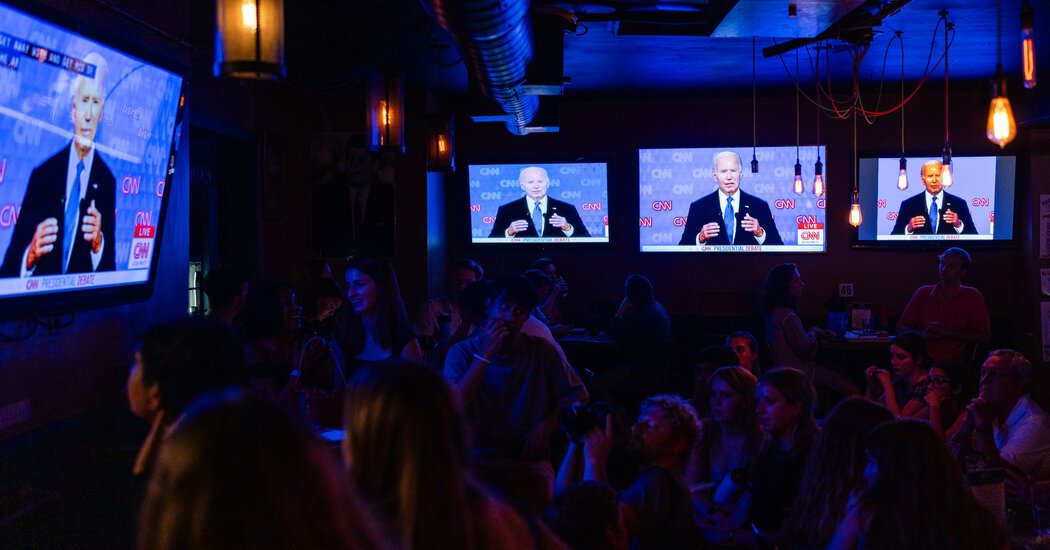
And then the debate happened. And now the era of denial in the White House is over. After his shaky performance Thursday night against former President Donald J. Trump, the president’s aides can no longer simply ignore concerns about his competence. His team is now being forced to confront the issue head on, as it struggles to quell the fires of intense alarm within the Democratic Party.
Biden, 81, acknowledged on Friday that he is no longer a young man and that he has taken a step back in the debates. At a spirited rally in Raleigh, North Carolina, he made his case more forcefully than he had the night before on the debate stage in Atlanta. His campaign, with support from Democratic allies including former President Barack Obama and Rep. James E. Clyburn of South Carolina, rejected calls for the president to concede the nomination to a younger candidate.
But many bewildered Democrats, including some in the Biden administration, wondered how we got to this point and, fairly or not, blamed the president’s campaign for letting it happen. Why didn’t those closest to Biden dissuade him from running? Why couldn’t they agree to a debate, knowing Biden might stumble badly? Couldn’t they have done a better job of preparing Biden for the predictable challenges during their week sequestered at Camp David?
“I was a little shocked last night because I’d heard they were preparing for this and all,” former Obama adviser David Axelrod said the morning after the debate. “The first 10 minutes were disastrous and I don’t understand how that happened.” Ultimately, he added, “this was a great opportunity to calm people’s nerves, and it backfired.”
In the past, Biden aides have frequently gone after people who have questioned the president’s age. When special counsel Robert K. Hur decided not to indict Biden on charges of mishandling classified documents, he explained in his report that one reason was that jurors would view the president as “an old man with good intentions but a short memory.” Biden’s team blasted Hur for going beyond the call of duty to unfairly disparage the president.
Axelrod had been one of several Democrats who had long warned about the risks of fielding a presidential candidate who debuted in national politics the same year the video game Pong was released, and his outspokenness has angered Biden’s advisers.
But Axelrod said in an interview Friday that he wasn’t going to second-guess their views. “I’m not going to belittle their views,” he said. Age is a “funny thing,” he said, and “maybe he was in a different position at the time they were saying that.”
Biden’s age also allows him to take different positions depending on the situation. The two events on Thursday and Friday showcased two different perspectives that, like their timing, were night and day different.
The Biden in high spirits at the Raleigh rally was the Biden his aides saw: the Biden with the energy to travel across nine time zones from international summits to fundraisers, the Biden who asked sharp questions to grill unprepared aides, the Biden who made smart decisions on tough policy issues and held his own against demagogues.
The subdued Biden who took the stage the previous night in Atlanta was the man his advisers did not want to see, or were determined not to see: rather than exuding the aura of authority and strength expected of a commander in chief, he stumbled to the podium, stammered, lost his train of thought, made cryptic comments and stared blankly, mouth agape.
“The problem is, this is sporadic,” said Elaine Kamark, a longtime Democratic National Committee member who worked in the White House under President Bill Clinton. She recalled sitting close to Biden at an event last spring and being impressed by his impressive ability to discuss policy, remember names and speak without notes.
“I thought this man didn’t have dementia and was doing fine,” she said. “Unfortunately, this was not the man who was on TV last night. I think the thing is, dementia is rare. At this stage in life, people have good days and bad days, but unfortunately, he had a very bad night last night.”
The Democratic panic that followed Biden’s poor night was astounding. Democrats used words like “nightmare,” “disaster” and “catastrophe.” Republican state Democrats were in a state of panic, and Biden aides worried that donations would dry up and his economic advantage over Trump would fade.
Biden’s team has tried to bid time in hopes that the panic will die down, advising nervous donors to wait until they understand what has happened. The president’s supporters have highlighted early polls and phone groups that show the overall state of the race has not changed after the debate. They point to campaign focus groups that say Biden’s support has risen among swing voters in Midwestern states because they agree with his positions on key issues.
“Biden didn’t have the best night of the debate,” presidential campaign manager Michael Tyler told reporters aboard Air Force One. “But it’s better to have a bad night than to have a candidate who has the wrong vision for where he wants to lead the country.” He added that there have been “no conversations” about Biden stepping down and that no staff changes were being considered.
The president’s allies sought to draw attention to the 78-year-old Trump’s performance, which was marked by dozens of false and misleading statements as well as his own disorganized moments. Seeking a hopeful model, Biden supporters recalled John Fetterman, who won his Pennsylvania senate seat in 2022 despite suffering from residual symptoms from a stroke.By the end of the day on Friday, some Democrats, fearful of the consequences of a Trump victory, had concluded that if Biden was unlikely to back down, they needed to support him despite their own concerns and returned to their camps.
If the president’s advisers have ever spoken openly about Biden’s age, they have never acknowledged it, and recent interviews with dozens of the president’s aides and friends say he did not go through any organizational process outside of his family to decide to run for a second term.
None of his advisers said they might have mentioned the impact of their age in meetings or memos outlining the pros and cons of a reelection campaign. None said they encouraged him not to run or discussed how he would address the issue of age if he did run. Instead, he simply told them to assume he would run unless he decided otherwise.
For a presidential adviser, such a conversation would be painfully difficult: bringing up such personal issues with your boss is fundamentally different than bringing up impersonal factors like swing states, polls and policy issues.
Some of Biden’s closest current and former aides — Ron Klain, Anita Dunn, Jeffrey D. Zients, Steve Ricchetti, Mike Donilon, Jen O’Malley Dillon and Bruce Reed — have deep respect for the president, Democrats say, have no desire to undermine him and see his strengths.
“He’s known for having really loyal people,” Kamark said. “To Ron Klain, he’s like a father. What do you say to a father? This is tough, very tough.”
Klain, Dunn and other senior aides either declined to comment or did not respond on Friday, but White House aides said on their behalf that they all supported, and still support, Biden’s decision to run again. Zients and Dunn held a White House staff meeting on Friday and tried to ease tensions by telling aides that every campaign has tough days, but that they’ll get through it together.
James Carville, who helped Clinton’s 1992 presidential campaign, said Biden had close friendships. “The people around President Biden have been with him all along,” he said. “I think their White House culture is different than what I’m used to.” He added that “they’re very fine people,” but that “Ron and Mike and Anita are not peers.”
Indeed, given their age and experience, Biden has few people he could truly consider peers, let alone a presidential peer. His relationships with Clinton and Obama were complicated, and some of his advisers say Biden would be outraged if those former presidents had told him not to run last year, or to consider dropping out now. Most of the senators with whom Biden has worked for years and whose views he has respected are now all but gone. Ted Kaufman, Biden’s close friend and longtime aide who succeeded him in the Senate, is one of his biggest supporters of reelection.
The only people the advisers believe have any influence on such a crucial decision are family members, particularly first lady Jill Biden, who is said to have strongly encouraged his reelection campaign, and his sister Valerie Biden Owens, who served as a political adviser during his time as a senator.
“He’s a very proud man,” said Axelrod, who served alongside Biden when he was vice president under President Barack Obama. “He’s someone who has always believed that he’s been underestimated his whole life, but that he’s overcome the odds. So I don’t know what his mindset is. There are other people who are close to him now, but I know there are a lot of concerns.”
