

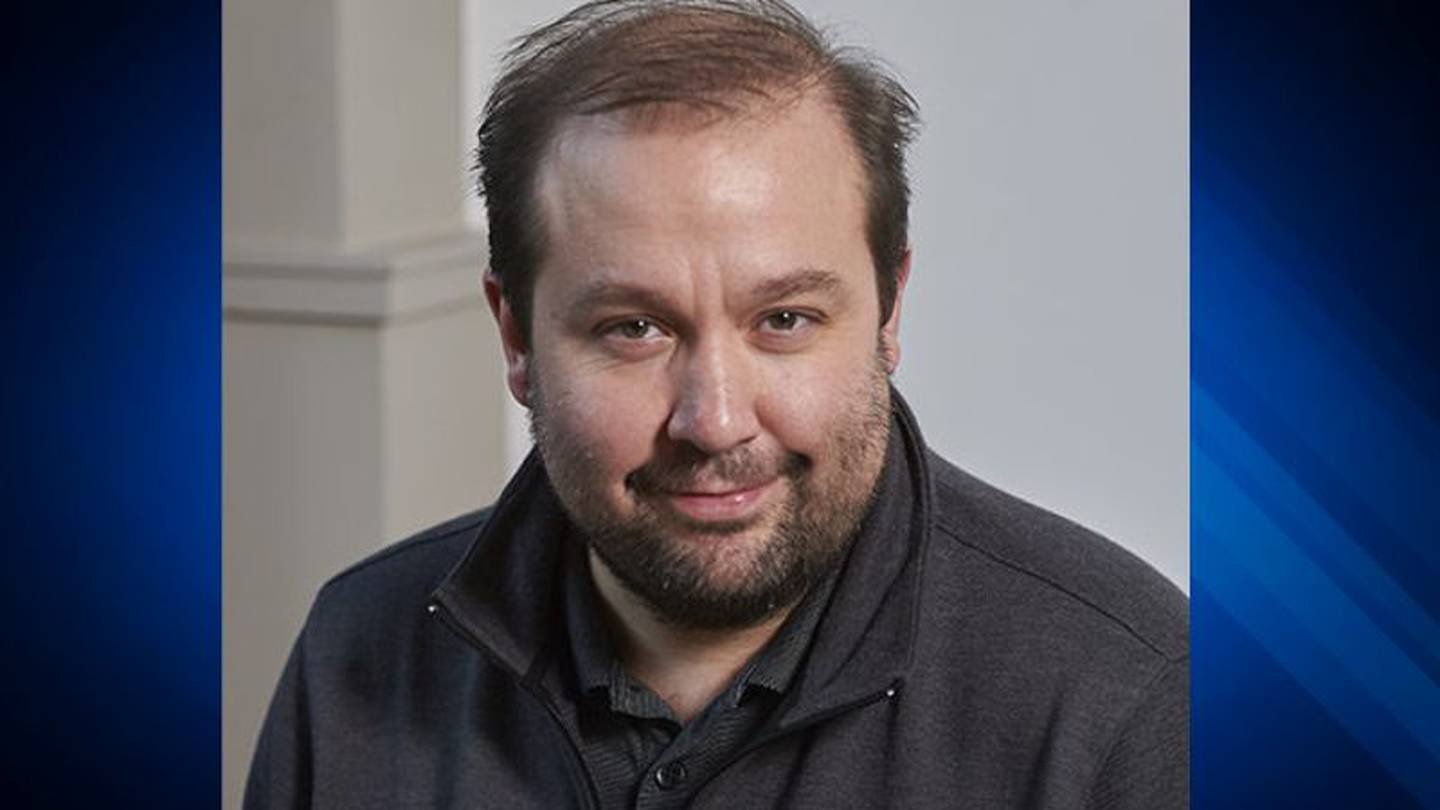
BOSTON — A former technology manager at Northeastern University has been convicted by a federal jury of staging a fake explosion in 2022 and making false statements to federal law enforcement officials.
Jason Duhaime, 46, formerly of San Antonio, was convicted Friday of knowingly communicating false and misleading information about an explosive device and two counts of making material false statements to a federal law enforcement officer, Acting U.S. Attorney Josh Levy said in a statement.
Senior U.S. District Judge William Young is scheduled to hand down the sentence on Oct. 2.
Duhaime was originally arrested and charged with a criminal complaint on October 2, 2022, and subsequently indicted by a federal grand jury on October 27, 2022.
“Bomb hoaxes like the one the defendants fabricated here have real impacts: they terrorize communities, distract law enforcement personnel from other important duties, and have significant economic impacts,” Levy said. “As bomb hoaxes continue to occur in schools, places of worship and other places of congregation, we will continue to work closely with our local, state and federal partners to hold accountable those who seek to sow fear and anxiety in our communities.”
Jody Cohen, special agent in charge of the Federal Bureau of Investigation in Boston, echoed Levy’s words, saying, “Staging a hoax explosion and lying to the FBI is not innocent conduct. It’s a crime.”
“The FBI and our partners take any threat to life seriously because protecting human life is our absolute priority. Anyone engaging in this type of behavior should prepare themselves for FBI investigation and think carefully about whether they want to end up like Jason Duhaime, who is currently awaiting sentencing on three federal felony charges,” Cohen said.
:quality(70)/cloudfront-us-east-1.images.arcpublishing.com/cmg/QDKTP3PICVA6RL2AMYGBIV4CLM.jpg)
As of September 2022, Duhaime serves as the Emerging Technology Manager and Director of the Immersive Media Lab at Northeastern University.
According to Levy, on Sept. 13, 2022, at approximately 7 p.m., Duhaime called Northeastern police to report being injured by a sharp object that had come out of an open plastic case in the lab that evening.
Specifically, Duhaime told emergency police dispatchers that he and a Northeastern University student who was working at the lab that night had collected several packages from a mailbox, including two plastic “Pelican cases,” and brought them to the lab, prosecutors said.
Duhaime said that when he opened one of the cases in the vault, a “very sharp” object flew out of the case, lodged under his shirt sleeve, and injured his arm. According to prosecutors, Duhaime also reported finding an anonymous “violent note” inside the case that threatened to “destroy the lab” and read, “The case you picked up today was capable of planting explosives, but not this time!!! Watch out!!! Stop the operation in 2 months or else!!!!! We’re watching you.”
Prosecutors said Duhaime’s report, along with concerns about a second unsolved Pelican case, triggered a “massive law enforcement response” that included the Boston Police Department’s explosive ordnance disposal unit, multiple federal and state law enforcement agencies and the evacuation of part of Northeastern University’s campus.
:quality(70)/cloudfront-us-east-1.images.arcpublishing.com/cmg/FWQZFDA5HBBT3AKWU2Y4ZUVCFI.jpg)
Duhaime also gave statements to investigators and emergency responders that were consistent with what he told emergency police dispatchers on Sept. 13 and 14, 2022. He denied fabricating the story about the Pelican incident, the anonymous threatening letter and the injury to his arm, according to prosecutors.
A search of Duhaime’s office at Northeastern University on Sept. 14, 2022, uncovered several laptops, and prosecutors said a subsequent forensic examination of one of the computers turned up a verbatim electronic copy of the anonymous threatening letter that Duhaime claimed was in a Pelican case.
According to evidence presented at trial, the electronic copy of the threatening letter was created and printed on September 13, 2022, between 2:50pm and 3:56pm, just hours before he reported the incident to Northeastern Police.
The charges of knowingly communicating false and misleading information about an explosive device and making a material false statement to a federal law enforcement officer are each punishable by up to five years in prison, up to three years probation, and a fine of up to $250,000.
This is an ongoing story, so check back for updates as more information becomes available.
download Free Boston 25 News App For breaking news alerts.
Follow Boston 25 News on Facebook twitter. | Watch Boston 25 News now
©2024 Cox Media Group
