

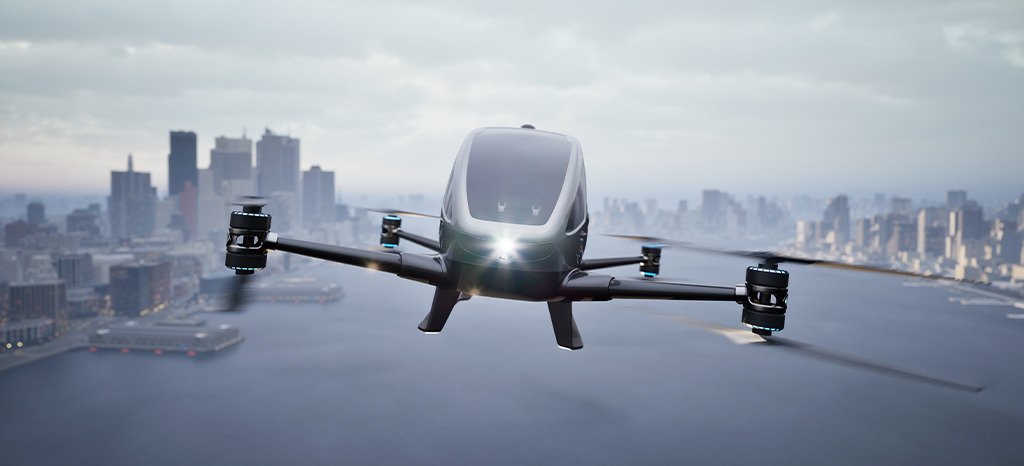
The way to the future: Unlocking the benefits of urban air mobility
MORRIS PLAINS, June 26, 2024 (GLOBE NEWSWIRE) — Global Aerospace, a leading provider of risk and insurance solutions to Urban Air Mobility (UAM) companies worldwide, has published articles highlighting the risks and challenges associated with urban aviation. This insight focuses on the benefits these innovative aerial services can bring as a new era of urban transportation emerges.
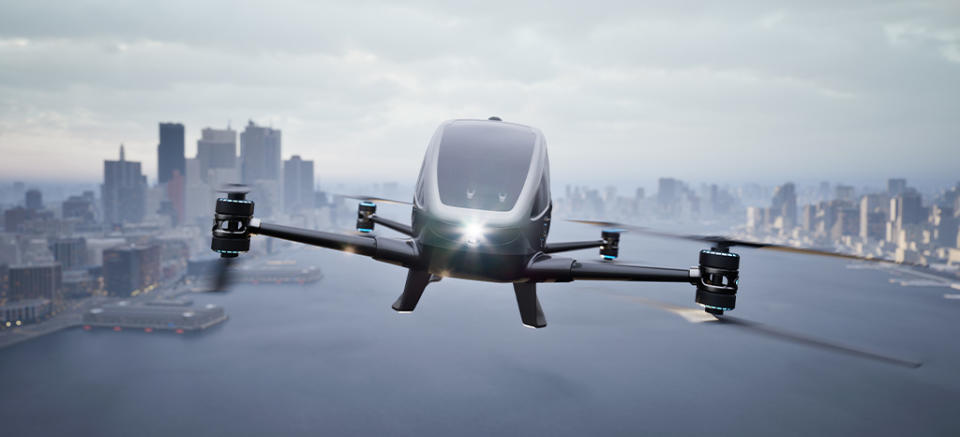
While the term “mobility” in UAM generally refers to people, the technologies being developed also have significant applications for cargo, and the discussion in this article is relevant to those services, including the impact of small drones.
Generally speaking, the benefits can be divided into three categories: first, benefits experienced by direct users of flight services; second, broader social and societal benefits. Third, and not to be underestimated, the efforts to create a viable and sustainable UAM industry will have implications that go beyond just the operation of new electric aircraft.
For example, new hybrid and electric powertrains will pave the way for wider adoption in the aviation industry, and the creation of automated and safe urban air routes will have far-reaching implications for air traffic management more broadly.
What benefits does UAM bring?
Less congestion
UAM services, if deployed on a large scale, have the potential to reduce road congestion: commuters, airport shuttle passengers, and delivery customers would all feel the direct impact of high-speed point-to-point service.
According to California Department of Transportation data, 221 million vehicle miles are traveled every day in Los Angeles County. To significantly alleviate this traffic would require hundreds of aircraft flying shuttles, but when combined with drone delivery, you can see how mass urban air traffic could have a major impact on the ground.
Reducing emissions
Electric aircraft have the potential to significantly reduce emissions compared to traditional aircraft and the ground transportation they replace. By eliminating the need for fossil fuels, electric aircraft have zero direct emissions, which can help address climate change and significantly advance the discussion and progress towards more sustainable transportation.
New Markets and Economic Opportunities
The promise of electric aviation has already generated billions of dollars of investment, and if realized, new air services will create jobs and opportunities for workers in manufacturing, maintenance, piloting and countless ground infrastructure.
Opportunities abound for users of these services, whether it’s for quicker delivery of packages or an efficient way to commute. It’s hard to see the economic value in reducing the time spent commuting to work or school. When you have the choice between sitting in traffic or efficiently flying to your destination, it’s easy to see the market potential.
Add to this the ripple effect for aviation and the transportation industry as a whole: a truly interconnected network of airports, vertical takeoff and landing pads and surface transportation hubs serving local communities creates opportunities for populations to grow and thrive.
New Technology, Big Impact
Many of the aircraft being certified represent fundamental changes in design. Multirotor systems, electric propulsion, fully composite structures, and various levels of advanced flight deck autonomy represent breakthroughs in aerospace technology. Combined, these advances have the potential to deliver safety and ease of operation that exceeds current expectations.
Multirotor systems offer revolutionary levels of redundancy and safety, and most of the latest designs incorporate technology that adjusts motors every millisecond to account for atmospheric and navigational changes. This not only improves passenger comfort, but also enables safe, repeatable flights in more challenging environments.
With the goal of truly urban flight operations, manufacturers are focusing on developing quieter aircraft. Electric motors contribute greatly to this, but the design of the rotor system is equally important. Especially if flight operations reach the levels required to reduce the burden on ground traffic, disturbance to residents is paramount as a potential barrier to service launch.
Another big advantage of electric propulsion is the expected reduction in operating costs. Maintenance intervals will be longer and, due to the elimination of lubricants and gearboxes, there will be fewer moving parts to maintain and inspect. Additionally, charging batteries will be cheaper than fossil fuels, at least once the infrastructure is built. Finally, by moving towards autonomous flight, remote piloting, or a single onboard pilot based at the operational site, labor costs should be significantly reduced.
Progress is real
Barely a week goes by without one of the leaders in UAM development announcing news of a major milestone in its development. At the time of printing in June 2024, U.S. and European regulators, the Federal Aviation Administration and the European Union Aviation Safety Association, released interim revised guidance for the certification of eVTOL aircraft. The guidance more closely aligns the certification framework between the two leading agencies, creating an easier path for manufacturers to achieve broad certification.
There is still much work to be done, but with demonstrable benefits backed by investment, regulation and technological advances, the path to urban aviation is becoming clearer.
About Global Aerospace
Global Aerospace has 100 years of experience and a strong passion for providing aviation insurance solutions that protect aviation stakeholders and help the industry thrive. With financial stability from one of the world’s largest pools of capital, we leverage innovative ideas, advanced technology and strong synergy among our diverse team members to underwrite and process claims for the many risks our clients face. Headquartered in the UK, we have offices across Canada, France, Germany, Switzerland and the US. For more information, please visit https://www.global-aero.com/.
Global Aerospace Media Contacts
Suzanne Kennealy
Vice President, Head of Group Communications
+1 973-490-8588

