

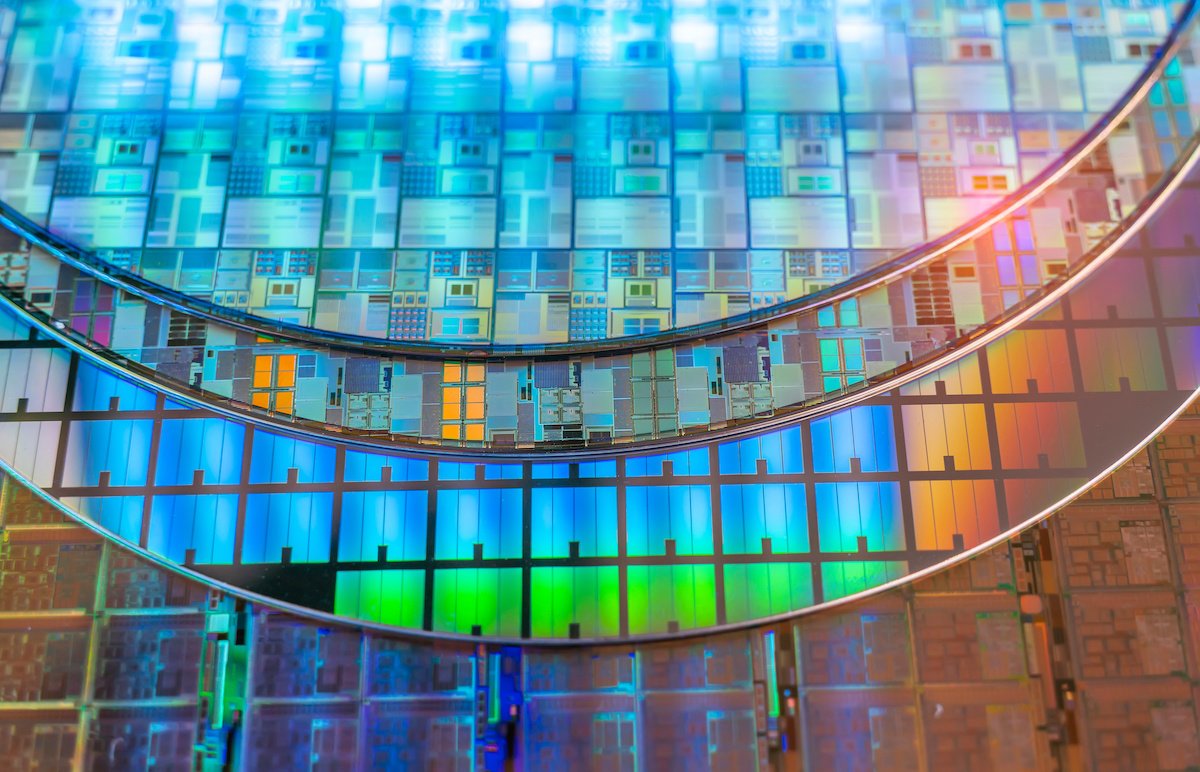
Under the Treasury Department plan, chips, quantum, AI and EDA would be severely restricted.

The United States has proposed new regulations to limit U.S. investment in Chinese technologies that pose national security threats, particularly semiconductors, microelectronics, quantum information technology and AI.
The proposed regulations come nearly a year after the Biden administration issued an executive order banning Chinese investments in sensitive technologies used to accelerate military technology. “The proposed rules promote national security by preventing the many benefits of certain U.S. investments — beyond just capital — from supporting the development of sensitive technologies in countries that could threaten our national security,” Paul Rosen, assistant secretary of the Treasury for investment and security, said in a statement.
Prohibited Semiconductor Transactions
The 165-page proposal defines prohibited semiconductor transactions (pages 133-134), which include:
- EDA software for IC or advanced package design.
- Front-end semiconductor manufacturing equipment designed to carry out high-volume manufacturing of ICs (including equipment used in the manufacturing stages from blank wafers or substrates to finished wafers or substrates).
- Equipment for mass advanced packaging.
- Commercial products, materials, software or technology designed specifically for EUV lithography equipment.
- Design of ICs that operate below 4.5 Kelvin and that meet or exceed the performance standards of Export Control Classification Number 3A090.
- Fabrication of logic ICs using non-planar transistor architectures or fabrication technology nodes below 16/14 nanometers, including FD-SOI ICs.
- Manufacturing of NAND with 128 layers or more or DRAM ICs with 18nm half pitch or less.
- Manufacturing of integrated circuits using gallium-based compound semiconductors, or graphene transistors or carbon nanotubes; and
- Any IC using advanced packaging technology.
Prohibited AI and Supercomputing Transactions
Prohibited transactions relating to supercomputers and artificial intelligence (pp. 134-135) include:
- A supercomputer containing advanced integrated circuits capable of providing a theoretical computing power of more than 100 petaflops of double precision (64-bit) or more than 200 petaflops of single precision (32-bit) processing power in an enclosure of 41,600 cubic feet or less.
- Manufacturing quantum computers or the critical components required to manufacture quantum computers, such as dilution refrigerators and two-stage pulse tube refrigerators.
- Quantum sensing platforms for military, government or large scale surveillance end uses.
- A quantum network or quantum communication system, and
- AI for military end uses, weapons targeting, target identification, and military decision making.
The deadline for written comments is August 4, 2024. The regulations are expected to be finalized this year.

Linda Christensen
(All posts)
Linda Christensen is vice president of operations and contributing writer at Semiconductor Engineering.
