

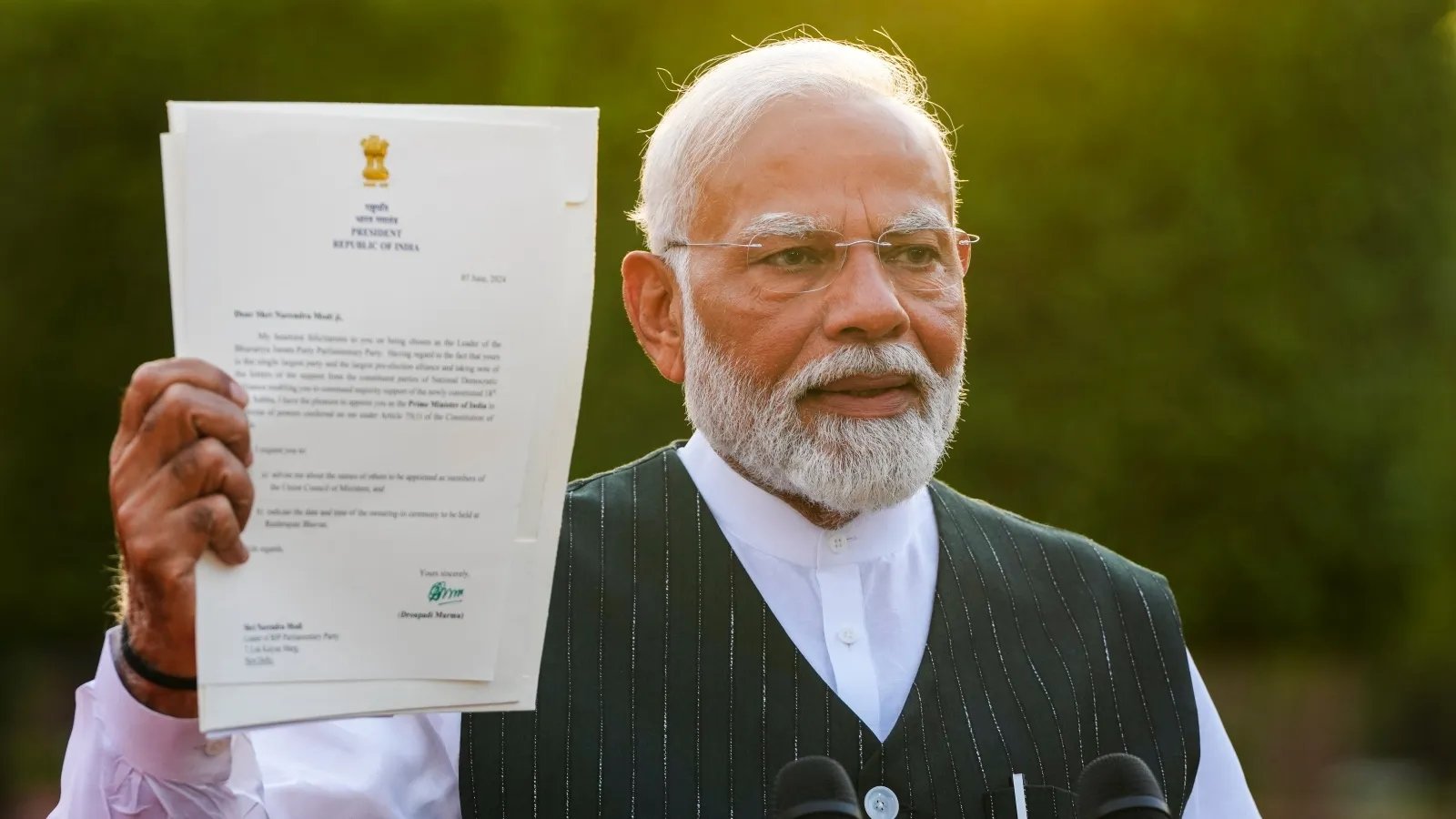
As the NDA government settles in, should we expect a departure from the hostility and one-sided displays of force of the past decade? A more balanced composition of the House encourages that expectation. On the other hand, the characters remain the same. And ironically, the Prime Minister, despite being in his “third term”, will be the most uncomfortable character in the new House, triple-bound by his party’s minority, the demands of his allies and an opposition that is almost as numerous as his own. He will have to assume a humble and moderate demeanor compared to the bombastic image he has carefully cultivated, but that is a tall order.
Thus, even after the elections, the main factors that have shaped politics for some time will remain the same: parties with hegemonic ambitions despite their weakened dominance, an opposition ignorant of cultural politics, and social spheres with marked emotional ruptures. Therefore, we can expect only slight changes.
Compromise and major conflict in the political arena.
To be sure, there will be some formal friendship. There will also be formal assurances of reconciliation and cooperation, a desire to work together to make India great, flattery about federalism, and of course emotional praise for the Constitution. The merits of a coalition government will also be listed. The opposition may get more time and attention, both in Parliament and in the media, but it will not necessarily be able to strengthen the tradition of deliberations. But in the realm of actual policy and the use of state power, substantive change is unlikely.
If anything, we will see a more direct confrontation between the main ruling party and the opposition, as the BJP will be licking its wounds and looking for an opportunity to delegitimize the opposition, and the opposition will be eager to project power as it believes the people have rejected the BJP.One aspect of this confrontation will be the quiet demise of the BJP’s allies and the steady defections and fragmentation of the opposition camp, and disunity within the Indian bloc.
Regardless of initial impressions, the Modi government will soon revert to its core characteristics: weaponizing state power to suppress dissent, zero tolerance for everyday opposition, delegitimizing all institutions through political capture, and encouraging society to stigmatize minorities.


Thus, the current social and economic fault lines are likely to generate conflict between the government and different sections of the population. The first and most immediate challenge is to address the issue of unemployment and youth discontent. Long-term policies of skilling and flippant talk of the future will not suffice. Another area of conflict is the relationship between the Centre and the states, which will give rise to clearer regional identities and regionalist demands. Third, issues of caste census and reservation will plague politics, mainly because of the success enjoyed by the Congress and the Samajwadi Party. Fourth, it is quite uncertain how the continuing victimisation and marginalisation of the Muslim community will play out. But in the social sphere, vigilante adventurism against Muslims will continue with the state as a passive bystander.


Add more examples of popular unrest resulting from existing social problems and you can strengthen the opposition. Predictably, the government response to many conflicts will be a combination of heavy-handed handling, emotional appeals to deflect issues, and pitting one section of society against the other. This assessment is based on the assumption that the BJP, which has led the new regime since 2014, will not be willing to give way to other parties. It will be equally unwilling to succumb to democratic pressure. Not only do the leaders of this government believe in their mission, but the main ruling party itself has imagined itself changing the destiny of the country for the past decade. This imagination has been in part powerful since the election results of 2014 and 2019. In part, this millennial and rigid self-image was a Hindutva view of the historical role assigned to it by destiny. But in the realm of competitive politics, the BJP has also come to see itself in an exaggerated light since 2014.
Elections are a mechanism that gives the rulers a temporary and limited sense of responsibility and legitimacy. But the temptation to win majorities in elections is such that the rulers over-interpret the meaning of the election results and try to justify their exaggerated self-interest expressed by the people through the elections. This over-interpretation allows the rulers and their supporters to transform the meaning of competitive politics from a mere mechanism of selection into an endorsement of the establishment of a new order, ostensibly for a state-imposed transformation of ideas and social relations. The BJP’s repeated conflicts with various sections of society, its incredible confidence in the correctness of its policies, the undemocratic model of governance it has practised for the past decade, its contempt for dissent, and its anxiety about electoral defeat are all part of a double syndrome of attaching great significance to electoral victories and a deep-rooted ambition to change the character of India.
Since 2014, the BJP has tried to broaden the meaning of the election results and convince its cadre and the general public of a larger, albeit less overt, national purpose that had brought it to power. This could be said to have been a mandate on its electoral victory. Disillusioned voters had brought the opposition to power in 2014. But the BJP imbued its victory, mostly in retrospect, with multiple tropes: Hindutva, national restoration, the idea of a new India. This time, the BJP lost its majority, but conscious of its historical burden, it is not ready to admit that this was a warning against its bad governance, its neglect of basic livelihood issues, and its arrogance in taking the Hindu electorate for granted. It has therefore tried to emphasise continuity and develop the argument that the 2024 result “mandates” a third term for Narendra Modi.
There is an inevitable awkwardness to this assertion, given the coalition government the BJP is forced to follow. That awkwardness will create many tensions and distortions as well as farcical moments of surrealism. An unfounded interpretation of the results will see the BJP continue with the three core characteristics mentioned above, putting it at odds not only with its allies and the opposition, but also with a section of the public.
The BJP, eager to claim victory even in the face of defeat, must remember that while fierce nationalism and dreams of economic power may act as temporary painkillers, power-level ambitions will only make politics more turbulent, unruly and unproductive.
The Pune-based author taught political science.
© Indian Express Ltd.
First uploaded: June 24, 2024, 8:15 AM
