

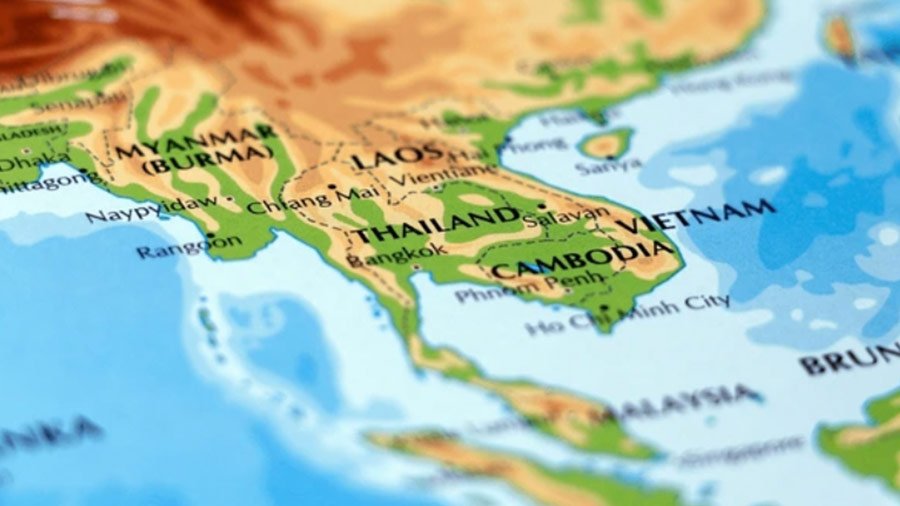
As part of its 2024-2025 budget, the Australian government committed to investing A$505 million (U.S. $336 million) over five years to strengthen ties with Southeast Asia.
This investment facility is aligned with key recommendations set out in the Australian Government’s Southeast Asia Economic Strategy to 2040. Under the Strategy, the Government has identified a number of priority sectors to help boost trade between Australia and Southeast Asia, including agriculture, healthcare, infrastructure, digital economy and education.
By 2040, the region is expected to become the world’s fourth largest economy, with a compound annual growth rate of 4% from 2023 to 2040. Southeast Asia therefore offers opportunities for Australian businesses in a range of sectors across the region, from green energy to infrastructure to healthcare. Two-way trade could reach AUD465 billion (US$310 billion) by 2040, from about AUD287 billion (US$191 billion) today.
Australia’s Southeast Asian Economic Strategy to 2040
The strategy aims to encourage Australian private sector investment in Southeast Asia by allocating A$2 billion (US$1.3 billion) for an investment finance facility, in particular to support the region’s infrastructure development and transition to renewable energy. The investment facility will provide loans, equity, guarantees and insurance for initiatives to boost Australian investment and trade with Southeast Asia.
Funding the Infrastructure Partnership Program
The economic strategy also sets aside funding of A$140 million (US$93.3 million) over the next four years for an Infrastructure Partnership Program, which will begin in 2021 and aims to promote sustainable and inclusive economic growth in Southeast Asia through infrastructure development.
Southeast Asia needs approximately US$3 trillion in infrastructure development to keep up with economic development and demographic change. Moreover, the region’s population is expected to reach 766 million by 2040, placing increasing strain on cities and urban areas. Without significant investment in infrastructure, pollution, congestion and unequal access to basic services will continue to grow. For example, congestion in Indonesia’s capital city, Jakarta, is estimated to cost the economy US$5 billion per year, a significant amount considering the city accounts for one-fifth of Indonesia’s economic activity.
Coupled with Australia’s engineering, construction and ICT expertise, there is significant scope for Australian companies to meet the region’s infrastructure needs through private financing, particularly at a time when public sector funding is unable to cover infrastructure gaps in most Southeast Asian countries.
Priority areas for enhancing trade between Australia and Southeast Asia
The Australian Government has identified a number of priority areas to help boost trade between Australia and Southeast Asia.
Agriculture and Food
Australia already makes a significant contribution to food security in Southeast Asia, particularly the supply of wheat, beef and live cattle. Around half of Australia’s wheat exports go to Southeast Asia, mainly to Indonesia, Vietnam and the Philippines.
Population growth, increasing urbanization, and rising incomes will be the driving forces behind agricultural demand in Southeast Asia by 2040. As a result, the region is seeing increased consumption of meat, dairy, processed foods, and wheat-based foods. For example, Indonesia imports more than 600,000 live cattle from Australia each year, accounting for 62% of Australia’s total cattle and beef exports.
Green Energy
Southeast Asia faces significant challenges in its clean energy transition, especially as most countries in the region rely on fossil fuels for their energy needs. The region faces the added challenge of growing energy consumption, which is expected to double by 2050. By that year, the region will need approximately 350 billion cubic meters of natural gas alone.
This represents a huge investment opportunity for Australian companies offering sustainable, low-emission technologies. Cross-border power trading is one of the most effective ways to increase renewable energy use across Southeast Asia. The region needs an estimated 464 gigawatts of new power capacity by 2050, of which 60 percent is estimated to come from renewable sources.
health care
Southeast Asia’s growing population will drive demand for healthcare services and infrastructure. Spending on healthcare infrastructure will place constraints on public budgets, making the private sector key to filling the gap.
This will create opportunities for Australian healthcare providers to offer higher quality medical supplies and services, particularly in preventive care, with the region’s supplements market expected to reach US$10 billion by 2026.
Additionally, Southeast Asia is expected to have over 100 million people aged 65 and above, increasing the demand for specialized elderly care, and creating opportunities in the digital health sector, including healthcare management software, electronic medical records, hospital information systems, and data analytics and diagnostics offerings.
Digital Economy
Southeast Asia’s massive digital economy could offer huge economic opportunities for Australian businesses. According to the e-Conomy report compiled by Google, Temasek and Bain & Company, there will be around 460 million internet users in the region as of 2022, with a total digital economy value of US$194 billion, a 20% year-on-year growth rate. This figure is expected to reach US$330 billion by 2025. Additionally, the region is home to more than 23,000 digital or technology start-ups, with the highest concentrations of these start-ups in Singapore and Indonesia.
Australian businesses are seeing opportunities in cyber security, e-commerce, software development, digital services, fintech solutions and cloud services.
education
Southeast Asia’s young population and fast-growing middle class will drive demand for quality education services. Education is one of Australia’s largest and most valuable services to Southeast Asia, expected to add US$5 billion to the economy in 2022.
Australia has welcomed more than 500,000 students from Southeast Asia over the past 20 years. The largest sources of international students studying in Australia include Indonesia, Malaysia, Thailand, Vietnam and the Philippines.
Furthermore, Southeast Asia is one of Australia’s largest international markets, with Australian universities setting up overseas campuses, partnering with local institutions and offering online courses. Australian higher education institutions, such as Monash University and Royal Melbourne Institute of Technology, have campuses in Indonesia, Malaysia, Vietnam and Singapore.
Australia’s vocational and higher education capabilities can therefore support skills development in Southeast Asia, particularly in sensitive areas such as cybersecurity, ICT, biomedicine and food production.
About us
ASEAN Briefing is produced by Dezan Shira & Associates. The firm assists foreign investors across Asia and has offices across ASEAN including Singapore; Hanoi, Ho Chi Minh City and Da Nang in Vietnam; and Jakarta in Indonesia. The firm also has partner firms in Malaysia, Philippines and Thailand, and operates in China and India. Please contact us at asean@dezshira.com or visit our website at www.dezshira.com.
