

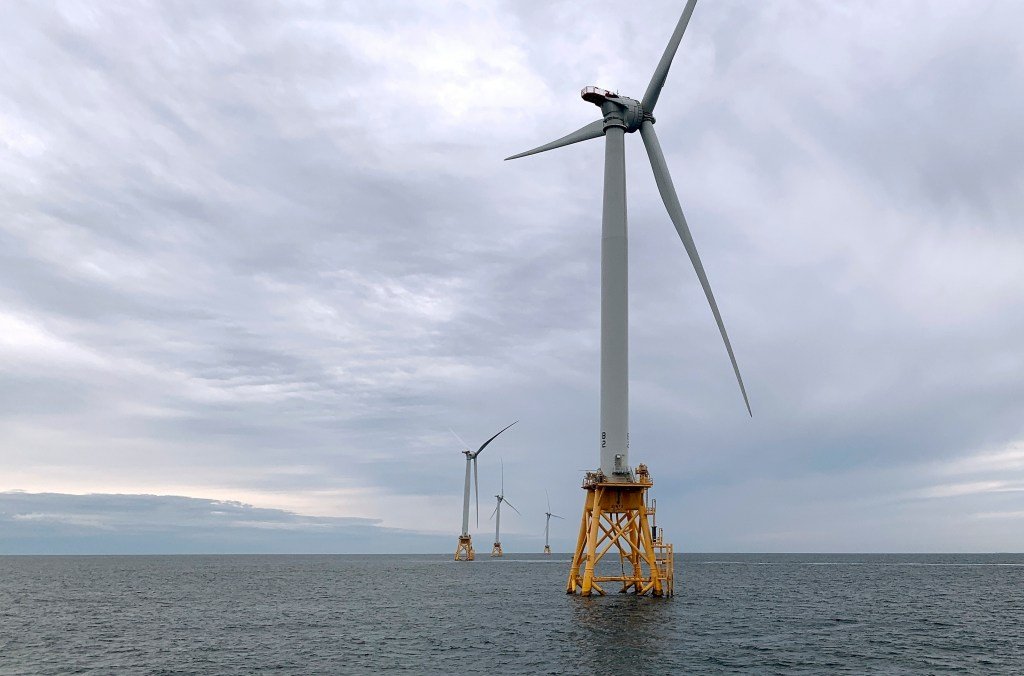
The United States and countries around the world are moving toward “clean energy” sources. Solar energy, and offshore wind in particular, are being welcomed across the country with the idea that these solutions can reduce the country’s reliance on fossil fuels and cut carbon emissions. With a sustainable future in mind, government officials along each coast are pushing to advance offshore wind projects, providing an optimistic outlook for citizens as they begin their journey toward clean energy.
However, this optimistic vision is far from reality. Numerous studies have demonstrated that adding wind farms to an existing power grid, due to their intermittent and fluctuating output, would result in much more existing fossil fuel power plants being run, resulting in higher carbon dioxide (CO2) emissions. Thus, the more offshore wind farms are built, the more fossil fuel power plants will be run, resulting in the same or even higher CO2 emissions than without the wind turbines.
Think of carbon emissions and offshore wind as a person running. When a person trains for a sprint, constantly stopping and moving forward burns energy faster than jogging a longer distance at a steady pace. The fuel efficiency of fossil fuel power plants changes in a similar way. Power plants are more efficient when they run at a steady pace, just like a person jogging for a long distance.
When it comes to compensating for wind power, fossil fuel power plants on the grid must adapt to more efficient operating practices and rapidly adjust output to compensate for the varying turbine power output with the weather. This causes these systems to burn nearly twice as much fossil fuel to compensate for the wind turbines on the grid, resulting in proportionally higher CO2 emissions.
On the New England power grid, combined cycle gas turbine power plants are the most common type of generating facility. These plants can only change output slowly, and if they need to change output rapidly, they must adjust from their efficient cycle to operate as a single cycle gas turbine. This alternative configuration burns nearly twice as much fuel to produce the same amount of power.
These efficient power plants are a large part of the power system because energy consumption is usually very predictable, and energy generation can be efficient given this predictability. When a wind farm is added, its unpredictable and variable output creates a breakdown in efficiency between projected generation and projected consumption. Because wind is inherently unpredictable and intermittent, fossil fuel power plants must constantly vary their output to compensate for the fluctuating amounts of energy produced by the wind farm. This rapidly varying output is a feature that most fossil fuel power plants were not designed to provide, and as mentioned above, it increases the amount of fuel consumed and inevitably increases CO2 emissions. Even the Bureau of Ocean Energy Management, the federal permitting agency for the wind farm off the coast of Rhode Island, has stated that “Overall, no collective impacts on global warming are expected as a result of offshore wind projects.”
If we take a step back and look at wind turbine construction, we see that the production of materials and components, including the production of fiberglass, concrete and steel, as well as construction and decommissioning, are all carbon-intensive activities associated with offshore wind.
The time to act is now. The air we breathe and the oceans we depend on are being damaged in the rush to meet clean energy goals. Fisheries are being devastated and the ocean floor is being severely impacted or destroyed. Before it’s too late, government officials need to understand the full environmental impact of the rush to build wind farms. We need to take a step back and understand the true environmental impacts of these “clean” energy decisions before we cause significant, and perhaps permanent, damage to our planet.
Dr. Miles O. Bidwell, a Rhode Island-based member of Green Oceans, holds a PhD in Economics from Columbia University. As an economist, he has been involved in designing electricity generation markets and pricing in the United States and Europe for the past 30 years. He was the primary architect of the current New England Capacity Market.
