


Brazilians are jumping on the investment bandwagon.
At the heart of Brazil’s bustling market is a new wave of retail investors ready to navigate the complex world of finance: Their numbers have soared from about 600,000 in 2017 to about 5 million today, according to Brazil’s stock exchange, B3 (short for Brazil’s Bolsa Balcao). And almost half of them are between the ages of 25 and 39, typically millennials.
To help newbie investors who don’t have the funds for professional financial advisors, B3 decided to add a conversational AI assistant (also free) to its free online investment education.
B3 CoPilot doesn’t provide stock tips, investment advice, or broker recommendations. Instead, it quickly and directly decodes foreign-sounding financial jargon and provides answers hand-picked by B3’s experts. We can explain stocks, bonds, how to find a broker, and even more complex financial products.
“There is a lot of information on the Internet, but it is difficult to find the right content,” says B3’s Director of Education Cristianne Barichelli, who speaks of the assistant as a bridge between knowledge and action. “This solution is for Brazilians who have already invested but are still at the beginning of their journey, as well as those who want to invest but lack the information they need. Some investors need a secure source to verify the offers they receive from financiers or the Internet. We want the AI assistant to provide them with secure information from the source.”
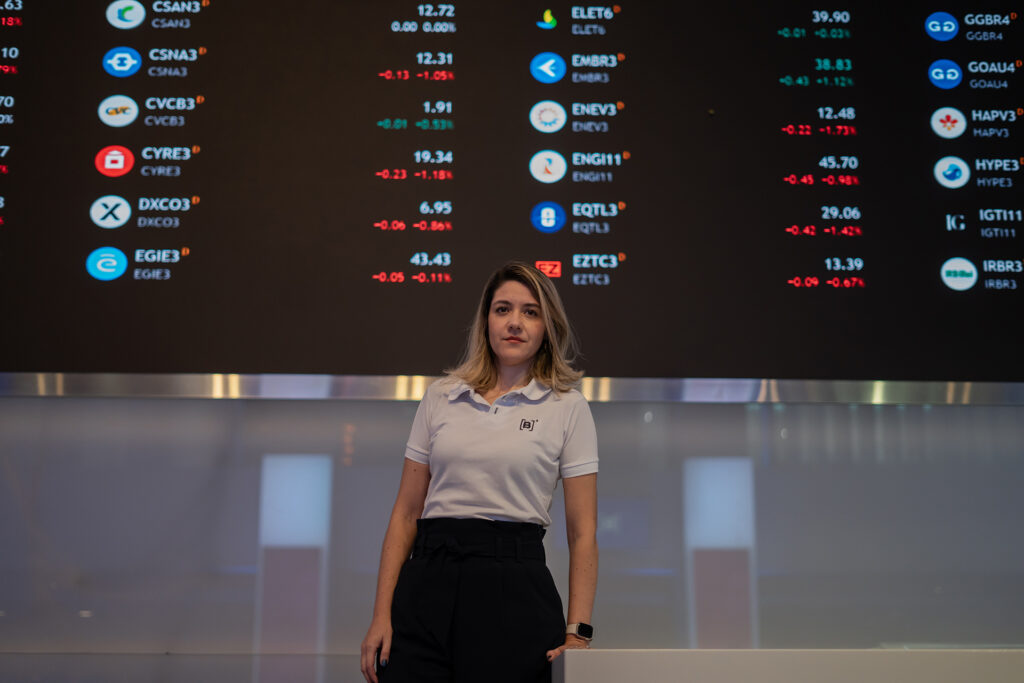
Barichelli attributes the new interest in investing to three factors: “Financial education is becoming more mainstream. Technology has also improved, making it much easier to open a digital brokerage account and allowing people to open one themselves. And between 2018 and 2021, interest rates fell to levels never before seen in Brazil,” she says.
Although the median investment amount fell from 4,300 reais in 2021 to 2,200 reais at the end of 2023, B3 sees this as a sign of the democratization of the stock market in recent years, as it means that investment is being embraced by the middle class and not just the wealthy.
Deposit savings account, PupansasInvesting looked attractive in Brazil because interest rates had long been double digits as part of a policy to keep inflation in check, and the number of investors was a tiny fraction of the 20 million Brazilians with savings accounts. Now, with inflation calming and interest rates falling in Brazil, Brazilians are looking for higher-yielding alternatives.
“In Brazil, very few people invest,” says Marcos Garavini Siffert, an engineer in Bauru who runs an investment club with some friends from university. “Until recently, real interest rates were low, so it was easy to get money without doing anything. [the rate after deducting inflation] It was expensive. That’s not reality anymore. Now Pupansas It is one of the countries that pays the lowest, if not negative, returns relative to inflation. Paupansa And instead of striving for positive returns, people will die with little knowledge about investing.”
Siffert has studied investing principles for years, and he believes B3’s AI assistant “gives people a starting point, makes them feel comfortable enough to organize their thought process, and… Pupansas And then you enter this new world.”

Despite it being free, Schiffert points out that the quality of the information is also high. He found that the AI assistant is responsible for the reports he receives from private banks. “Even people with very little can access reports in a sophisticated way that wasn’t possible before.”
B3’s free educational offering includes articles, videos, and online courses. The benefit of the AI assistant is that individuals can ask questions and get instant answers. Questions can include “What are stocks?”, “How do I save for investing?”, or “What are ETFs?” The AI tool generates a brief answer consisting of a few sentences. Investors may prefer to read B3’s articles or take courses to delve deeper into a topic. But if they come across a term they don’t understand, the AI tool can instantly explain it.
The AI assistant was first trained on B3’s own educational materials and news content, after which B3 partnered with Brazil’s securities market regulator, Comissão de Valores Mobiliários, which also has a wealth of content. B3 has expanded to include input from partners such as bankers, brokers and select influencers, all reviewed and approved by B3’s experts.
B3 doesn’t track users of its AI assistant, but it does analyze answers to ensure they’re appropriate and within B3’s scope.
“Every day the team retrains the solution to improve and modify its answers,” says Marcos Albino Rodrigues, director of architecture, data and innovation at B3. “We put in place an ethical layer to ensure we don’t act in a discriminatory way or make investment suggestions. We’re trained to be financial educators.”
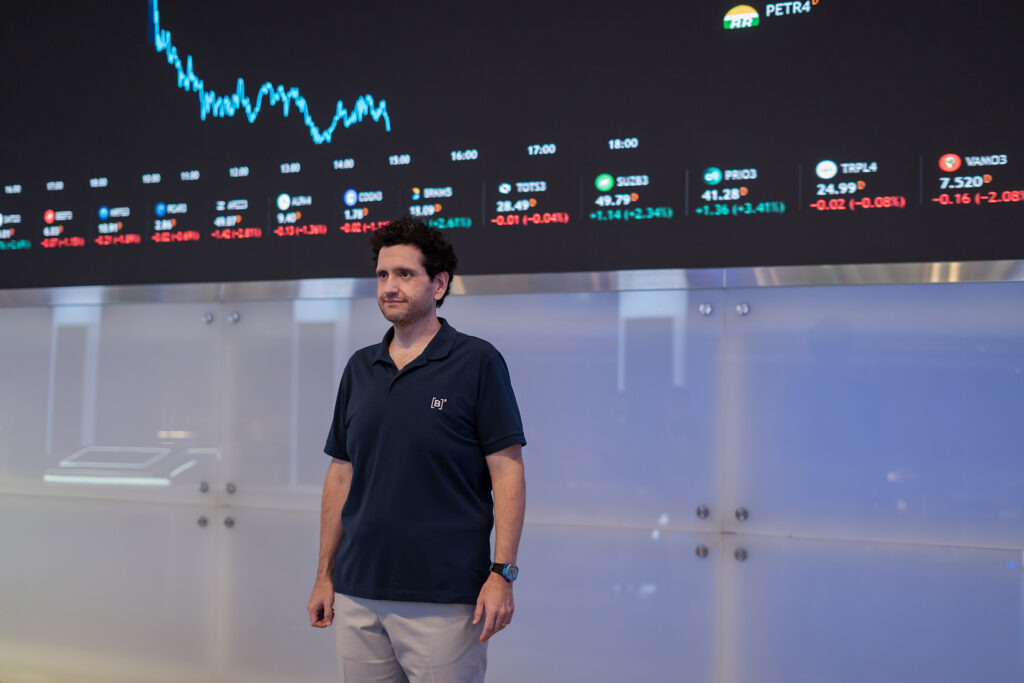
When generative AI hit the market, B3 quickly realized it could be useful as an educational tool. “Some people don’t watch a video to the end or read an article to the end,” Barichelli says. “An AI assistant is more casual and more specific to what they’re looking for.”
Riccardo Nardoni, B3’s chief technology officer, had a vision for B3 to strengthen its investment messaging and leveraged its relationship with Microsoft to develop the AI assistant.
The AI assistant runs all of its documents on Microsoft Azure OpenAI services with Azure AI Search. It’s much more advanced than traditional chatbots that can only answer every question one way and don’t explain the acronyms and complex names that make financial markets so daunting. Generative AI allows for a more natural conversation, adapting to the user’s education level and spelling out and explaining unfamiliar terms when needed.
The AI assistant, released in February, already supports 10,000 daily users and has “gotten very positive feedback from users, especially on social networks,” Rodriguez said. B3 doesn’t collect user information on its website, so it pays close attention to social media mentions.
B3 is considering new ways to popularize its AI investment assistant, such as offering a widget that other companies, such as banks or brokerages, can place on their websites where users will know their answers are being vetted by B3.
Encouraging Brazilians to invest in stocks and bonds is important not just for B3 but for the future of the Brazilian economy. “As Brazil’s capital markets strengthen, growing companies will be able to turn to the stock market for access to capital,” Barichelli said.
The World Bank report noted that while banks are essential for economic growth, supporting enterprises and reducing poverty, capital markets, in the form of debt and equity, are especially important for helping new enterprises grow, boosting productivity and creating new jobs. The government also relies on capital markets to issue bonds to finance big spending such as infrastructure construction. B3 hopes that more investors will buy Brazilian government bonds, which are a higher-return, lower-risk investment than pupansas, Barrichelli said.
“We believe that financial education and new investors are directly linked to an improvement in Brazil’s economy,” she says, “because with access to capital, businesses can grow, they can get new employees, and people can save.”
Top image: Christianne Bariquelli, head of education at B3, and Marcos Albino Rodrigues, director of architecture, data and innovation at B3, helped develop an AI assistant for the Brazilian Stock Exchange to answer investor questions. The number of new investors in Brazil has grown more than eightfold in just a few years, and B3 wanted to provide them with free financial education. Photo by Avener Prado, Microsoft.
