

After more than two years of death and destruction, neither side in the Ukrainian war seems close to victory. Russia has failed to achieve its imperialist conquest of Ukraine, and Ukraine is unlikely to recapture all of the territory occupied by Russia. Sooner or later, both sides will have to agree to a ceasefire and work out a peace agreement.
That is a welcome prospect. An agreement would not only reduce the killing, suffering and enormous costs of war, but it would also make Ukraine stronger in the long run and more able to defend itself and its democracy. Importantly, it would reduce the likelihood of a dangerous escalation.
Many Western countries argue that making concessions to Russia in the name of a peace deal would be tantamount to appeasing the aggressor and would only encourage further aggression. But that is not appeasement. Ending the war would rearm Ukraine and further integrate it into Europe and the West, making it a real deterrent. Russia has already failed in its original war aims and would need to make significant concessions of its own as part of any deal.
A peace conference in Switzerland this weekend that Ukraine is hosting to rally diplomatic support could be a much-needed opportunity to consider whether an agreement is reasonable and achievable. Russia has expressed a willingness to negotiate but has not been invited to the conference because Ukraine suspects it will use it as a pretense. But the Swiss host expects Russia to attend future conferences.
Until peace talks begin, no one can tell how they will fare. Even an imperfect solution would be preferable to the endless war that is consuming lives and resources at an alarming rate. So what can Ukraine reasonably expect to achieve, and what concessions should it make?
Ukraine has pledged not to give up any territory. This is backed by international law prohibiting the seizure of territory by force, and Ukraine should not abandon its legitimate claims to it. But securing a lasting ceasefire may require Russia to acknowledge that it has control, though not sovereignty, over four Ukrainian regions and parts of Crimea and to halt attempts to retake the occupied territories by force.
To be sure, this will be a difficult and painful concession, and it will be contingent on Russia not launching a major attack. If Russia keeps the peace, Ukraine may have to wait for a better opportunity to retake the entire territory, as Germany did in 1989, when the fall of the Berlin Wall paved the way for unification.
As part of a peace deal, Ukraine may have to suspend its NATO membership application and promise not to join for five to 10 years. This commitment is made easier because NATO member states are still not united on admitting a country at war, for fear that membership could lead to a NATO war with nuclear-armed Russia. Still, it would be a major concession.
However, Ukraine could enter into bilateral treaties with NATO allies for security assistance, as it has already done with France, Germany, and the UK, for example. Future security guarantees would need to include strong provisions for the supply of weapons and intelligence to Ukraine, and for preventing cyber attacks. However, Ukraine’s allies would probably not be allowed to establish military bases on Ukrainian territory.
Any peace agreement would require strong measures to prevent a resurgence of conflict. These would include demilitarized zones and mutual notification of exercises and military operations. Early warning, continuous monitoring, and transparency are much easier, especially in an age of satellite surveillance such as that currently provided by the United States. International inspections and a UN buffer force made up of troops from non-NATO countries would also make future invasions more difficult.
Certainly, a ceasefire or peace agreement would give Russia time to regroup and rearm its forces, but Ukraine could do so as well. It would also mean that all prisoners of war would be returned, not just the small group that has been negotiated between the parties so far, but that war crimes investigations and trials would go ahead.
Most importantly, a tentative peace, even if punctuated by violations, would finally allow Ukrainians time to rebuild their lives and their country. Millions of refugees could return home and repopulate the shattered country. The United States could sponsor Marshall Plan-style reconstruction efforts. Europe could lead reconstruction and integration efforts. Peace would make it easier for Ukraine to join the European Union.
There are other benefits too. Ukraine will continue to fight corruption, having already put an end to the dominant role of Ukrainian oligarchs. Democratic life may resume after martial law is lifted. Ultimately, a successful reconstruction would show the Russian people a better alternative to the dictatorial regime they submit to. That may be the biggest win for Ukraine and the West.
To make a peace deal more palatable to Russia, they could offer sanctions relief contingent on compliance with the agreement. Russia would then be able to trade its oil and natural gas at market prices, but the West could provide a mechanism for quickly reimposing sanctions if necessary, known as a snapback. Russia would regain access to gold and foreign exchange reserves that it had withheld from the West.
Of course, future violations of the agreement can be expected, but the level of violence would be much lower than the current war. And Ukraine would be better able to respond if Russian President Vladimir Putin escalates to all-out war. The point is that Putin has learned a hard lesson that invading Ukraine is not easy and subjugating the country seems impossible. In the meantime, Ukraine’s allies need to maintain a steady supply of weapons and increase diplomatic and economic support to strengthen Ukraine’s position at future negotiating tables.
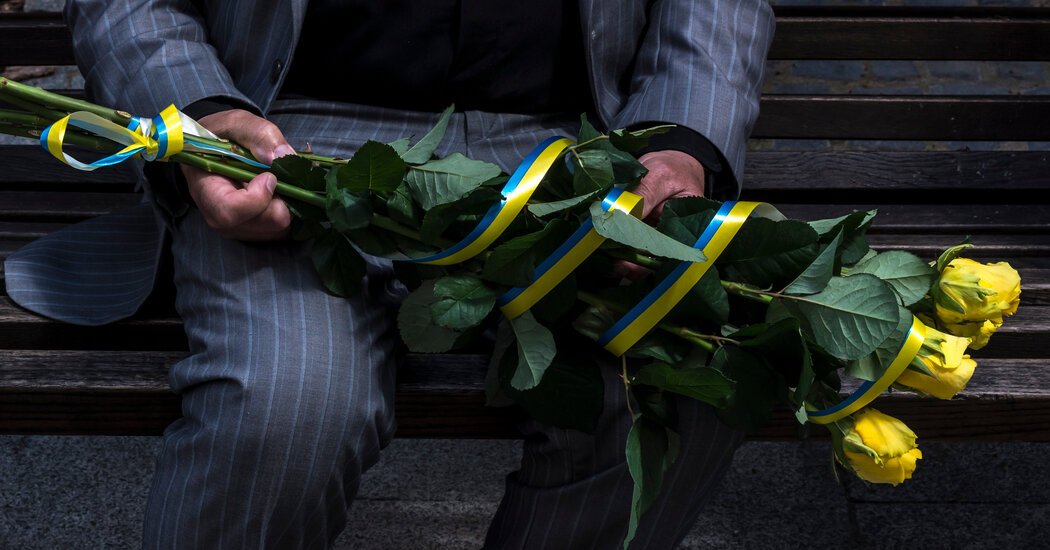
Ukraine and Russia will remain neighbors for decades and centuries to come, so they need to come to some mutual agreement for a peaceful resolution of the conflict. And if the current carnage continues for years until a settlement is reached, people will wonder why so many had to die first. The best way to honor those who died in the war is to ensure a sustainable peace so that others do not have to make the same sacrifices.
A. Walter Doane is professor of defence studies at the Royal Military College of Canada in Kingston, Ontario, and the Canadian Forces College in Toronto.
The Times is committed to publishing Diverse characters To the Editor: Tell us what you think about this article or any other article. Tips. And here is our email: letters@nytimes.com.
Follow The New York Times Opinion section Facebook, Instagram, Tick tock, WhatsApp, X and thread.
