

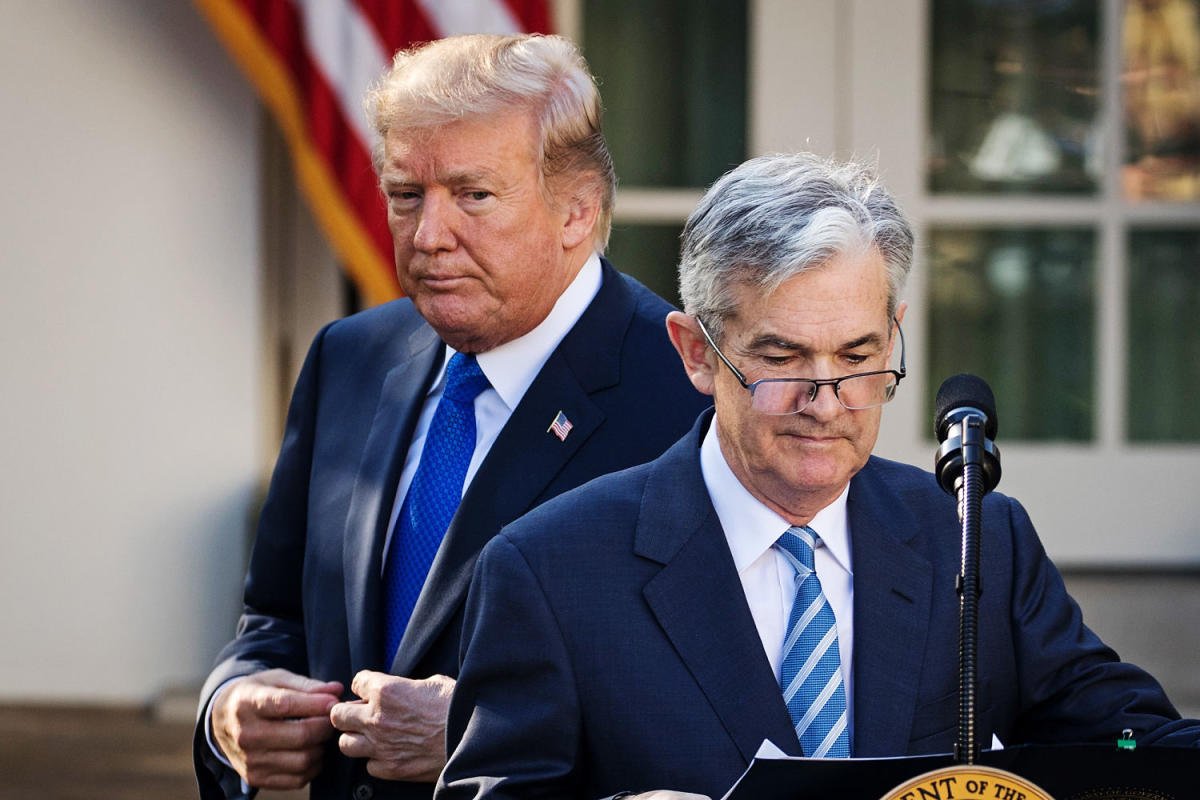
On Wednesday, the Federal Reserve announced it would keep interest rates steady at about 5.3%, the highest level since 2001. Fed Chairman Jerome Powell signaled that one or two rate cuts are possible before the end of the year, but will almost certainly not come before the fall. But Wednesday’s decision to hold current rates was a mistake; the Fed should have already lowered rates. And every month the Fed refuses to cut rates is a gift to Donald Trump.
Voters’ economic worries have been one of the biggest obstacles to President Joe Biden’s reelection. Some of that discontent is rooted in partisanship — Republicans changed their view of the economy almost from the moment Biden took office — and some can be traced back to the disruptions caused by the pandemic. But there’s no denying that some of the discontent is due to the 20% rise in prices since Biden took office, even as wages outpaced prices for the past two years.
The Federal Reserve has said it will maintain current interest rates to fight inflation, which may seem like a good thing for Biden, but it’s not.
To be clear, the Fed’s logic has nothing to do with politics (President Trump has already promised not to reappoint Powell). Early Wednesday, the Consumer Price Index report showed year-over-year inflation at 3.3%, slightly below expectations and well below the June 2022 peak of 9.1%, but still above where the Fed would like to be. Combine this news with Friday’s jobs report showing that job and wage growth accelerated in May, and it’s clear why Powell and others are afraid to change course.
But a look behind these headline numbers suggests this cautious outlook is misplaced. May’s jobs report may have beaten expectations, but other data has been disappointing. First-quarter GDP grew at an annualized rate of just 1.3%. The unemployment rate hit 4% for the first time in more than two years, and other indicators point to a weakening labor market.
Also, Wednesday’s inflation numbers may be misleading. On a monthly basis, prices were flat for the first time in two years. Food prices were also steady and gasoline prices fell. Even auto insurance, which rose 20 percent over the past year, finally fell. Housing, the biggest driver of sustained inflation, uses an index that lags the private sector index by several months; the latter index has shown home prices falling recently.
As it vacillates between fighting inflation and avoiding a recession, other central banks have begun to lean more toward recession prevention. Notoriously inflation-averse central banks such as the European Central Bank, Canada and Switzerland have cut interest rates. But the Fed has continued to cut rates.
The problem is that rising interest rates, by design, have casualties: Their purpose is to put a brake on economic growth by getting consumers to spend less. But when interest rates rise, mortgages, credit cards, and auto loans become more expensive. These increased interest expenses aren’t reflected in the Consumer Price Index, but they’re certainly on the minds of Americans who complain about the rising cost of living.
And the burden is not evenly distributed: Just as rising prices disproportionately hit poorer Americans who spend more on food and energy, rising interest rates are a bigger burden for people who can’t make their credit card payments each month or who are looking to move out of their new homes.
The Fed’s delay is especially frustrating because interest rates are a tricky tool to tackle inflation this time around. If inflation were primarily a matter of excess consumer demand, then higher rates might help. But recent inflation has been driven largely by supply chain bottlenecks, other pandemic disruptions, and companies’ pursuit of higher profits. (One study by the Groundwork Collective found that “corporate profits drove 53% of inflation” in the middle six months of 2023.) Higher interest rates could still lower inflation, but only in a roundabout way. And in the all-important housing sector, higher rates would make homeowners more hesitant to take out new mortgages to move, further driving up prices amid a national housing shortage.
“The blunt instrument of high interest rates is coming down on the heads of the working class,” said New York Times reporter Peter Coy. Pandemic-era savings have dried up and Americans are thrifting, as evidenced by giants like McDonald’s and Walmart slashing prices to lure customers back.
The last time Trump was in the White House, he often sought to undermine the Federal Reserve’s longstanding independence from the White House. That independence exists for a reason: to give credibility to the central bank’s economic goals. It is ironic, then, that the Fed’s misguided interest rate policies are unnecessarily putting the economy at risk, raising the cost of living and reinforcing a key concern among voters that may lead to a return of Trump.
This article originally appeared on MSNBC.com.
