

I see hundreds of these companies every year, and it’s easy to see why they are able to beat many Western companies.

18:59
Why the EU and US are worried about Chinese excess capacity
Why the EU and US are worried about Chinese excess capacity
The first advantage is that there is naturally fierce competition in many industries within China: for every product or industry in which there is one successful company in China, there are many others doing everything they can to surpass it.
The result of this competition is very hard work at a very fast pace. Companies expect long hours and quick results from their teams. There will always be people willing to work harder for less pay, so as an employee, you often have little choice but to work hard.
Compare this situation to the reverse one in Europe, where companies can only bring employees back to the office three days a week, and many employees are upset when they receive work-related emails outside of working hours. Which environment allows for cheaper products to be produced at a faster pace?
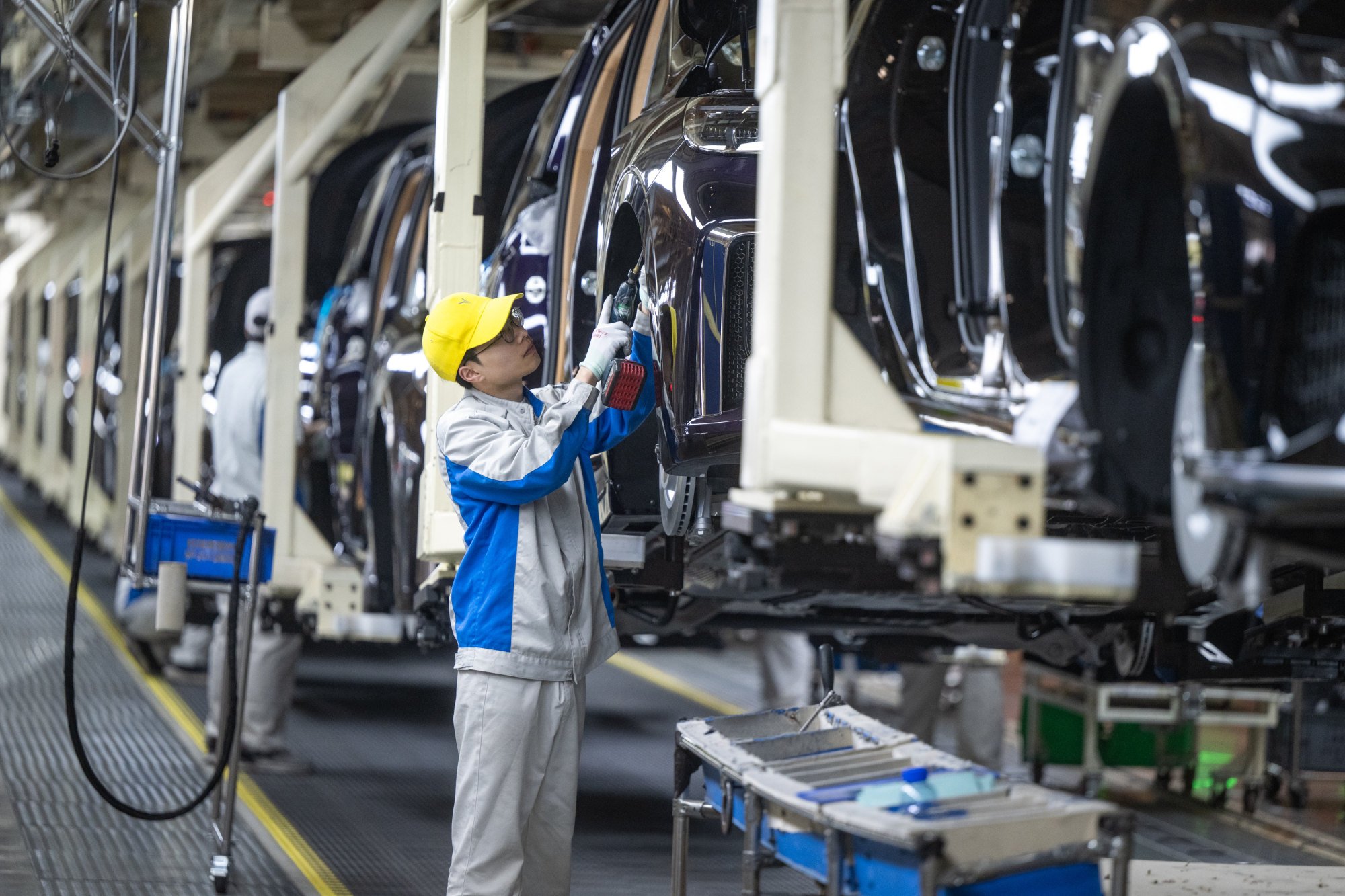
Take EV battery chargers for example: there are several well-funded Chinese companies making very similar products, some of which have emerged in the last decade or so, but only 2-3 of them will likely still be around in 10 years’ time.
These companies have already largely fended off most of the international competition by making more affordable products with a few extra features each time. Now, the competition between companies will intensify, and the winners will be those that can create better micro-innovations at a faster pace.
Another important reason why Chinese companies have an edge over the rest of the world in many ways is geography. Just as Silicon Valley is a hub for high-tech talent, China has supply chain hubs for every industry imaginable, most of which are concentrated in the Pearl River Delta and Yangtze River Delta regions. These industrial clusters foster innovation, entrepreneurship, production, and distribution.

One Shenzhen-based company I work with makes premium electric toothbrushes at half the price of the big brands, with sleek products and packaging that rival Western brands, all made in Shenzhen.
A representative for another U.S. food service company said all of their products still come from China. “Not only is the entire supply chain in one country, but sometimes the entire supply chain is on one street,” he explained.
When you combine this megacity of high-stakes competition, micro-innovations and industrial clusters with a sophisticated and highly educated population hungry for success, it makes it almost unrealistic to expect anywhere else in the world to be able to compete in certain industries.
Competition can be painful in the short term, especially in complex political and election years. But it is competition that drives innovation. Just as the space race drove the United States and the Soviet Union to bold, innovative feats, so too in China, domestic competition is driving domestic companies forward.
U.S. and European companies are now losing out in many industries where they once led, but thwarting competition won’t spur innovation, and focusing this success solely on industrial policy and overcapacity obscures other obvious reasons why Chinese companies are now on top.
Chris Pereira is the founder and CEO of iMpact, a communications and business consulting group.
