

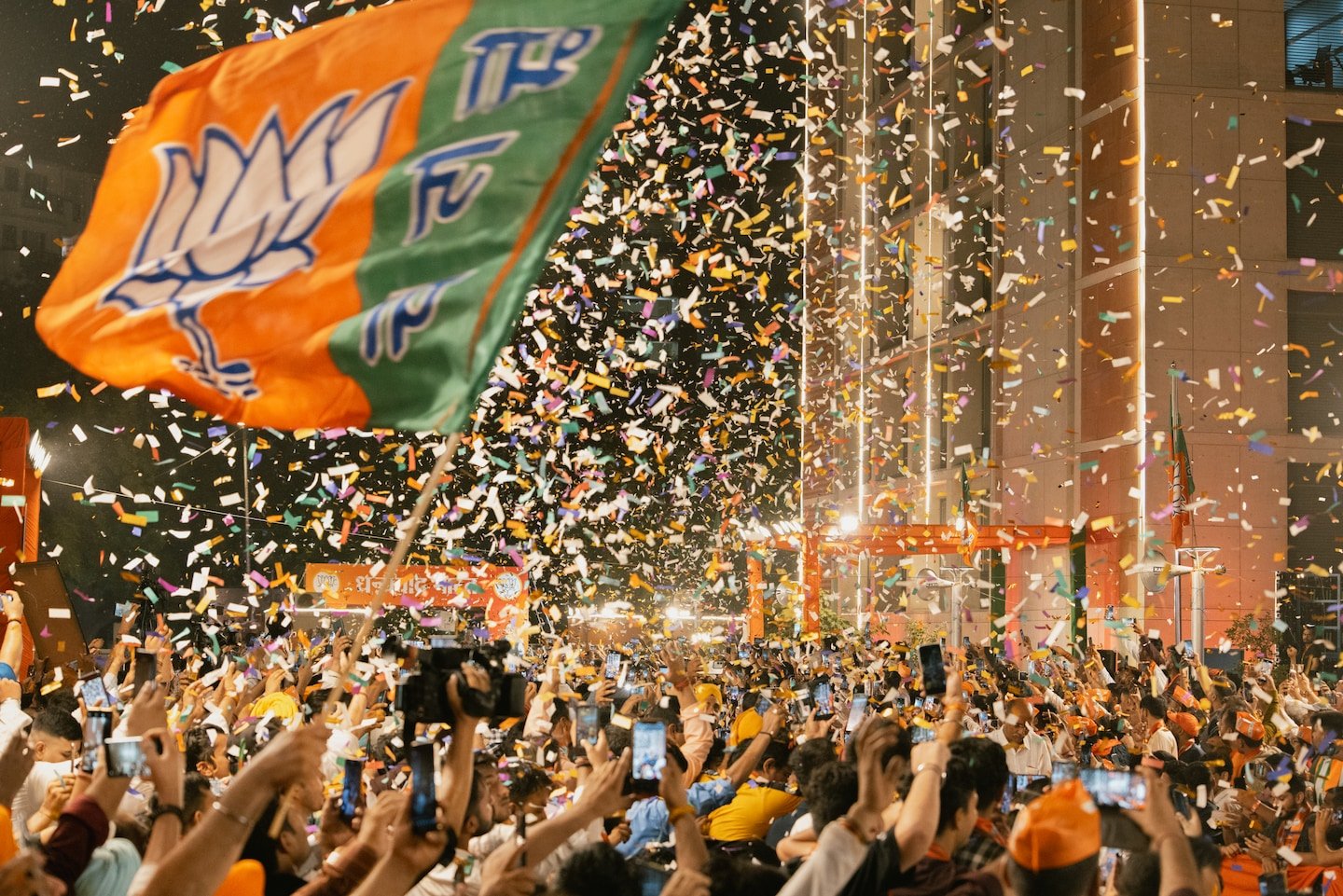
The key outcome of the vote is that his Bharatiya Janata Party will not be the sole centre of power in India for the next five years, as Modi hoped and predicted. Modi and the BJP will lose the freedom to further crack down on civil society, jail the opposition, infiltrate and hijack democratic institutions and persecute Muslims. Modi will never abandon his Hindu nationalist thrust, but the resurgence of the opposition and the need to compromise with coalition partners will strengthen checks and balances. For a world where democracy seems to be in retreat all over the world, this is a very positive development, all the more good as it comes at the direct hand of 640 million voters. This is comparable to Poland’s recent rejection of a dictatorship as a silver lining in dark times.
Modi has frequently predicted that his Bharatiya Janata Party and its allies would win more than 400 seats in the 543-seat Lok Sabha; 272 seats are needed for a majority in the lower house. But Modi’s party won just 240 seats, 63 fewer than five years ago, and will need to negotiate a coalition to take power. Rahul Gandhi’s perennially struggling opposition Indian National Congress won 99 seats, a staggering 47 more than in the last election. There were also decisive victories for several regional parties.
Modi’s party suffered heavy losses in the vast northern state of Uttar Pradesh, losing 29 seats, as well as 14 in Maharashtra state, home to India’s business and financial capital, Mumbai. The Bharatiya Janata Party also lost in the northern constituency of Ayodhya, home to a Hindu temple to the god Rama that Modi opened on the site of a former Mughal-era mosque, a highly symbolic defeat in a largely Hindu region.
To be sure, voters were frustrated by unemployment, inflation and inequality, despite India’s overall economic growth. The election results map also suggests a return to older patterns of regional voting that Modi has previously opposed. But the vote was also a protest against Modi’s autocratic and divisive approach. He has been leaning toward authoritarianism for years, but voters may have worried that if he won an absolute majority in Parliament, he would try to change the constitution to permanently disenfranchise some groups.
In the run-up to the vote, Mr. Modi fostered a cult of personality as a leader. He claimed that God had sent him to rule India. When his mother was alive, “I probably believed that my birth was biological,” he said, but “after my mother died and looking back at my life experiences, I became convinced that God sent me here.” In the run-up to the vote, his government froze some of the opposition’s bank accounts, jailed leaders on corruption and tax-related charges, and basked in laudatory coverage by a media dominated by Mr. Modi’s allies.
Moreover, as The Washington Post detailed last year, under Modi, social media platforms have become a conveyor belt of hatred against India’s 200 million Muslims. Under Modi’s Hindu nationalist rule, India has been plagued by mob rule and lynchings and attacks on Muslims and Christians. During the election campaign, Modi unashamedly denigrated Muslims with dark warnings that they would steal the country’s wealth. Overall, there were legitimate concerns in India and abroad that Modi’s rise would mean the end of truly competitive politics in the world’s largest democracy. Fortunately, that prospect was tempered, if not thwarted, by the election results.
Elections are crucial, but they are only one wheel in a functioning democracy. What happens in between is just as important: encouraging civil society, the rule of law, institution building, and tolerance. It remains to be seen how Modi will respond to this setback, or whether he will continue his demagoguery of Hindu nationalism. But at least there are now those with the power to counter his worst excesses, thwart his crushing rule, and return India to the democracy it is best: a competitive one.
