

By Elizabeth Copple
Whenever I complained about the division in American politics, my son Henry would often encourage me to do something. Henry was a poll worker during the 2020 election at age 17. It was his first official job, and he loved the experience so much he even wrote about it in his college essays.
After Henry tragically died in an accident on August 29, 2022, I followed his lead and signed up to work in that year’s midterm elections. It may have been a mistake to commit to something so important while struggling with grief. But I threw myself fully into the work and learned through my son’s example that we can all find bipartisan ways to improve our political process and overcome divisions in our country.
Until November 2022, I had never thought about the good-natured poll workers I encountered, or the monumental efforts required to run an election.
I was named “Election Coordinator” and was responsible for auditing five polling stations the week before and on Election Day. I attended a one-day training session where an instructor explained the voting procedure, demonstrated the electronic polling register system, provided me with a county-issued phone, and helped me pack boxes of supplies into my trunk. I was ready.
That first morning, I arrived at 7 a.m. to audit the first polling place, nervously clutching my clipboard as the vote center opened. Was there an official table with all the forms, flyers, and guides we needed? Yes. Were the printers working? Checked. Was curbside voting available? Yes. Did anyone need extra temporary envelopes, posters, registration forms, “I Voted” stickers, scissors, etc.? I had spares in my car if I needed them.
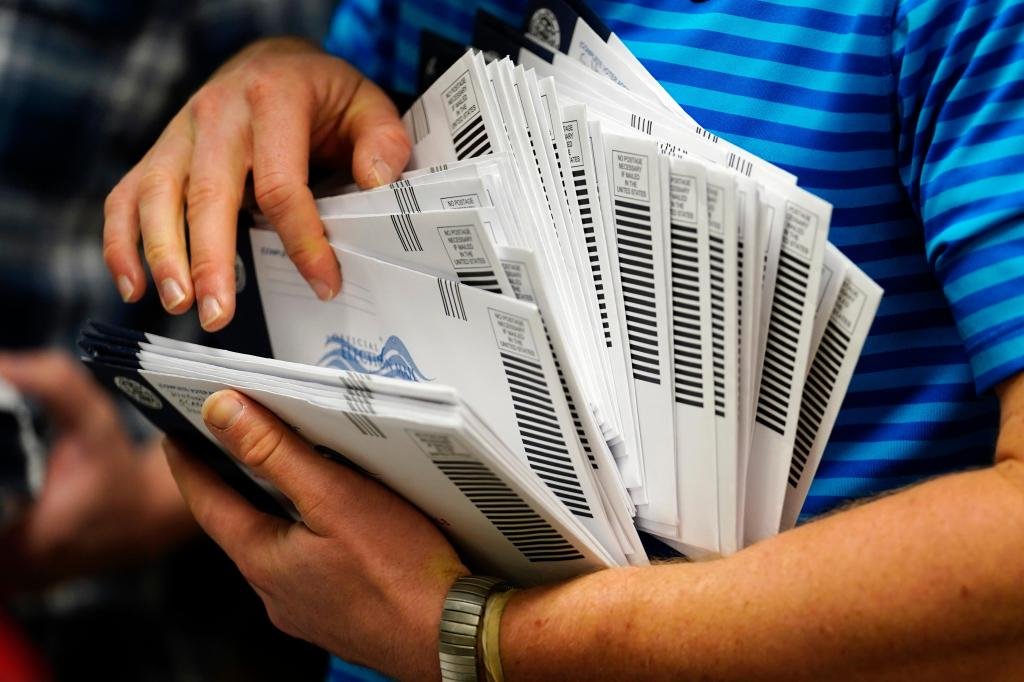
Everything about the job amazed me. The entire process was digitalized, with procedures in place to keep the voting data safe. Every night, the team printed out voting reports, counted all the ballots (voted, provisional, conditional, curbside, write-in), and packed the machines, printers, and equipment onto carts and locked them with scanned zip ties to ensure a “chain of custody.” Finally, two people were required to transport the ballots to a central location. By that time, it was usually close to 10 p.m.
I’m sure the other poll workers had strong political opinions, just like me, but we didn’t argue about the candidates or the endless propositions on the ballot. Everyone was calm and professional.
We were a ragtag bunch, ages 16 to 70, from all parts of the city. Most of us got an allowance, but none of us were in it for the money. There was no storybook patriotism. There were no lofty speeches. We’d never heard the Pledge of Allegiance. But we were all part of Team Democracy, and we were proud to be part of it.
My experience is consistent with data that shows that among poll workers, “among possible motivations for serving, a sense of civic duty and involvement in the electoral process were most important; demonstrating party support was the least frequently expressed motivation.”
In other words, being a poll worker has no political significance.
Most of us worked 14-15 hours straight, but things didn’t always go to plan. We had to direct the crowds after the storm knocked out the power. The county sent electricians within hours and restored power. Still, one woman yelled that we were preventing her from voting and threatened to call a lawyer.
Poll workers tried to prevent “campaigning” – campaigning or vote solicitation – within 100 feet of a polling place. Local school board candidates were the problem: one tried to put up a campaign sign in the parking lot outside the polling place but was asked to move, and another candidate handed out balloons to children in the park next to the polling place, with the candidate’s name printed on them.
Some highlights for me were: I drove a 94-year-old woman home the evening she voted. One evening, election observers from Western Europe were watching us close the polling station. They didn’t ask any questions, they just watched quietly as everything went smoothly. I thought, “We must be doing something right.” An Iranian-American man was in tears while voting. He talked about women in Iran being killed for defending their human rights.
On Election Day, I arrived home near midnight, exhausted but satisfied. I had found a small way to support our democratic process, and it felt good. I had also honored my son and created a new shared experience for the two of us. I knew Henry would be proud of me. Maybe I never stopped complaining about politics. But I had done something useful. For both of us. I plan to work the polls again this November.
Elizabeth Kopple works in content marketing and lives in California with her husband. She is currently writing a memoir focusing on the death of her son.
