

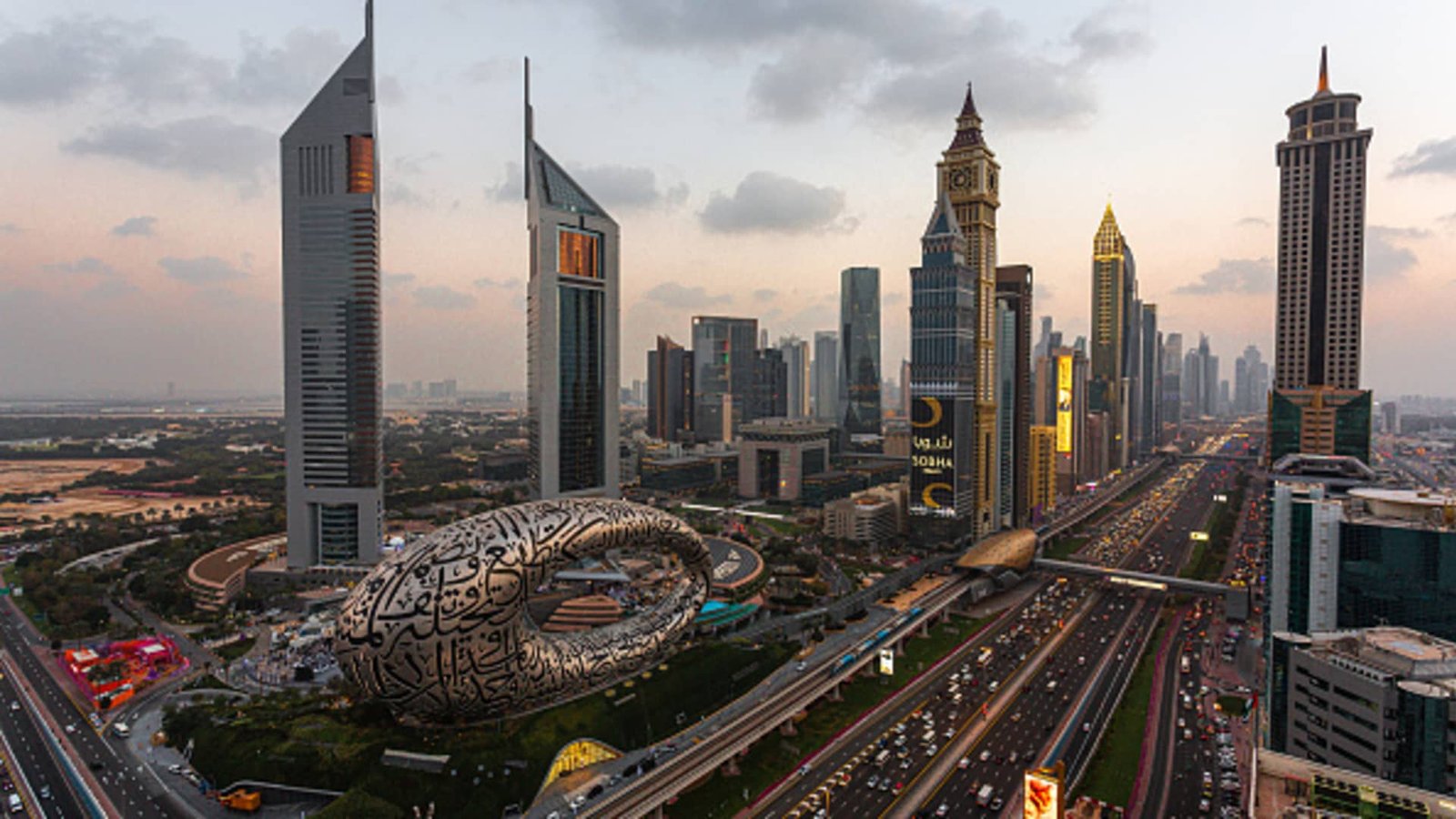
Growth prospects in countries like India and South Korea have many investors and big banks bullish on emerging markets this year. But one wealth manager said his ultra-high net worth clients are looking elsewhere. “A lot of wealth, especially from the ultra-high net worth, is flowing into Dubai,” Dhruva Jyoti Sengupta, CEO of Rise Private Middle East, told CNBC Pro on May 31. Sengupta, who serves ultra-high net worth and high net worth individuals from Asia, the Middle East and Europe, said he regularly gets inquiries from individuals about investing in Dubai. “Dubai is taking advantage of the political instability that’s happening around the world,” he said. “The Dubai market is seeing a lot of money coming in from Russia and China. The new wealth coming in is coming from Indian startups, Chinese companies, European hedge funds and family offices, and even Indonesian conglomerates.” The United Arab Emirates city of Dubai is a gateway to the Middle East, Africa and other regions.According to Henley & Partners, Dubai’s billionaire population has grown 78% in the past decade, with 72,500 billionaires currently living there. The consultancy, which tracks personal wealth and global investment migration trends, ranked Dubai the 21st richest city in the world. Dubai’s benchmark DFMGI index is down about 1.64% year-to-date, but has risen more than 10% in the past 12 months. Sengupta said Dubai’s appeal to the ultra-high net worth individuals is the ease of doing business and investing there, its tax-free policies and access to other markets. “We are not looking at wealth mobility as a whole,” he said. “In fact, the ultra-high net worth individuals are using Dubai as a gateway to invest in different regions and assets, and they are doing a lot of diversification.” Portfolio Allocation Sengupta also revealed how an individual with around $10 million in investable money typically allocates his money: $3 million (30%) is earmarked for wealth accumulation. These funds are allocated to “high-yield asset classes” such as stocks, real estate and commodities like copper, he said. Some of the funds are often directed to alternative assets, with cryptocurrencies like Bitcoin and Ethereum gaining popularity. $3 million (30%) for capital preservation. The funds are typically invested in fixed-income assets like U.S. Treasuries and passively managed vehicles offered by hedge funds and private equity firms. $3 million (30%) for cash. $1 million (10%) for their own business, if applicable. “Investors typically earn 23-25% returns on their own businesses that they manage and understand well,” said Sengupta, former head of EMEA insurance and investments at Citibank. “So we’re focusing on that as an asset class, rather than putting all our money into riskier assets that only give single-digit returns.”
