

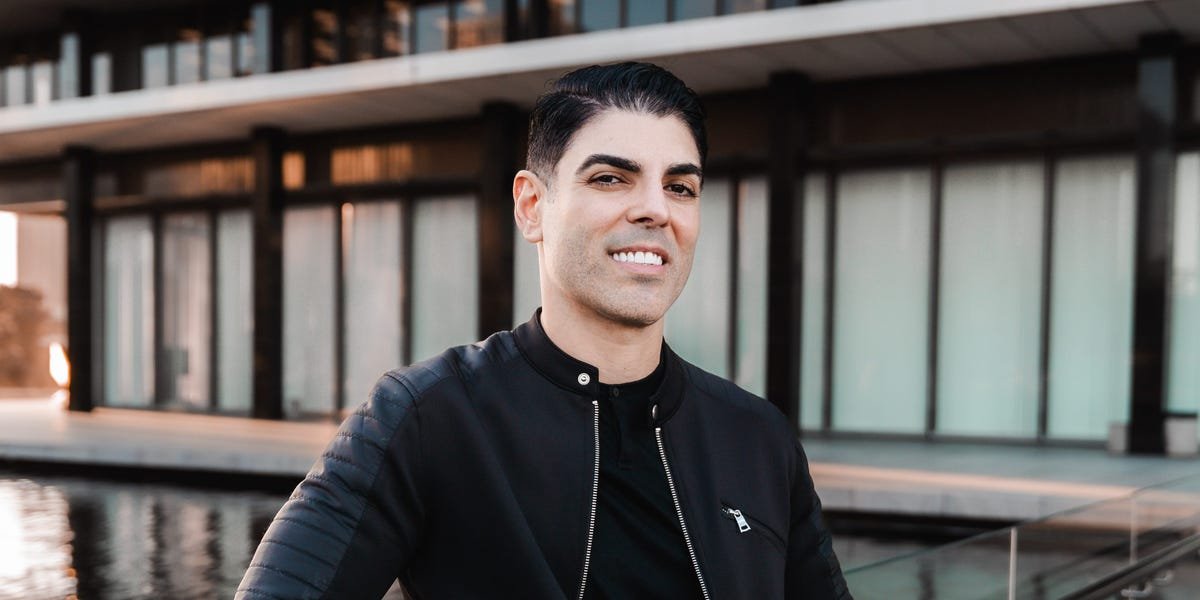
David Capablanca is a short-only bias trader, which means he bets that the share prices of companies with weak fundamentals will fall. He does this by borrowing shares, selling them, and buying them back later at a lower price, pocketing the difference.
This is a more aggressive approach than many investors take because short selling is much riskier than buying a stock. If you buy a stock, the amount you can lose is only up to the purchase price. But when you short sell, there’s no guarantee the stock price will fall, and it could skyrocket instead, so your potential losses are unlimited.
Either way, Capablanca has always liked trading on the short side because he enjoys the process of finding weaknesses and holes in companies, especially those that are underfunded.
He likens the process to being a chess player, meaning he has to plan every move in advance and know how to react to different outcomes.To get there, he conducted a multi-layered evaluation that included company fundamentals, technical analysis of stock chart patterns, top news stories, and the readiness to keep a close eye on the stock even after it opened.
Over the years, he’s developed a nine-point checklist to determine whether a trade is suitable for shorting. Those variables include low institutional ownership, small cash reserves, a market capitalization under $250 million and other characteristics that can signal a weak stock. This has helped him maintain a winning rate of more than 90% of the time, according to records from his brokerage account previously viewed by Business Insider.
Although he loves the thrill of short selling, he knows that while the risks are high, the rewards are also high. Now 40 years old, Capablanca is also thinking about his long-term financial situation and a more stable source of income for sure. As a non-employee, he doesn’t have a 401(k) plan or employer-sponsored retirement plan, so the onus is on Capablanca to put money aside. Capablanca’s strategy so far has been to purposefully allocate 2-5% of his trading profits each month or quarter into longer-term, more stable investments that don’t require constant checking.
Two popular ETFs and two big tech stocks
To lock in profits and keep them growing in a safer way, investing in exchange-traded funds has been his main option.
Of the four long-term investments that Capablanca regularly adds to, two are the world’s most popular ETFs, which he feels comfortable with because they offer broad exposure to major stock indexes.
“When I take a long position, I don’t want to worry about anything,” Capablanca said. “I just want to invest my money once a month.” [or] Every few months.”
His main fund is SPDR S&P 500 ETF Trust He is investing in SPY, which tracks the S&P 500 index, which he describes as a “bet on America” by gaining exposure to the country’s top companies across a variety of sectors.
“We have a lot of great companies in our country that are great innovators for the world at large,” Capablanca said.
Invesco QQQ ETF (QQQ) is a more tech-focused fund that tracks the Nasdaq 100 Index, a basket of 100 of the largest companies traded on the Nasdaq stock exchange, excluding financial stocks. He chose the fund because many of the companies he shorts are listed on Nasdaq, and exposure to the top companies provides a kind of hedge for his aggressive bets.
Outside of his major ETFs, Capablanca allocates a small portion of his portfolio to individual stocks, two of which he likes the most: He shorts companies with minimal cash flow and reserves and low institutional ownership, so when he wants to buy more shares, he looks for the opposite.
The first one apple AAPL is a company with a nearly $3 trillion market cap and tens of billions of dollars in cash, and Capablanca says the company has steadily grown earnings since 2010 while maintaining a healthy debt-to-equity ratio.
In the long term, he sees no limit to the company’s potential, especially as it offers complementary products that tie into its hardware to form an entire ecosystem, such as the apps available on the iPhone, and he thinks that if flying cars ever become a reality, they will be Apple cars.
Uber Another stock Capablanca really likes is Uber, but he hasn’t allocated much to it because it’s a relatively new company. Capablanca’s confidence comes from the company’s very high institutional ownership at 83%, meaning big funds own the company and believe in it. He noted that even though the company was founded in 2009, it was profitable by 2022 and maintains low debt levels relative to its market cap. Additionally, he added that the company’s free cash flow has more than doubled over the past year.
“Uber is a little bit more at risk than Apple because it’s in the auto industry,” Capablanca said. “The auto industry has its problems. But I travel a lot. I just got back from Argentina. I was in the Galapagos Islands, I was in Colombia. Tomorrow I’m going to Italy for sightseeing. But everywhere I go, there’s Uber. I go to India, and there’s Uber rickshaws.”
He noted that he would allocate only about 1% of his discretionary budget to Uber because regulatory changes could affect the company’s business model.
