

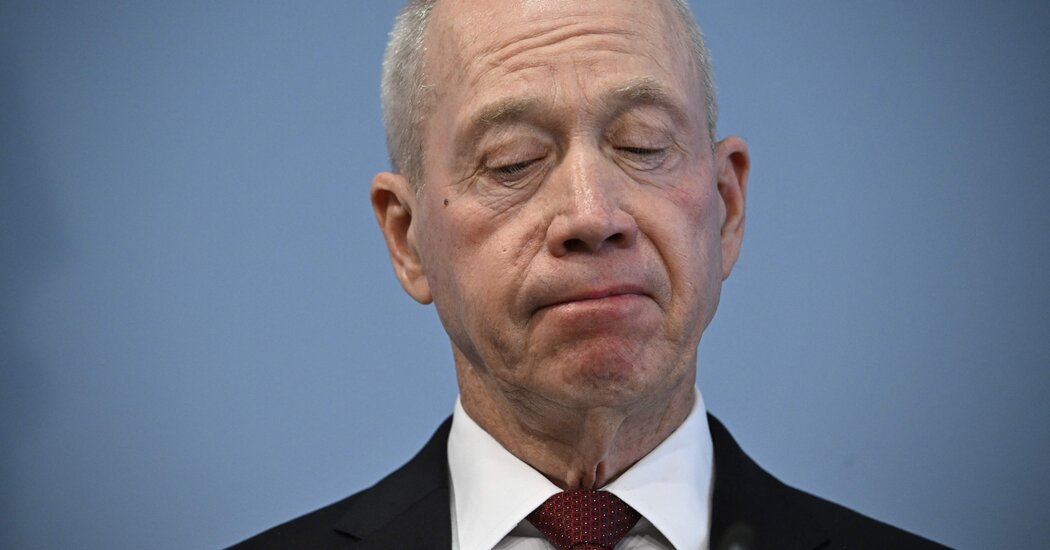
In reality, none of Gallant’s dramatic interventions have actually stopped the policies he criticized. He is, and will remain, a key figure in the government that brought Israel to this situation. This situation was highlighted last month when the chief prosecutor of the International Criminal Court sought his arrest on charges of war crimes and crimes against humanity, including using starvation as a weapon of war. The prosecutor also sought arrest warrants for Netanyahu and three Hamas leaders. The world’s international courts consider Yoav Gallant to be an architect of Israeli policies, not a whistleblower.
Israel faces tough choices about its future, and Gallant will play a key role in shaping the path forward for Israel: does Gallant represent a real alternative to populist leaders who threaten to turn Israel into a pariah state, as he has seemed to do at these critical moments, or does he actually represent the status quo, as his track record suggests?
Many Israeli Jews are hoping that Mr. Gallant will lead Israel down this different path.
The course of the war will determine which path Israel ultimately takes. On Friday, President Biden said he supported Israel’s “comprehensive new proposal” for a ceasefire and hostage release, but the outlook for the plan remains unclear, as do the potential consequences of the Biden proposal for the stability of Netanyahu’s coalition.
Gallant, 65, began his career in the heartland of the Israeli military. Born in Jaffa, near the sea, he was required to serve in 1976, enlisting in the Israeli Navy’s elite special forces, the 13th Squadron. Israel’s elite military units are the equivalent of America’s Ivy League universities, and soldiers must meet rigorous requirements to join and stay. They shape a soldier’s identity and forge a community for decades to come, and it’s common for children to follow their parents into the special forces, like Gallant’s son.
Gallant rose to the position of commander of the 13th Fleet. He continued to rise through the ranks, becoming Prime Minister Ariel Sharon’s military chief in 2002 and commanding Israel’s southern region a few years later. In 2010, he was named Israel’s next chief of staff. But he lost the coveted job after media reports of land-use irregularities involving his luxury villa. He was later exonerated, but a legal battle over fines dragged on for years and drew little public attention.
