

Ramaphosa, who has lost support for his perceived indecisiveness, has never faced a more crucial choice. It is important to remember that there is much more at stake in the choice than an extension of his term as president. South Africans were clearly fed up with the ANC’s record of endemic corruption, inadequate delivery of basic public services like water and electricity, widespread unemployment among the black majority, and widening inequality. The future of South Africa, and the entire African continent, depends on stabilizing South African democracy and restoring it as a powerful engine of economic growth.
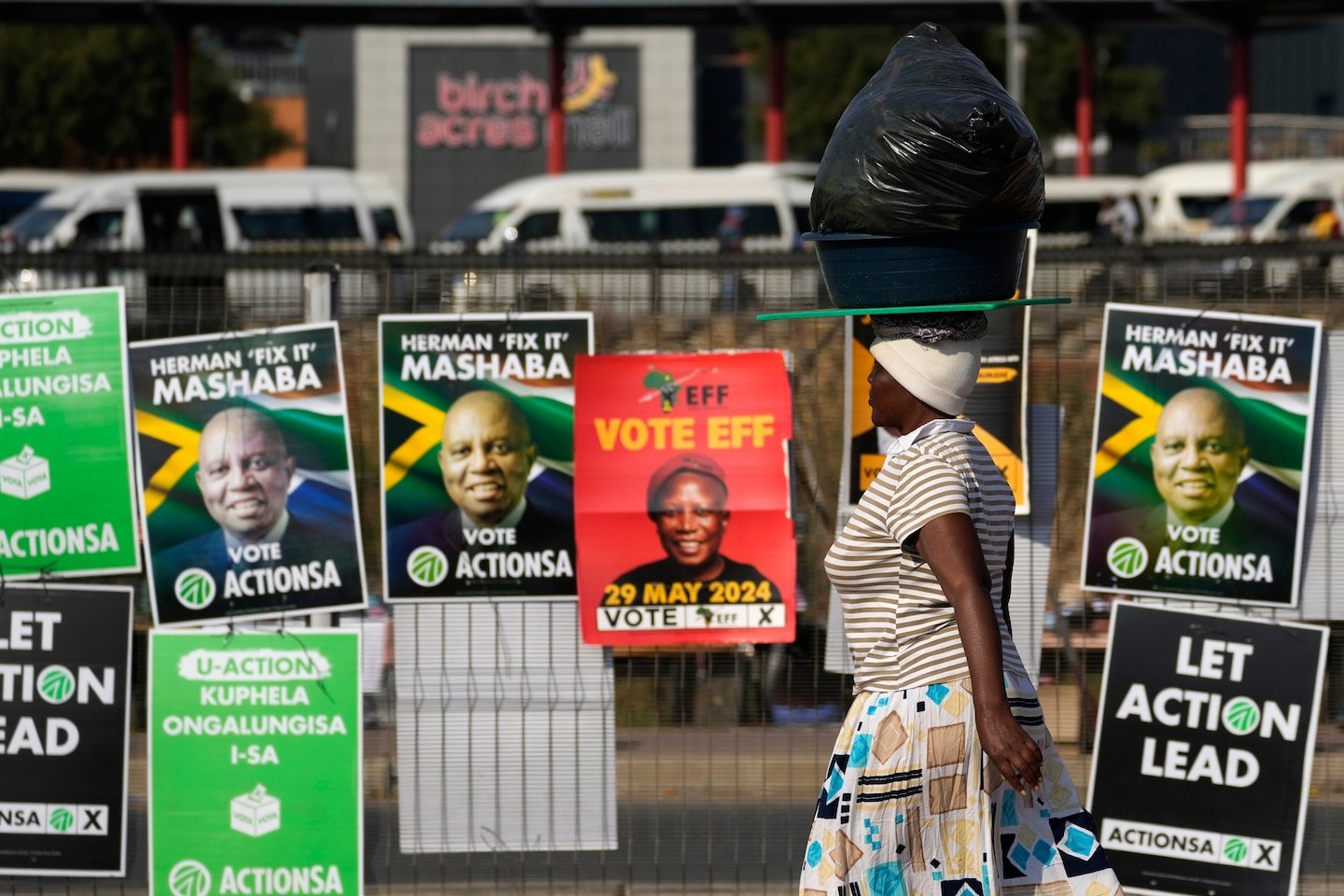
Given the angry mood of the electorate and the strength of the ANC’s own left-wing tradition, President Ramaphosa will undoubtedly be tempted to align with one of the two parties that split off from the ANC. The quasi-socialist Economic Freedom Fighters (EFF) won about one-tenth of the vote. Led by red-bereted firebrand Julius Malema, who was expelled by the ANC for insubordination more than a decade ago, the EFF advocates a total confiscation of white-owned farmland similar to the one that ended in disaster in Zimbabwe under socialist President Robert Mugabe. Malema has been convicted twice for hate speech, including a call to “shoot the Boers” (a reference to white Afrikaans-speaking South Africans). Many political analysts in South Africa have rightly called the possibility of an ANC-EFF coalition government a “doomsday scenario.”
Equally problematic, albeit for different reasons, is the coalition government of the ANC and Mkhonto weSizwe (MK). MK is expected to win around 14% of the vote, with a disproportionate share of the vote based in KwaZulu-Natal. MK is a left-wing Zulu nationalist party formed by 82-year-old former ANC chairman Jacob Zuma, whose abysmal tenure from 2009 to 2018 led to economic decline in the province. Zuma resigned amid corruption charges and was briefly jailed, but his supporters rioted in a way that left 300 people dead. Early in his career, Zuma was controversially tried and ultimately acquitted of rape charges after he accused a suspect of wearing a knee-length skirt and claimed he showered after sex to reduce the risk of HIV infection.
The most logical move for the ANC would be to join forces with the Democratic Alliance, which has around 21% of the vote. Of course, this would require the ruling party to move ideologically to the center. The DA is known as a center-right party that supports free markets and, according to DA leader John Steenhausen, is ideologically closest to the British Conservative Party. The DA is more pro-Western than the ANC, and is, for example, more staunchly and vocally opposed to Russia’s invasion of Ukraine. This could bring a much-needed new balance to Ukraine’s foreign policy in general and its relationship with the United States in particular.
As a potential partner for the ANC, the DA suffers from being seen as the party of South Africa’s privileged white minority (about 8% of the population), which includes Steenhausen and many of its MPs. But its roots are in part in the liberal white parties that opposed apartheid before the transition to democracy. And it may be hard for the ANC to work with a party that campaigned against it by publishing a database of ruling party supporters who were appointed to government positions without their qualifications, a corrupt process known as “cadre placement.”
But the ANC has always been a collection of factions rather than a strictly ideological party. Ramaphosa, who held several ANC positions under Mandela, who later became a private sector billionaire, comes from the party’s moderate wing. He should be able to create a space for the DA within the larger ANC bloc. Such a coalition would give South Africa a strong, multi-ethnic governing majority based on a three-fifths vote and could bring about needed economic reforms. That would be good for South Africa, the African continent and the world.
