

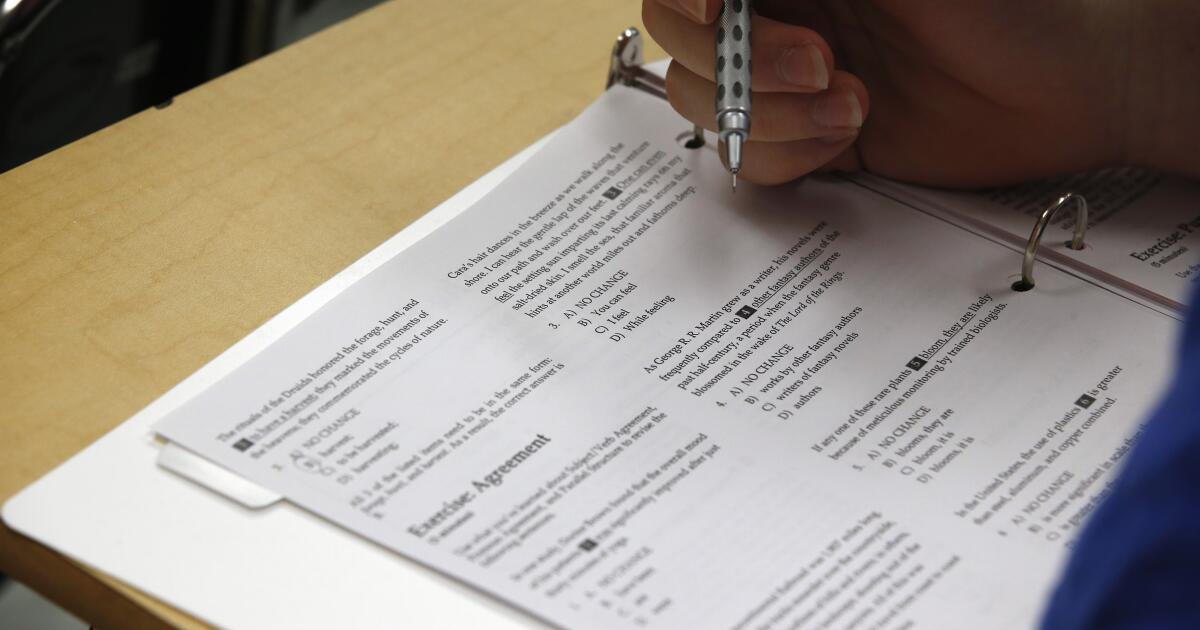
I live in Northern California but am traveling to Texas on Saturday to take the SAT.
This isn’t due to a lack of planning on my part. I tried to register for the June SAT on the College Board site during the first hour of the first day students could register. But within minutes, all the seats in my county and across Northern California were filled. Bay Area SAT It’s about as hard as getting tickets to a Taylor Swift concert.
I’m not the only one California takes extreme action They struggled to find a place to take their college entrance exams. One mom in my community posted on her Facebook page that it “took 2 months of effort and 3 calls to ACT to secure a spot over 100 miles away.” Other families in California joined the conversation, explaining, “It’s the same in Southern California. Last year we had to drive 100 miles for an 8am test, stayed up all night…really frustrating.”
I know the SAT and ACT tests are controversial. I’m not here to debate whether those tests should exist or not. The fact is, they’re still important whether we like it or not. For the 2025 college application cycle, only 4% of four-year colleges are test-blind, meaning they don’t accept test scores. Most schools (87%) are test-optional (i.e. test-first), and the remaining 9% are test-required. According to Fair TestIf a good test score improves my chances of getting into 96% of four-year colleges, then I want to take that test, and as long as most colleges remain test-optional, it should be readily available to all high school students.
So I travel 1,800 miles to take the SAT. (I chose Dallas because there were plenty of seats available and the flights were cheap.) Having parents with the financial means and the flexibility of their work schedules to get me to a testing site far from home is an advantage many others don’t have. The lack of testing sites in California isn’t just an inconvenience, it’s also a matter of equity.
California students who cannot take the tests due to lack of access will miss out on admission to some colleges and universities and scholarships that consider or require SAT/ACT scores in their admissions decisions. For many students, especially those from low-income families, this may mean losing aid to attend college.
The lack of sufficient test sites seems to be a particular problem in Northern California, as evidenced by the August 24 SAT test date. A search on the College Board’s website earlier this week for test sites within 100 miles of San Francisco, Dallas, and New York City found 103 test sites in the New York area, 49 of which still had spaces available. The Dallas area had 69 test sites, 65 of which still had spaces available. But the Bay Area had only 12 test sites, and they were 100% booked for the August test. In fact, the closest test site with spaces to San Francisco was 405 miles away. This lack of access puts Northern California students at a disadvantage.
California clearly needs more testing centers, but I advocate that college entrance exams, like other standardized tests such as the California Assessment of Student Achievement and Progress, be administered to all high school students in their own schools during regular school hours.
After my family and others raised the issue of a lack of testing sites with the Superintendent, our school district agreed to hold an SAT School Day in October, allowing students in our district to take the SAT at school during regular school hours. But change in one school district is not enough. Students and parents across California must demand more testing sites in more schools so more California kids can pursue their college dreams.
Sebastian Gilmore is a senior at Tamalpais High School in the San Francisco Bay Area.
