

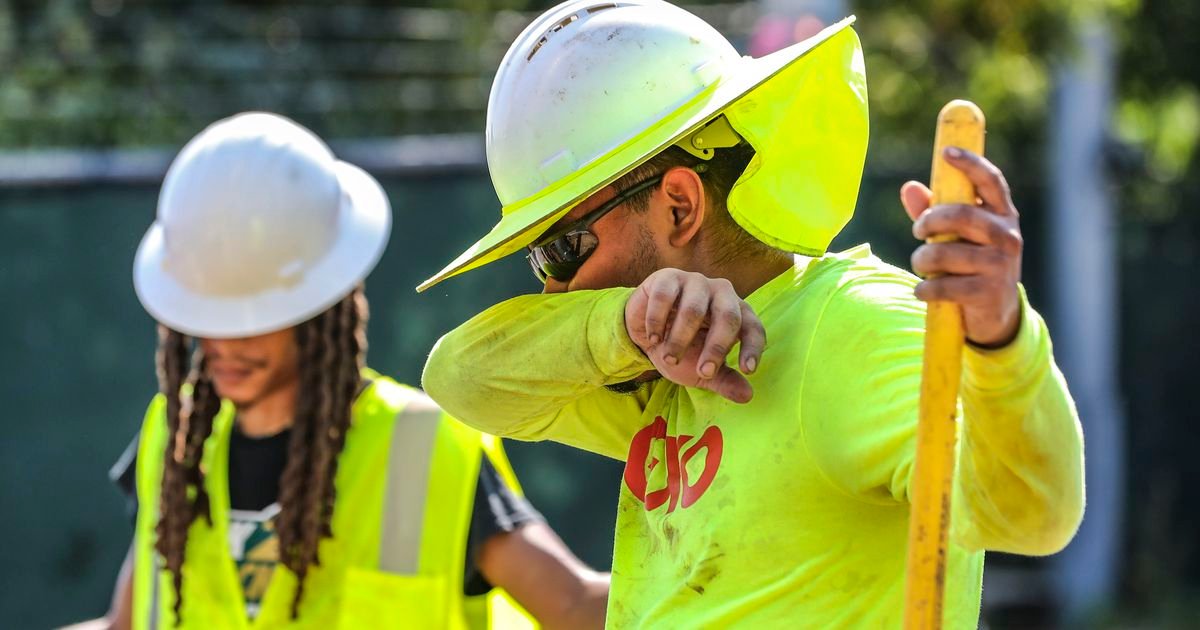
I have seen firsthand the damage that extreme heat can do. As a physician, I volunteer at a mobile clinic in South Georgia where I frequently treat migrant agricultural workers. Many of the workers exposed to pesticides suffer from widespread rashes, and some wear multiple layers of clothing in the sweltering heat to protect their skin from the chemicals. These workers often show signs of sun overexposure, heat stroke, and syncope (fainting or dizzy). Some workers say they would be fired if they spoke out about the need for sunscreen and hydration.
Georgia is not one of several states that offer heat protection to workers. California, Oregon and Washington all require employers to provide shade and clean drinking water when temperatures reach certain thresholds. Though they need to be more strictly enforced, these laws help prevent heat-related illnesses and deaths.
But Georgia leads the nation when it comes to keeping high school athletes safe from the heat. For years, our state had one of the highest rates of heatstroke deaths among high school football players. Our state is known for its humid heat, which means sweat evaporates very slowly and the body works hard to cool itself down. This can lead to deadly heatstroke.
So in 2012, the Georgia High School Association took action: It required schools to use wet bulb globe temperature (WBGT) calculators to measure air temperature and humidity. and Radiant temperature. Based on the readings, coaches must take a certain number of breaks per hour. As the readings increase, more protective measures are added, such as changing sportswear, reducing the time players are outside, or canceling practice altogether.
Shouldn’t workers who work outdoors have similar protections?
As we prepare for another record-breaking heatwave, state and local officials must take steps to protect workers from extreme heat. Workers who work outdoors need safety measures like shade and hydration. Employers should use the WBGT to monitor temperatures and limit heat exposure accordingly. Workers also need mechanisms to report unsafe conditions without losing their jobs.
Our state is a national leader in protecting our high school athletes from dangerous heat, and it’s time to do the same for those who toil and earn a living under the hot Georgia sun.
Charles E. Moore is a professor and distinguished physician at Emory University. He is the service chief of the Department of Otolaryngology-Head and Neck Surgery at Grady Health System. Dr. Moore is the director of the Emory Urban Health Initiative and president and founder of HEALing Community Centers, a Federally Qualified Health Care Center based in Atlanta. Dr. Moore will be a recipient of the Emory 2024 Climate Health Equity Fellow In collaboration with the Medical Societies Consortium on Climate and Health.
