

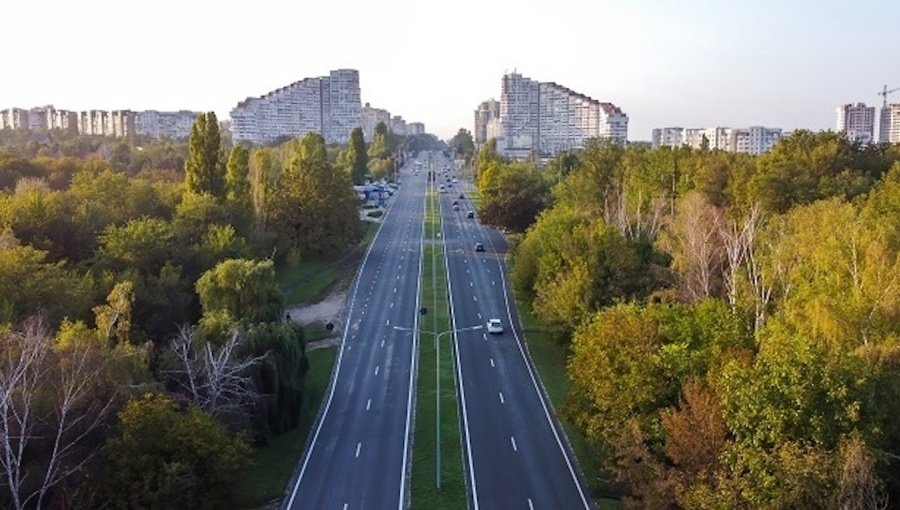
Moldova is already directing its trade towards Western markets, but to boost exports further it needs investments in infrastructure, from roads and rail to logistics centers, Katarina Bjorlin Hansen, Moldova representative for the European Bank for Reconstruction and Development (EBRD), said in an interview. bne intellectual news.
Investments in road and rail infrastructure are already underway with the support of the EBRD, the EU and Moldova’s other international partners. This kind of investment is essential to open up new markets, particularly for Moldova’s large agricultural sector, as well as to boost export-oriented investment in sectors from IT to automotive.
After Russia invaded Ukraine and weaponised energy supplies to Moldova, the EBRD and other international partners stepped up to support the energy sector in particular as the country pivoted to European suppliers.
However, international financial institutions (IFIs) are also funding investments in infrastructure and other sectors to support Moldova’s long-term development. For example, the EBRD announced earlier this year that it would lend €150 million to upgrade Moldova’s roads, and will also work with Moldovan Railways to develop the country’s rail network.
“Since the start of Russia’s war in Ukraine, Moldova’s need for assistance from international organizations has grown. We, like all other international financial institutions, have sought to meet these needs as quickly as possible,” Hansen said. bne intellectual news At the EBRD Annual Meeting in Yerevan earlier this month.
“We want to continue this level of investment. Rather than continuing with emergency aid, now is the time to plan projects. Moldova is a big country for us in terms of operations. We invest hundreds of millions of euros every year and intend to continue to do so.”
Shifting West
Since Moldova signed the Association Agreement and Comprehensive Free Trade Agreement (DCFTA) with the EU, the country’s trade has been shifting towards the West.
“A few years ago, 70 percent of Moldova’s trade was with Russia and Ukraine. That became impossible, so there was a desperate need for connections to Europe, both by rail and road,” Hansen said.
Alongside broader infrastructure investments, there is also a need for specific investments in the agriculture sector: “55% of Moldova’s population works in agriculture. Agricultural products need to be shipped to the EU now and the roads must be working, because any delays will mean the produce will rot. It is very important that logistics work,” she adds.
“The cold storage facility, warehouse and logistics center will be a great investment to increase the competitiveness of Moldova’s agricultural sector.”
Moldovan producers already have some advantages: “Moldova has a very clean production. Their juices and jams have less sugar than many other countries. They are good products and we would like to see them in the EU,” Hansen said.
But the small size of many produce producers and processors can be a problem. “One obstacle is probably that many of these companies are small and medium-sized enterprises – it can be hard for them to get their products into the big European supermarkets,” Hansen says. “We are encouraging them to look at smaller European markets where there is a better match between production capacity and demand.”
Food and agriculture are important industries, but Moldova is also developing other sectors such as ICT and auto parts.
“Moldova is already taking advantage of the nearshoring and friend-shoring trends, and just the fact that you can drive from Moldova to anywhere in the EU is a big incentive,” Hansen says. “There are a lot of foreign companies investing in business process outsourcing to produce automotive parts in Moldova, and we expect to see this growth.”
