

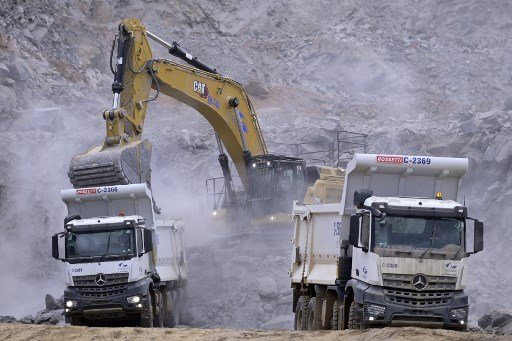
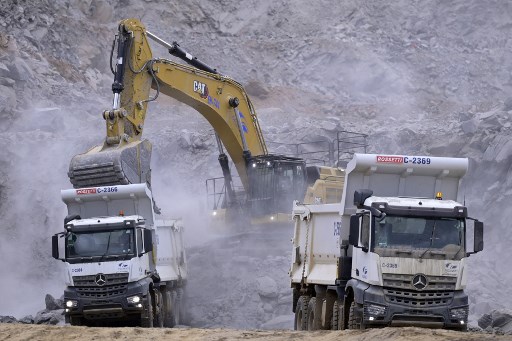
Brazilian development bank BNDES and mining giant Vale have begun the process of setting up an investment fund with up to 1 billion reais (US$193 million) to back domestic projects that produce critical minerals.
The banks and mining companies have launched a call to select investment funds to manage the money, which is due to close in October 2024. Once that is complete, the selection of assets to receive investments will begin.
Vale and BNDES, through their equity arm BNDESPar, will each subscribe to an allocation of between 100 million and 250 million reais in the fund, representing a maximum share of 25% of the fund’s total committed capital. The fund, which will also be open to third-party investors, aims to raise up to 1 billion reais to be invested in the research, development, implementation or operation of projects producing minerals, metals and fertilizers needed for the energy transition and decarbonization.
“This initiative will allow BNDESPar and Vale to act as investment catalysts, leveraging private investment to strengthen domestic capital markets while boosting the production of key inputs for the energy transition, decarbonization and food security,” BNDES said in a statement.
The initiative was praised by those involved.
“Brazil is severely lacking in financing options for projects linked to the energy transition, which are typically undertaken by small and medium-sized mining companies. This fund is a step in the right direction,” mining consultant Wilfredo Bruin, CEO of Anglo American in Brazil until the end of 2023, told BNamericas.
According to BNDES, companies eligible for the fund will be those that hold mining rights or mineral resource rights to directly or indirectly extract cobalt, copper, tin, graphite, lithium, manganese, platinum group metals, molybdenum, niobium, nickel, silicon, tantalum, rare earth elements, titanium, tungsten, uranium, vanadium, zinc, phosphates, potassium and other minerals to enhance soil fertility.
The companies included in the fund will include those based in Brazil and operating in the country, as well as those headquartered abroad with 90% of their assets in Brazil at the time of the fund’s initial investment and total annual operating revenues of up to 300 million reais, it added.
Despite government efforts to expand mining activities for critical minerals in the country, Brazil faces significant challenges before it can become a significant producer of these resources.
“We are seeing a large influx of new companies into Brazil’s mining sector, particularly in the critical minerals sector. However, despite this growth, I believe it will be difficult for Brazil to become a major player globally in these commodities. This is mainly because a significant portion of the world’s critical mineral reserves are controlled by China, either through its domestic assets or through assets it has acquired in recent years on the African continent,” Bruin added.
