

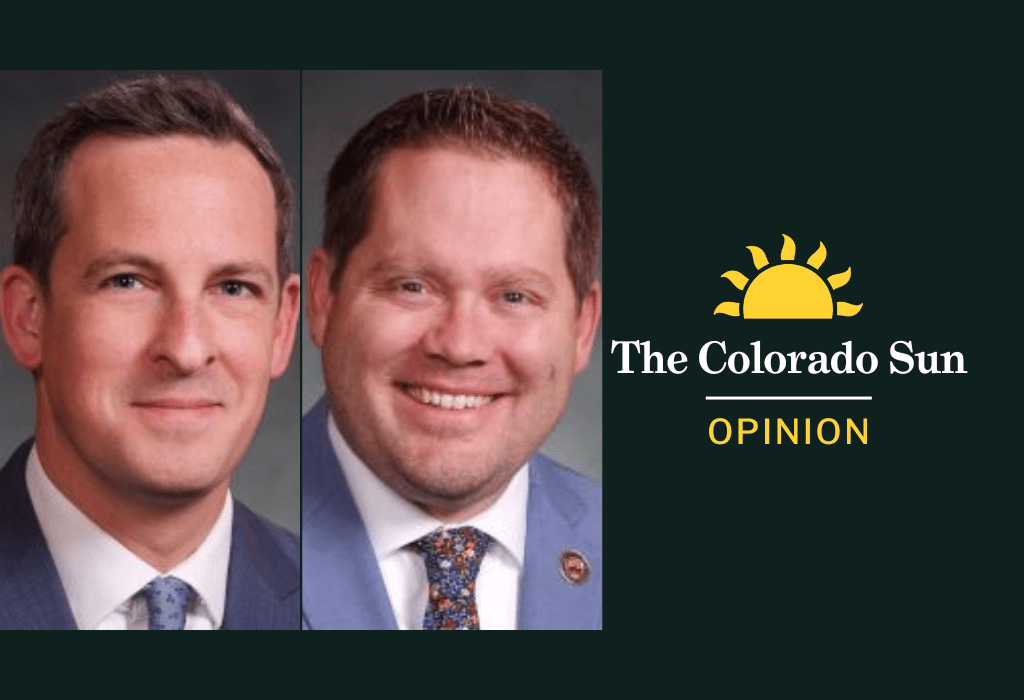
Politics is about improving people’s lives and fighting for the future we believe in and want for our families and neighbors. Each of us ran for office on behalf of the people of Colorado because we believe smart policy is the key to transforming lives and building a more equitable society.
For us, that means a society where our children have access to the educational opportunities that prepare them for the future, where our economic policies create the conditions for workers and families to not only survive but thrive, and where all eligible Coloradans have the freedom to participate in the democratic process and express their views.
We are proud to have helped Colorado emerge as a national leader when it comes to designing efficient, secure systems to give Coloradans easier access to one of their most cherished responsibilities: the right to vote. Colorado pioneered expanding and enhancing its automated voter registration system at the Department of Transportation to Secure Automatic Voter Registration (SAVR) in 2018. This policy shift doubled the rate of voter registration among unregistered DMV customers.
We knew we could build on our success at the DMV and extend the promise of civic engagement to even more eligible, and often underrepresented, Coloradans. That’s why in 2019 we were proud to lead a successful effort to pass legislation expanding SAVR to state Medicaid offices. According to data from the Institute for Responsive Government, this expansion will help engage more than 428,000 eligible but currently unregistered voters.
Now that we fully understand the potential of SAVR, we hope the Centers for Medicare & Medicaid Services (CMS) will provide guidance to help us implement the policy as soon as possible. We’re not alone: Six other states and the District of Columbia have also passed similar SAVR in their Medicaid policies, and Colorado Governor Jared Polis has joined the governors of New Mexico and Oregon in calling on CMS to expedite guidance. Earlier this year, nearly 40 policy, grassroots, and community-based organizations also called on the federal government to act quickly.
The opportunity to engage Coloradans who are often left out of our democracy cannot be overstated: Voters who are eligible for Medicaid but are unregistered typically come from historically underrepresented communities, including people of color, people with disabilities and low-income voters.
The National Voter Registration Act of 1993 requires state government agencies, such as Medicaid, to offer their customers the opportunity to register, but this is not an effective system. Medicaid applications, like many other types of government paperwork, are often difficult and confusing documents that easily overwhelm people. It is no wonder that Medicaid enrollment is actually negatively correlated with voter registration, even after controlling for factors such as race, age, income, and education status.
Medicaid SAVR addresses this issue by leveraging information already collected by state agencies and using that information to filter out non-citizens and those who are ineligible to vote, while automatically registering those who are eligible to vote.
We know firsthand the reality facing many Coloradans who would have received Medicaid SAVR benefits. One of us, Senator Fenberg, grew up canvassing for candidates, meeting so many different types of people along the way and learning about the daily challenges faced by so many across our state. One of us, Senator Malika, grew up knowing what it was like watching her parents work tirelessly to provide for a living, struggling to put food on the table and keep a roof over their heads.
For many Coloradans who are most affected by the policies we consider in our elections, there are often more pressing concerns beyond the mountains of bureaucratic government paperwork.
SAVR in Medicaid is a prime example of a policy that improves people’s lives and contributes to a stronger future. And it’s exactly the kind of efficient, fair policymaking that our neighbors elected us for. As soon as we begin implementing SAVR policies, we will not only engage hundreds of thousands of new voters in Colorado, but we will also streamline government services. In the process, we will reduce costs for taxpayers and improve the security of our voter rolls.
We are committed to continuing to lead the nation on safe, efficient and innovative ways to increase public engagement, and CMS’s swift action to provide guidance helps us get closer to achieving that.
State Senate President Steve Fenberg, a Boulder County native, represents the 18th District.
State Sen. Kyle Mullica, of Adams County, represents the 24th District.
The Colorado Sun is a nonpartisan news organization, and the opinions of our columnists and editorial writers do not necessarily reflect those of the newsroom. For more information on The Sun’s opinion policies, please see our ethics policy.To learn how to submit a column, contact opinion@coloradosun.com.
Follow Colorado Sun Opinion on Facebook.
