

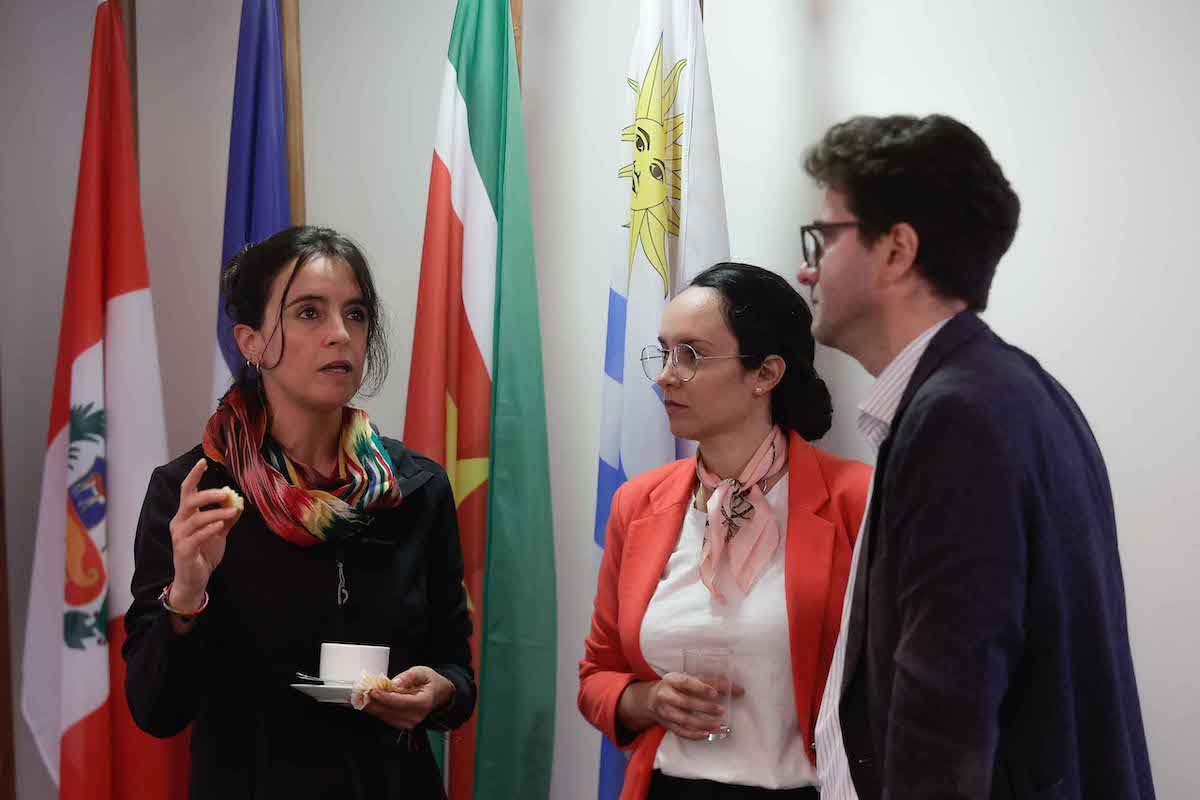
Dialogue Earth recently held a series of discussions and workshops on interrelated issues such as trade and investment relations between China and Latin America and the Caribbean, green transition, and environmental rights.
This event was held in collaboration with the Raoul Wallenberg Institute, ICLAC and FLACSO. The conference was held in Santiago, Chile, from April 23-25, on the sidelines of the third Conference of the Parties to the Escazu Agreement, the region’s first environmental treaty.
Discussion focused on four areas. China’s role in the region. Initiatives to address environmental issues. The importance of local context and agency in shaping the nature and impact of Chinese investments. and the knowledge gaps that must be filled to shape relationships that are better for all.
Understanding China in the World
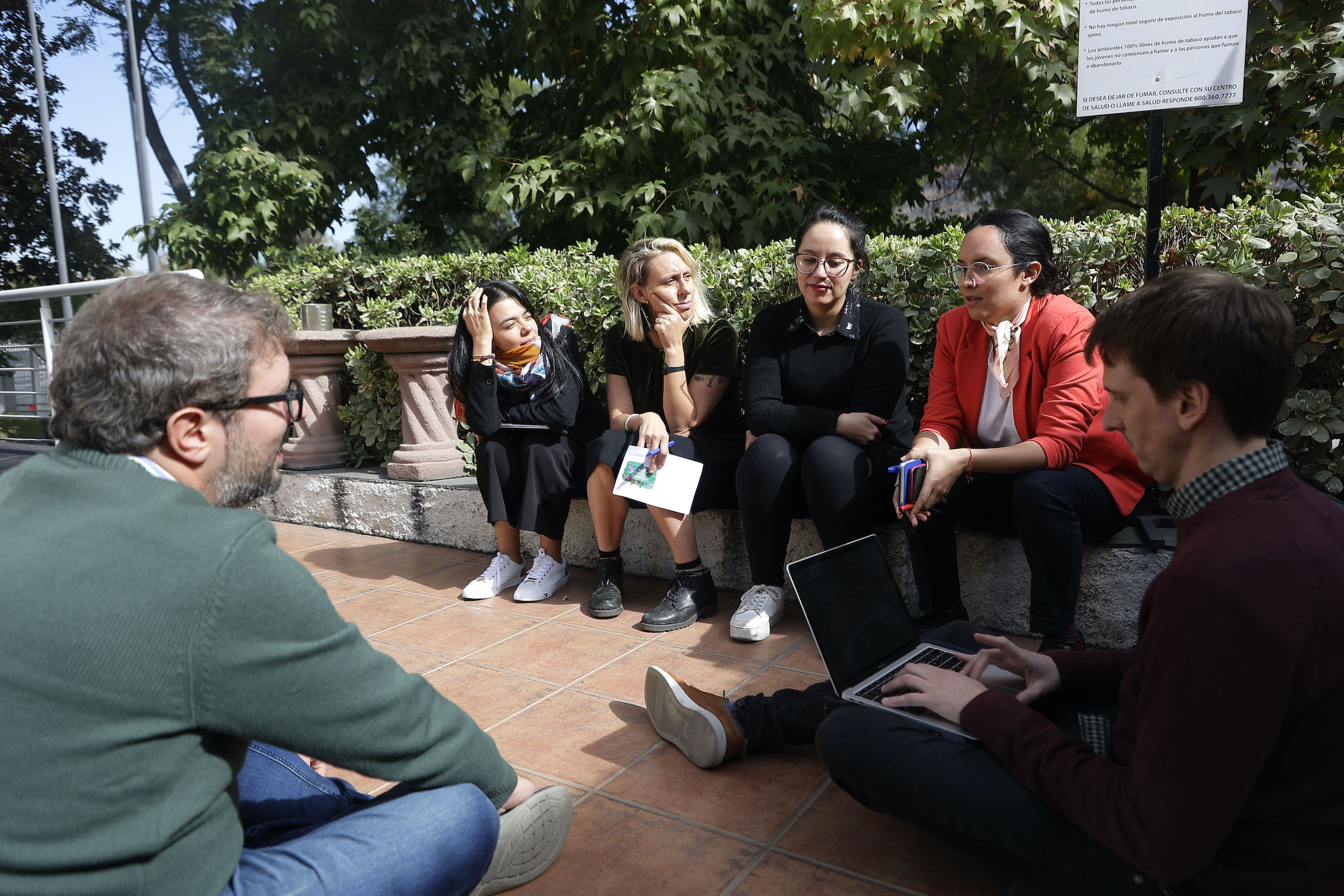
Spanish breakout session on environmental governance and China-Latin America relations (Image: Raúl Bravo Mercado/Dialogue Earth)
Much of the conversation focused on how to understand China’s role in investment, trade, and the green transition in Latin America and the Caribbean, and around the world. Many participants noted how bewildering China’s political and foreign investment system is, along with the array of terms and initiatives used by Chinese actors.
Several participants mentioned the importance of “fragmenting” China to understand the many different actors that make up China’s overseas investment system. Each actor often has very different incentives. In other words, one participant emphasized that China is not a monolith. Understanding the different components of China’s overseas investment system, from the political sector to corporations to banks, and the different types of finance they provide will help local stakeholders understand China in a more realistic way. It may be helpful to interact with
However, understanding the complex network of players is not an easy task. One participant pointed to resources that help map different actors and their relationships.
Participants also noted the need to understand the dynamics behind grand initiatives such as the Belt and Road Initiative and the World Development Initiative. One participant said that these are the “appearance” of global China, not its “essence.” Viewing China through power rather than policy allows for a comparative approach to engagement with the world. This allows for a deeper understanding of the interrelationships between development actors and national governments around the world, and allows for a global politics rather than the separate worlds of ‘Western’, ‘Chinese’ or ‘Japanese’ development aid. It becomes possible to see them as part of the economic system.
The conversation then moved on to a discussion of China’s green transition and the concept of environmental rights. It was noted that China’s approach to environmental protection tends to be very technology-centric, with environmental engineering playing a major role in the country’s approach to protecting and restoring the natural world. This can lead to communication and conceptual gaps with actors in different parts of the world, especially civil society.
However, it was also pointed out that a technology-centered environmental approach is an opportunity for countries in the Global South to redefine their place in the world. This could be achieved by bringing transition-related industries and technologies to developing countries through economic engagement with Chinese companies expanding into overseas markets, for example in the form of transition mineral processing. Changes in China’s own discourse on the environment and climate reinforce this. We have moved from framing the issue as detrimental to development in the 1990s and his 2000s to one that harmonizes well with “high quality” development. Meanwhile, China’s economy has become increasingly reliant on exports of products such as solar panels and electric cars, giving further momentum to the “greening” of overseas trade and investment.

Participants discuss the importance of the Escazu Agreement for local communities (Image: Raúl Bravo Mercado/Dialogue Earth)
The importance of action on the ground
While it is important to understand the dynamics and logic of China’s global engagement, it is also necessary to understand how local conditions may influence the nature of that engagement. Participants noted that it is common to think of China as a monolithic entity that acts unilaterally. As a result, investment projects in Belt and Road countries have come to be seen as being directed and completely controlled by Chinese actors, when in reality, for example, initiating projects, signing MOUs, granting permits, etc. The host country’s government also plays an important role.
Zambia’s special economic zone was cited as an example of a project initiated by the host country’s government rather than a Chinese company. Another participant noted that government and civil society pressure on Chinese companies has a track record of building investment. For example, companies may be forced to comply with local content and processing requirements, as in Indonesia and Zimbabwe. In some cases, as in Chiang Rai, Thailand, they are forced to consult with local communities.
In Latin America and the Caribbean, the Escazu Agreement presents important new avenues for shaping the management of Chinese companies. Article 9 of the treaty recognizes the rights of environmental defenders, giving stronger legal standing to community voices and creating legal obstacles for companies that employ armed security forces around projects. possible to produce. The Kunming-Montreal Biodiversity Framework, which was signed in 2022 with China hosting the United Nations Convention on Biological Diversity, includes language regarding the rights of humans and indigenous peoples as well as the rights of nature. Also worth noting. The latter was cited as an example of how engagement with China can produce positive results, even in areas where China is not usually considered progressive.
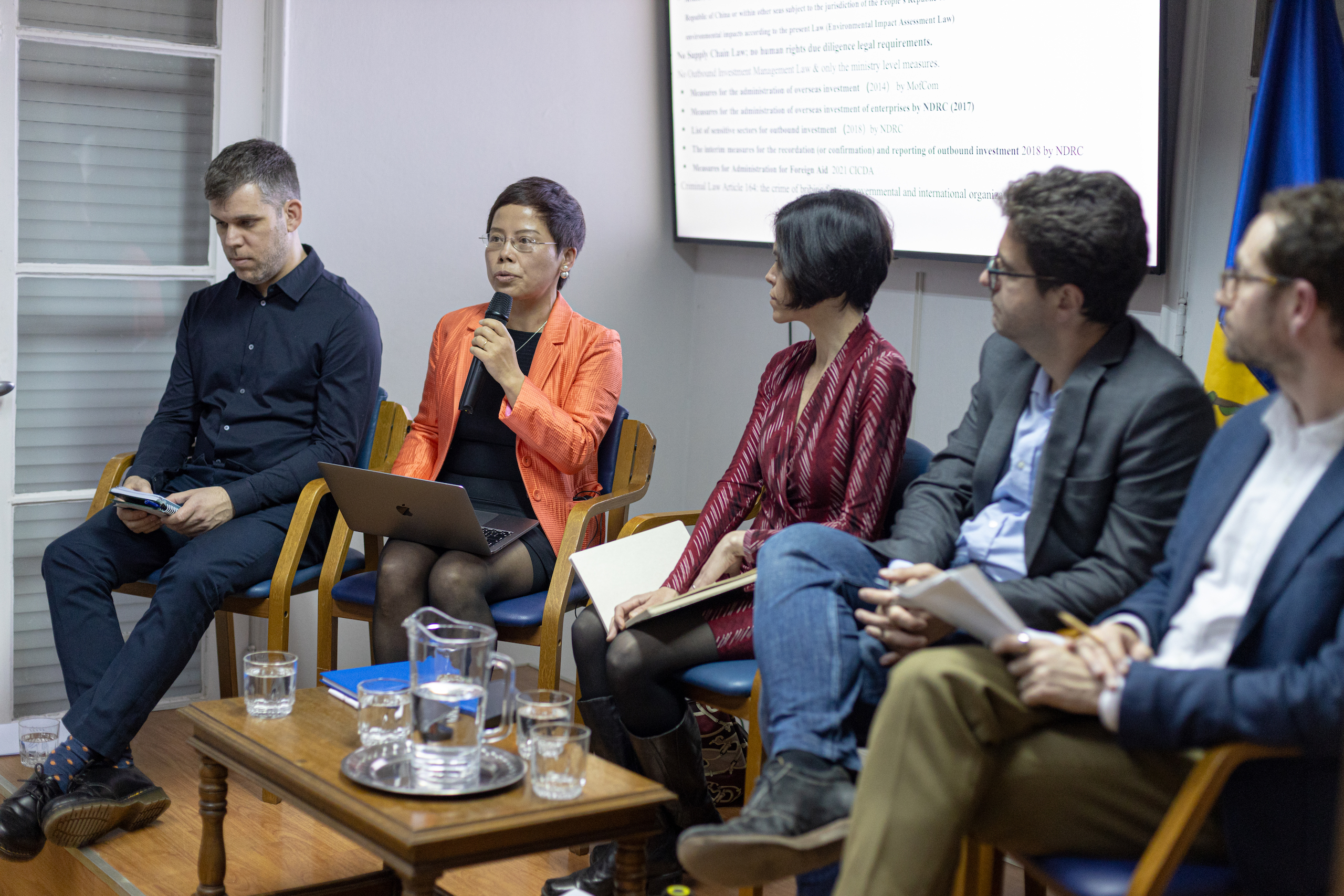
Panelists discuss Chinese regulations and guidelines regarding the environmental impact of overseas projects (Ailén Díaz Escobar/Dialogue Earth)
How can we better work with China towards a green and just transition?
Participants also noted that there are significant gaps in knowledge and awareness of China within the policy-making community, civil society, and grassroots communities. Bridging these gaps could significantly improve the outcomes of Chinese investment projects, they said, many of which are in desperately needed infrastructure sectors such as power, roads and communications. be. Some participants argued that a lack of understanding of Chinese companies led to poor government negotiations and a lack of strict and mandatory conditions for investment. Closing knowledge gaps could enable smarter negotiations, they argued. Others noted that knowledge about China remains within the purview of their own country’s elites and rarely extends to those directly affected by projects.
Overall, it was clear that discussions such as those held in Santiago enable learning and foster connections between those involved in different aspects of ‘Global China’. Expanding on this could help fill the knowledge gaps identified by participants. This could contribute to building relationships with Chinese companies that lead to better outcomes for the environment and local communities.
