

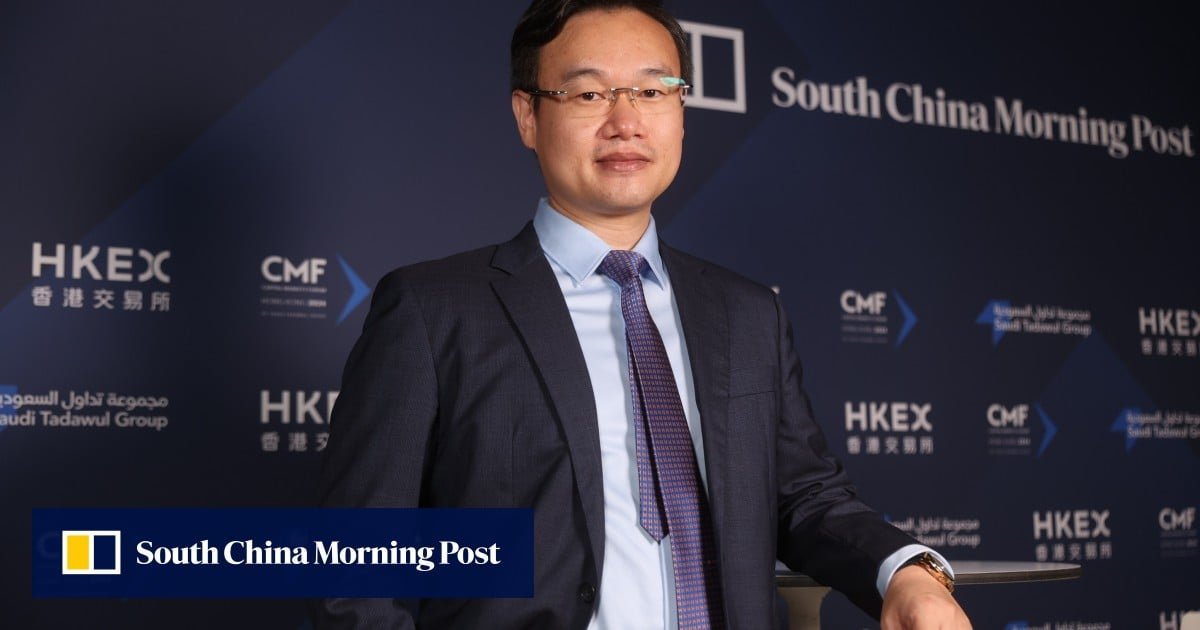
MSCI Managing Director Jen Wei said China and the Middle East have the potential to reinvigorate their historical ties through financial cooperation, but further mutual understanding is needed.
The index provider first included Saudi stocks in its emerging market index in 2019, helping to put Saudi Arabia on the map of international investors as the index serves as a benchmark for measuring market movements and performance.
As relations between China and the Middle East continue to deepen, capital market investors will be offered more financial products and investment opportunities.
Mr Wei said the scenario was an “untapped world” as few Chinese investors had previously focused on Saudi Arabia and vice versa. Both communities require learning, not only in terms of the investment environment but also in terms of investor preferences.
“Chinese investors will become increasingly familiar with assets. [companies] Investors in the Middle East and Saudi Arabia also need to be familiar with the assets here,” he said.
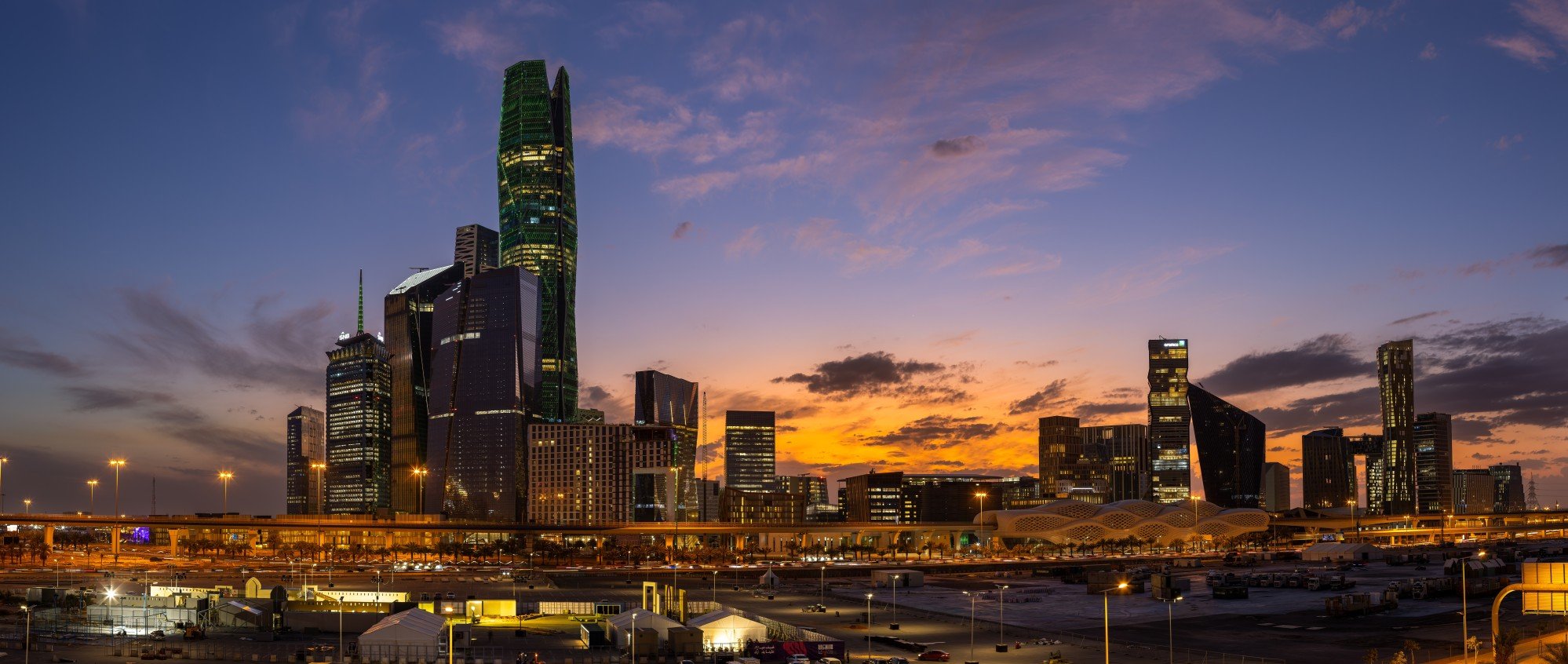
China has become the largest greenfield foreign direct investor in Saudi Arabia. According to a report by Emirates NBD, investment in Saudi Arabia increased 11 times year-on-year to USD 16.8 billion in 2023.
“Foreign direct investment between the two countries has increased healthily in many sectors related to electric vehicles, energy and construction,” said Wei, MSCI’s global head of China research. “The next stage of opportunity is financial markets, which should play a role in helping to finance this kind of growth.”
For example, many investors are considering investing in the renewable energy sector. To address this need, MSCI offers portfolio construction tools that help investors screen securities with high or low thematic exposure and develop strategies to capitalize on opportunities.
On the index side, MSCI and the Saudi Exchange partnered in 2018 to launch the MSCI Tadawul 30 Index, a jointly tradable index that tracks the 30 largest and most liquid securities listed on the Saudi stock market. has been developed. This index can be used as a basis for financial products such as derivatives and exchange-traded funds (ETFs).
Mr. Wei said that as financial activities between the two countries increase, it is essential to understand that investor groups in the two countries have different preferences and views on investment opportunities.
For example, many Arab investors have adopted Sharia-compliant investment principles that promote ethical and socially responsible financial practices. Starting in 2007, MSCI responded by launching the MSCI Islamic Index Series.
MSCI believes that working with key players in Saudi Arabia, mainland China and Hong Kong will increase connectivity between their respective capital markets.
Wei believes that strengthening cooperation between China and Saudi Arabia will bring results, as the two countries have roots of trust and exchanges dating back thousands of years.
“I think we are just beginning to discuss financial market connectivity,” he said. “We hope to see more connectivity for funds to meet end investors.”
