

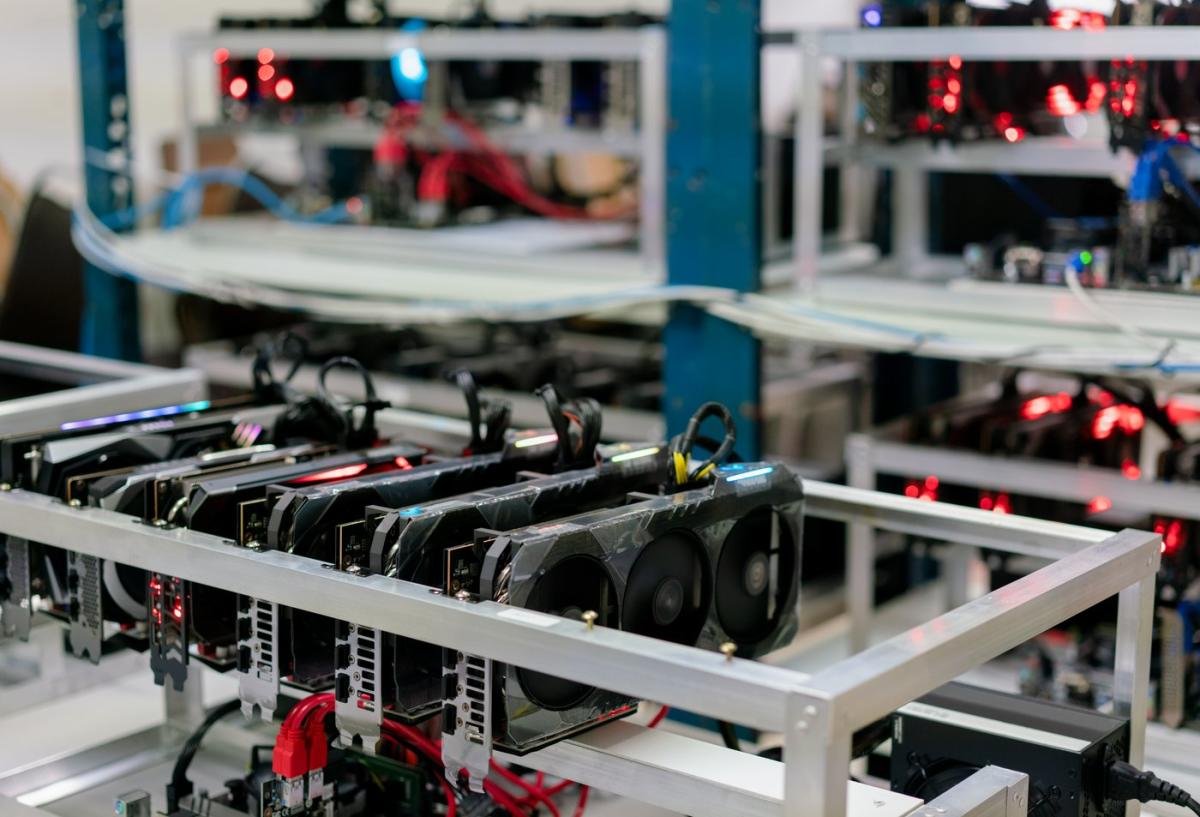
As history has shown, in a bull market, Bitcoin (Cryptocurrency: BTC) Miners almost always outperform the cryptocurrency itself. But over the past few months, bitcoin miners have been hit particularly hard, despite their role, as investors have poured into spot bitcoin ETFs as a way to get exposure to bitcoin through the stock market. To make matters worse, Bitcoin recently underwent its fourth halving, which cut the block rewards paid to miners in half, effectively reducing their main source of income.
Without a significant price increase, miners will face serious challenges in staying in business and keeping their stock prices rising. History has shown that halvings are usually preceded by a spike in Bitcoin prices, and many mining stocks fall accordingly, but investing in this industry is not easy. Before choosing a Bitcoin mining company for your portfolio, be sure to consider the following three things:
1. Production expansion plan
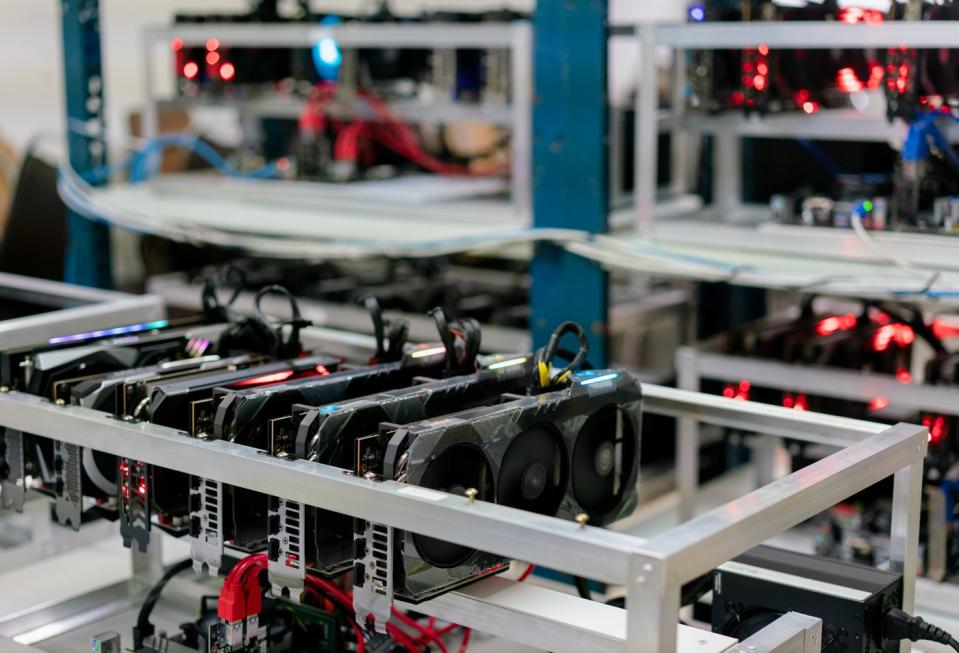
Faced with a significant decline in revenue, one of the most obvious strategies to offset the impact of halving is to increase mine production. Therefore, investors should prioritize companies that have clear strategies and initiatives in place to expand their mining operations.
This requires investment in additional mining hardware, infrastructure, and operational resources. Investors should look for companies that are actively expanding their mining capacity and have concrete plans for expansion.
Typically, the easiest way to quantify how much capacity expansion a company plans to expand is by evaluating a metric known as hash rate. It is generally believed that the higher the hash rate, measured in exahash per second (EH/s), the more Bitcoins a company can mine. While investigating a company’s potential is only part of the equation, investors need to make sure they are choosing a miner with a clear plan for increasing hashrate.
2. Efficiency is key
While increasing production is essential to maximizing profits, it is equally, and perhaps even more important, to ensure that a company’s mining operations are efficient and cost-effective.
The efficiency of Bitcoin mining is closely related to the cost of electricity, which is one of the most important costs in mining operations. Optimizing efficiency can be achieved in three main ways.
The first is access to cheap energy sources. Because energy is cheap and readily available, companies can power more computers to mine Bitcoin.
The second factor is related to mining equipment. Like any computer, older models usually consume more energy. Additionally, additional resources are required to prevent equipment from overheating. Companies that invest in new miners are better placed to keep costs low. Needless to say, they also have better capabilities when it comes to mining Bitcoin.
The third aspect comes down to pure business operations. Investors should focus on investing in companies with a proven track record of managing maintenance costs, minimal operating expenses, and low financial debt.
When you add it all up, there is a simple way to measure each company’s efficiency, similar to hash rate. Almost every company’s quarterly financial statements list the average cost to mine one Bitcoin. In an ideal world, companies would have a low average cost per mined Bitcoin and a high hash rate.
3. Find the X factor
The majority of Bitcoin mining companies have more similarities than differences. However, each has its own characteristics. Let’s call them the X-factor. These identifying factors can play an important role in helping investors evaluate and differentiate mining companies.
These X-factors come in many forms. for example, riot blockchain‘s (NASDAQ: Riot) Our unique energy consumption model sets us apart from other products. Located in Texas, Riot benefits from access to cheap and affordable energy. However, because Texas has its own power grid, it also has the ability to sell excess power back to the grid if the cost of mining Bitcoin exceeds the potential profit.
Similarly, Marathon Digital Holdings (NASDAQ:MARA) stands out with its introduction of a Bitcoin sidechain, representing a strategic move to diversify its revenue sources and expand its business operations. Although still in its early stages, the potential for Bitcoin sidechains to generate additional revenue presents an exciting opportunity for Marathon and highlights the company’s forward-thinking approach to innovation within the industry.
These X-factors are just two small examples, but they serve as important considerations for investors looking to identify potential winners in the Bitcoin mining sector. By carefully evaluating each company’s unique characteristics and assessing the impact on future growth and profitability, investors can make informed decisions and explore potential prospects in the highly competitive Bitcoin mining space. Winners can be identified.
Should you invest $1,000 in Bitcoin right now?
Before buying Bitcoin stocks, consider the following:
of Motley Fool Stock Advisor Our analyst team has identified what they believe Best 10 stocks Things investors can buy right now…and Bitcoin wasn’t one of them. These 10 stocks have the potential to generate impressive returns over the next few years.
when to think about it Nvidia This list was created on April 15, 2005…if you invested $1,000 at the time of recommendation. you have $525,806!*
stock advisor We provide investors with an easy-to-understand blueprint for success, including guidance on portfolio construction, regular updates from analysts, and two new stocks every month.of stock advisor For the service more than 4 times The resurgence of the S&P 500 since 2002*.
See 10 stocks »
*Stock Advisor will return as of April 30, 2024
RJ Fulton holds positions on Bitcoin and Riot platforms. The Motley Fool has a position in and recommends Bitcoin. The Motley Fool has a disclosure policy.
“Halving and Bitcoin Mining: 3 Things You Should Know Before Investing in This Explosive Industry” was originally published by The Motley Fool.
